

When considering what to bring to a mental health IOP intake, start with what you have. Insurance details, a medication list, and past care notes may help. Missing papers needn't delay your first call in Amesbury, MA. IOP means intensive outpatient program, called Half Day Treatment at MVBH.
What Should You Bring To A Mental Health IOP Intake?
Bring available details that explain your care needs and coverage. You don't need a perfect folder before making first contact. The pages for outpatient mental health care and mental health admissions provide context for this step. Treat this guide as helpful preparation, rather than a required document list.

An intake is a chance to talk about your needs. Papers can support that talk, though they can't replace it. Your own account of daily life matters during care planning.
Start with items that are easy to find or recall. You might already have them in a wallet or phone. There's no need to create a full life history.
- Keep your current insurance card nearby if you have health coverage.
- Bring available photo identification, without assuming a specific form is required.
- Use a current medication list or the labeled containers you already have.
- Keep names of current care providers handy when you know them.
- Bring recent care summaries if they're already in your possession.
These items serve different purposes during a care discussion. Coverage details help explain the plan you currently use. Care details help describe what support you've had so far.
A small folder can keep loose pages in one place. A short phone note can work for basic details, too. Use the format that feels easiest to manage.
You may have no records or feel unsure about dates. Say what you know and leave room for missing details. Avoid guessing about facts that another provider could later confirm.
This article doesn't set MVBH's document requirements for an appointment. Specific instructions may depend on the next step in care. You can call without gathering every item listed here.
Which Insurance And ID Details Can Help?
Current insurance details can help clarify which plan needs review. Identification may help keep your basic personal details consistent. Visit insurance benefits review for coverage information and mental health admissions for the separate care process. Having these details ready doesn't establish coverage or decide admission.
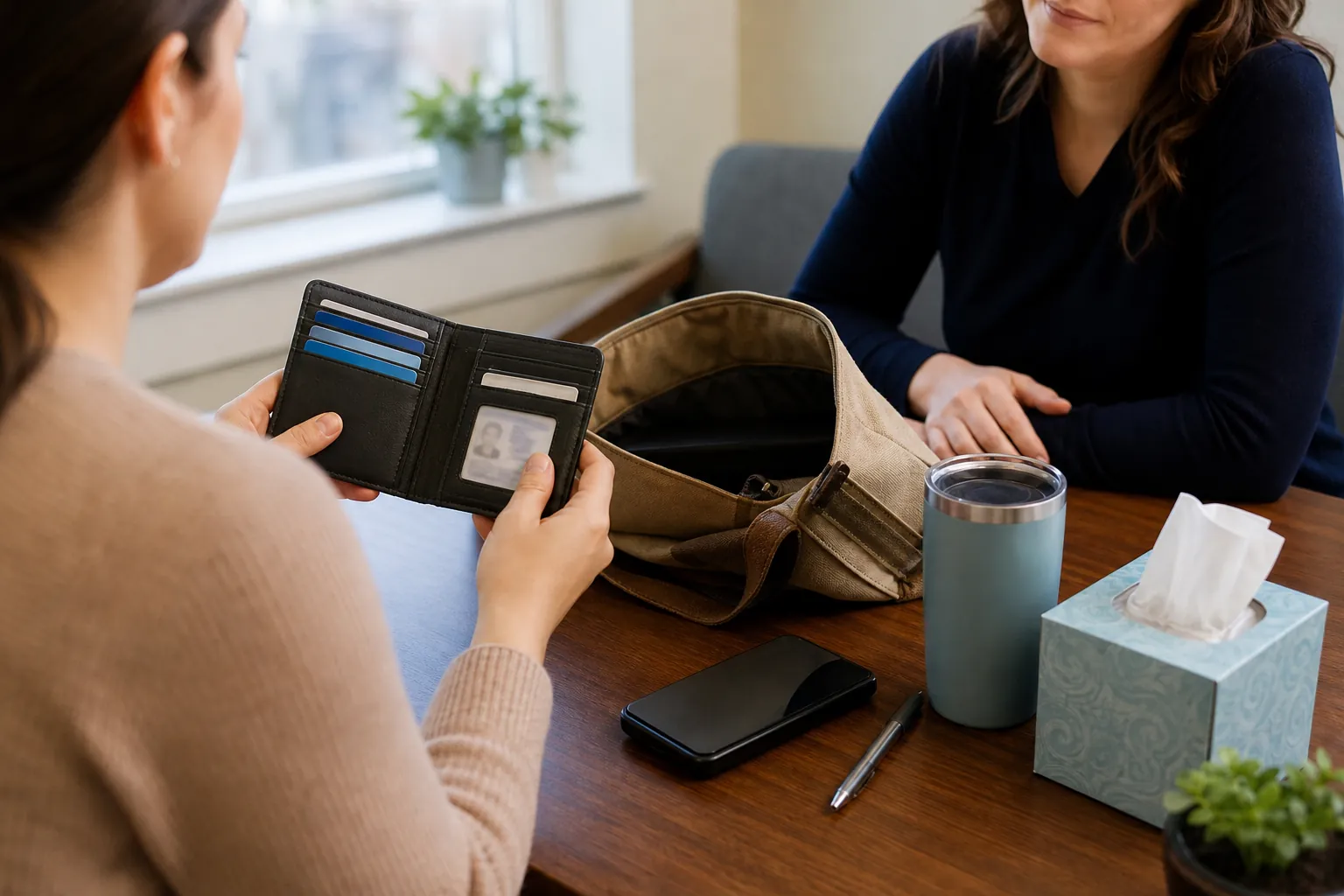
An insurance card is a useful starting point when available. It usually identifies the plan and its member information. Use your current card rather than one from past coverage.
If you have more than one plan, keep both nearby. You don't need to work out how they fit together. Coverage questions still need review based on the specific plans.
Your insurance record may use a former name or address. A brief note about that difference can reduce confusion. Keep your current contact details separate from older plan information.
If you don't have the card, use available plan details. A digital card or recent plan notice may be helpful. Don't delay a first call while searching through old mail.
Photo identification can help confirm the details you're sharing. This guide doesn't establish which documents MVBH requires or accepts. It also doesn't mean you must buy or replace identification.
Coverage varies by plan, including the care being reviewed. Benefits verification and admission are two separate steps at MVBH. A benefits review doesn't settle every payment or care decision.
Your insurer can help identify providers covered by your plan. NIMH describes this as one route to finding care. That general guidance doesn't confirm coverage for a particular MVBH service. NIMH: Help for Mental Illnesses.
If you don't have insurance, you can still make contact. Explain that your coverage status is unclear or has changed. This guide doesn't establish a payment arrangement or personal cost.
Which Medication And Provider Details Are Useful?
Available medication and provider details can make your care history clearer. Bring accurate information without changing medicines to prepare for intake. The outpatient mental health care page describes the service, while contact MVBH care offers a way to connect. These details don't imply that MVBH provides medication services.
A useful medication list reflects what you currently take. Include the name and dose when you know them. The dose means the amount listed for each use.
The label may also show how often you take it. Copy that information rather than relying on a rough guess. If a detail is unclear, leave it marked as unknown.
- List prescription medicines you currently take, using their labeled names.
- Include over-the-counter medicines, vitamins, and supplements when you know the details.
- Note known medication allergies and the reaction you remember having.
- Keep current provider names and office contact details if available.
- Mark unclear doses or dates instead of filling gaps with guesses.
Old prescriptions can make a list harder to read. Keep current medicines separate from ones you took in the past. You can mention past use when it relates to your concerns.
A provider list might include your regular doctor or therapist. It can also include someone who prescribes your current medicines. Having their names doesn't mean records have already been shared.
Someone else may help you manage your medications at home. You can explain that support without knowing every detail yourself. Don't stop or change medicines to get ready for intake.
NIMH explains that care choices depend on needs and medical history. Those choices should involve guidance from a mental health professional. A written list supports discussion; it doesn't select treatment for you. NIMH: Psychotherapies.
You may have concerns about side effects or past treatment. Describe your experience without trying to settle the cause yourself. This article isn't advice about starting, stopping, or changing medication.
How Can Past Care Records Help The Discussion?
Recent care summaries can help explain what happened before this intake. Use records you already have, rather than collecting every old file. The mental health admissions page explains the care pathway, and contact MVBH care provides a starting point. Missing records shouldn't become a barrier to your first call.
A recent discharge summary may describe a past care stay. An after-visit summary may outline a recent appointment or plan. Either can help you recall names, dates, and follow-up steps.
A discharge summary is a brief report after care ends. It may contain terms that are hard to understand. You don't need to decode every term before making contact.
Keep the most recent relevant records easy to find. Older records may help if they explain an important change. More pages aren't always more useful than a clear summary.
If you have many files, use this simple sorting order. It's an optional way to reduce clutter, not an intake requirement. Stop when you have enough to describe your recent care.
- Set aside recent summaries that relate to your current care needs.
- Keep current care plans separate from older plans that have changed.
- Note missing details without spending hours trying to reconstruct them.
- Keep original documents safe and use copies when that is practical.
You may remember more than your records show on paper. For example, a past plan may have been hard to follow. Your experience can help explain that gap during a discussion.
Records can include sensitive details about other people or past events. You don't need to send a whole file without direction. Use the route provided for any requested documents.
A past diagnosis or care setting doesn't settle today's care needs. NIMH says treatment choices depend on a person's needs and medical situation. Old records provide context rather than a new diagnosis from this guide. NIMH: Psychotherapies.
How Do You Describe Your Current Needs?
Describe what feels hard now and how daily life has changed. Plain examples are more useful than trying to choose a diagnosis. Explore outpatient mental health care and mental health admissions for context. You can talk about your needs without writing a polished personal story beforehand.
You might describe changes in sleep, energy, or interest. You might explain how worry affects work or time at home. Stick to what you've noticed rather than what you think it proves.
NIMH lists sleep changes, low energy, and ongoing worry among reasons people seek therapy. These signs alone don't establish a diagnosis or care level. A health professional can help explore what they mean. NIMH: Psychotherapies.
Time can help make your account clearer and more useful. Describe when a change began, if you remember it. An approximate month is better than an exact date you can't confirm.
Give examples that show the effect on your usual routine. You may be missing work or finding meals hard to manage. You don't have to measure every symptom or track each day.
It's also useful to describe what remains steady in life. You may still have close friends or a stable routine. Those details belong beside the parts that feel difficult.
Care goals can stay simple and close to daily life. You might want help with sleep, stress, or getting through work. A goal describes what matters to you, rather than predicting results.
You can mention past care that felt helpful or difficult. Explain the experience in your own words without judging yourself. You don't need a reason for every change you've noticed.
Some concerns can have a physical health cause as well. NIMH notes that a health provider can help check this. Sharing relevant medical history can support that broader discussion of needs. NIMH: Psychotherapies.
How Does Intake Relate To Your Care Plan?
Intake helps begin a discussion about needs and possible next steps. Bringing documents doesn't decide which care option fits your situation. The outpatient mental health care page describes IOP, while mental health admissions addresses the admission process. A care decision needs more than a search phrase or checklist.
MVBH offers outpatient IOP, PHP, and outpatient care. PHP means partial hospitalization program, called Full Day Treatment at MVBH. These are outpatient services rather than overnight stays.
The word “hospitalization” in PHP can cause understandable confusion. MVBH's program is in a non-hospital setting. It doesn't mean inpatient care or a bed for the night.
MVBH also offers Virtual IOP and dual diagnosis care. Dual diagnosis means mental health and substance use concerns occur together. Naming these services doesn't establish which one fits your needs.
A useful intake discussion includes the demands of daily life. Work, school, caregiving, and travel may affect access to care. Sharing these limits doesn't replace a review of your care needs.
Program names alone don't explain how care fits your week. This guide doesn't set session hours, days, or program length. A planned schedule needs to reflect the actual service being considered.
You don't need to choose a program before first contact. You can start by describing what help you're seeking. NIMH says care planning should reflect personal needs and medical circumstances. NIMH: Psychotherapies.
Your past experience may shape what feels manageable now. A previous program could have suited a different stage of life. That history is useful context, rather than a rule for today's plan.
MVBH doesn't offer residential, inpatient, overnight, or emergency care. It also doesn't provide onsite detox or withdrawal-management care. These limits matter when reviewing what kind of help is needed.
What Changes For A Virtual IOP Intake?
Virtual care changes how you connect, rather than the need for accurate information. Keep available records and coverage details within easy reach. Use contact MVBH care for connection details and insurance benefits review for plan information. Virtual IOP participants must be physically in Massachusetts during sessions.
Living in Massachusetts and being there during sessions are different things. An address alone doesn't meet the physical location rule. Travel outside the state can therefore affect participation.
Don't assume that every intake step happens by video. This guide doesn't establish the format of your appointment. Follow the instructions provided for the specific step being arranged.
For a remote conversation, keep basic details easy to access. A phone note may be simpler than several open files. You don't need to scan all your records before calling.
If video is arranged, a device check may reduce distractions. Confirm that you can hear and use the chosen connection. This is practical preparation, rather than a test for receiving help.
A quiet space may make a personal discussion more comfortable. Consider who could hear the conversation or enter the room. If privacy is hard to find, explain that limitation directly.
Don't assume that email is the requested route for documents. Use the method provided for any material that's needed. Keep insurance cards and care records out of public messages.
NIMH describes remote therapy as one form of digital mental health care. That general guidance doesn't verify MVBH's technology or intake process. It also doesn't show that virtual care fits every person's needs. NIMH: Psychotherapies.
You may have limited internet access or share a device. Those are real access concerns, and you can describe them. You don't need to solve every technical issue before making contact.
What Happens After Benefits Review And Intake?
Benefits review checks coverage information, while intake explores your care needs. Admission remains a separate decision rather than an automatic next step. The pages for insurance benefits review and mental health admissions explain these distinct parts. Documents can support the process without settling coverage, cost, or admission.
A completed benefits review isn't the same as starting treatment. Coverage still depends on the terms of your particular plan. The admission process also needs to address the care being considered.
An intake discussion may leave some details still needing review. Missing records or unclear history can be named as gaps. You don't need to pretend those gaps have already been resolved.
Keep any written next steps with your current care information. That can help separate a proposed plan from an older one. This guide doesn't set an admission date or waiting period.
Urgent concerns need attention apart from routine admission steps. An urgent assessment means a prompt review of your current safety needs. It doesn't automatically mean outpatient admission is the right response.
For suicidal thoughts or emotional distress, call or text 988. This connects you with crisis support, rather than an MVBH intake. Don't wait for documents, benefits review, or admission in a crisis. NIMH: Help for Mental Illnesses.
For immediate danger or a life-threatening situation, call 911. You can also go to the nearest emergency department. MVBH doesn't provide emergency care, so routine contact isn't a substitute. NIMH: Help for Mental Illnesses.
For a non-emergency first step, start with what you know. Your available information can help begin the discussion about care. You don't need a complete folder to make that first connection.
Call 978-233-9597 to connect with Merrimack Valley Behavioral Health. MVBH is at 77 Elm St, Amesbury, MA 01913. You can begin with your needs and the information you have.
Frequently Asked Questions
Can I call about IOP before gathering my documents?
Yes, you can make first contact before gathering every document. Start with the information you already know or can easily find. Insurance details, medication names, and recent care summaries may help later. This guide isn't a required document list for MVBH. Missing papers don't need to delay a call to 978-233-9597.
Which insurance details are useful for an IOP intake?
Your current insurance card is a useful starting point when available. Keep details for each current plan if you have multiple plans. A digital card or recent plan notice may help, too. Coverage varies by plan. Benefits verification reviews coverage information, while assessment and admission address separate care decisions at MVBH.
Should I bring a medication list to intake?
An available medication list can help explain your current care history. Include names, labeled doses, and how often you take each medicine. Note known allergies and any details you can't confirm. You don't need to change medication for intake. Bringing this information doesn't mean MVBH provides prescribing or other medication services.
Do I need records from every past care provider?
You don't need to collect every past record before first contact. Recent summaries may be more useful than a large historical file. Bring records already available and describe any gaps in your history. This guide doesn't establish MVBH's appointment requirements. A past diagnosis or program doesn't determine which care fits your needs today.
What should I have ready for Virtual IOP?
Keep available insurance details, medication information, and care summaries within reach. Follow the instructions provided for the specific appointment being arranged. Don't assume every intake step uses video or requires scanned documents. MVBH Virtual IOP participants must be physically in Massachusetts during sessions. A Massachusetts home address alone doesn't meet that location rule.
What happens after benefits review?
Benefits review checks information about your plan and possible coverage. It doesn't establish admission or settle every payment detail. A separate assessment involves talking about your needs and possible care options. Admission remains a distinct step at MVBH. If you're in crisis, don't wait for this process; call 988, or 911 for immediate danger.
Editorial status
Approved by Clinical Staff
Written by Tim Francis. This guide is educational. Read our clinical review and sources policy.
