

What Are Body Clock Timing Cues?
Body clock timing cues are signals from daily life that help align sleep and waking. NHLBI names light, darkness, eating, and physical activity as examples. These signals explain timing, not care needs; Comparing day treatment and structured outpatient care and understanding mental health PHP address separate questions.

Your internal clock helps tell your body when to sleep or wake. NHLBI calls this the circadian clock. Circadian rhythm means the repeating cycle of that clock, which lasts about a day.
The clock inside your body and the world outside work together. Your body tries to match sleep and waking to outside signals. That process is different from choosing a bedtime on a calendar.
A cue is a signal, not a command. Feeling awake at a planned bedtime does not explain the cause by itself. Nor does feeling sleepy at an awkward time prove a disorder.
These everyday examples show what the word cue means. They describe parts of a daily pattern, rather than a treatment plan.
- Light and darkness provide signals linked to the surrounding day.
- The timing of meals gives the body another daily cue.
- Periods of physical activity form part of the daily pattern.
How Do Light And Darkness Help Set Sleep Timing?
Light and darkness help the body align sleep and waking with the outside world. NHLBI identifies both as environmental cues, without giving one light schedule for everyone. Sleep education differs from understanding mental health PHP or what adult IOP involves, which describe care rather than clock settings.
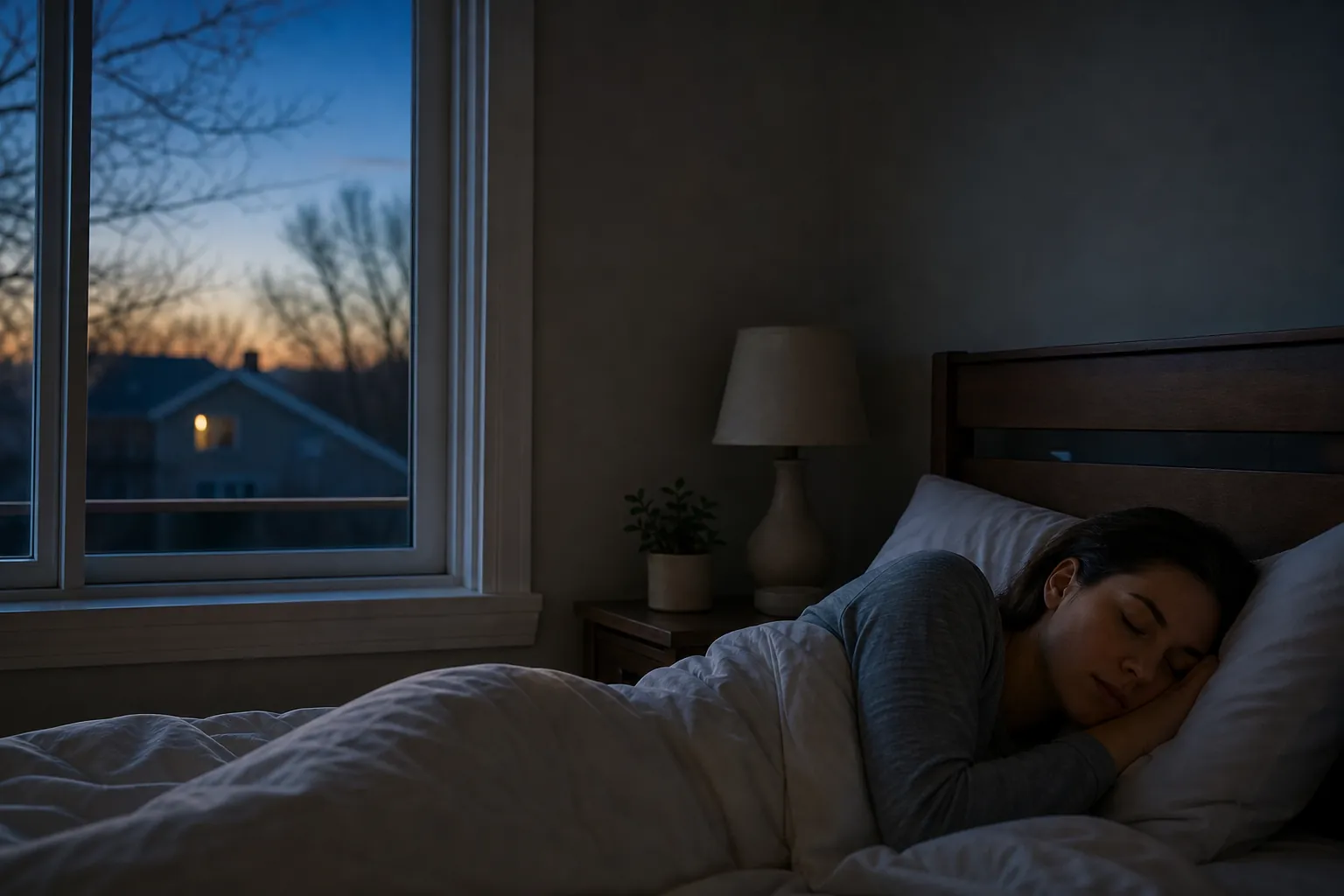
The key idea is the relationship between inside and outside timing. The outside world moves through light and dark. Your internal clock helps organize when you feel ready for sleep or waking.
Clock time and environmental light are related, but they aren't identical. A bedtime is a chosen time on a schedule. Light and darkness are features of the setting around that schedule.
For example, saying that bedtime is late describes a schedule. Saying that the surroundings are still light describes an environmental cue. Neither detail alone establishes why a person cannot sleep well.
The NHLBI overview supports the broad role of light and darkness. It does not provide a personal plan for light exposure. It also does not establish a required brightness or exact duration.
That limit matters when reading advice that sounds precise. Knowing that light is a cue does not settle its timing for you. A personal sleep concern may need review before choosing a treatment.
Related context appears in Massachusetts mental health day treatment guide.
Why Do Eating And Physical Activity Count As Cues?
Eating and physical activity count as cues because the body uses their timing when aligning sleep and waking. NHLBI includes both alongside light and darkness. Their role does not select treatment; choosing outpatient mental health care and understanding adult IOP care cover different decisions.
Meals and movement are familiar parts of daily life. In this context, the focus is when they happen. The source identifies timing cues, rather than a specific diet or exercise program.
A meal description and a meal time answer different questions. One describes what you ate; the other describes your daily pattern. This page addresses the pattern, without claiming that certain foods reset sleep.
The same distinction applies to physical activity. Knowing when activity occurs differs from measuring how hard someone exercises. NHLBI's overview does not prescribe an activity type, intensity, or duration for clock problems.
Consider a routine that shifts from day to day. Meal times and active periods may be among the details that change. That description can help explain the routine without proving what caused poor sleep.
These cues belong in the larger picture of sleep timing. They aren't a test you can pass or fail. A disrupted routine is not a moral fault, and one changed meal does not establish a disorder.
What Does Being Out Of Sync With Your Environment Mean?
Being out of sync means sleep and wake timing do not align with the surrounding environment. NHLBI says this mismatch can involve difficulty sleeping or poor sleep quality. Understanding the mismatch is separate from Comparing day treatment and structured outpatient care and choosing mental health outpatient care.
The phrase describes a relationship, rather than a judgment about discipline. Someone's internal sleep timing may not match the demands around them. The concern becomes clearer when looking at sleep and daily function together.
NHLBI describes circadian rhythm disorders as problems with this alignment. Sleep disruption that interferes with daily activities may suggest such a disorder. A professional assessment is needed to sort out the cause.
Difficulty sleeping and poor sleep quality are related but distinct descriptions. One concerns trouble sleeping; the other concerns how well sleep goes. Neither description alone identifies a specific clock problem.
Useful distinctions keep the discussion focused without turning observations into a diagnosis. The following details describe different parts of the same concern.
- Sleep timing describes when sleeping and waking tend to occur.
- Sleep quality describes how well sleep goes during that period.
- Daily interference describes the effect on usual tasks and responsibilities.
Does A Changed Routine Always Mean A Sleep Disorder?
A changed sleep routine does not always mean a circadian rhythm disorder. NHLBI says disruptions can be temporary or long term, with several possible causes. Neither a routine change nor information about mental health PHP or information about adult IOP can establish a sleep diagnosis.
NHLBI names sleep habits, jobs, and travel as possible sources of temporary disruption. Longer-term problems may relate to aging, genes, or a medical condition. These are possible explanations, not conclusions about any one reader.
A change in schedule and a lasting disorder are different ideas. A schedule change tells you that daily timing shifted. A diagnosis asks more, including how sleep and daily activities are affected.
Duration matters to the overall story, but this overview gives no diagnostic cutoff. There is no supported number of difficult nights to apply here. Avoid using an invented deadline to label the problem.
You also don't need to assign a cause before seeking help. A health professional can review sleep habits and the broader concern. NHLBI notes that testing may sometimes be part of that review.
The useful middle ground is neither alarm nor dismissal. One disruption does not establish a lasting disorder. At the same time, persistent trouble that limits daily life deserves attention rather than blame.
What Can You Learn From Your Daily Sleep Pattern?
A daily sleep pattern can show how sleep, light, meals, and activity fit together. Those details help describe the concern, but they cannot diagnose its cause. Daily observations serve a different purpose from choosing outpatient mental health services or Comparing day treatment and structured outpatient care.
NHLBI says a doctor may ask about sleep habits during assessment. That makes ordinary descriptions useful, even without technical terms. You can explain what has changed and how daily life feels different.
There is no need to create a perfect record before seeking help. A formal tracking routine is not required by this overview. Existing observations may simply provide a starting point for discussion.
The goal is to describe, rather than interpret every detail. A later meal and a later bedtime can occur together. That pairing alone does not prove that one caused the other.
- Notice when sleep and waking tend to occur in daily life.
- Describe light, meals, and activity as parts of the broader routine.
- Explain how sleep concerns affect alertness, memory, or usual tasks.
- Mention a recent change without assuming that change explains everything.
When Should Sleep Timing Problems Get Professional Attention?
Sleep timing problems deserve professional attention when they disrupt daily activities or raise safety concerns. NHLBI describes daytime sleepiness, reduced alertness, and memory or decision problems among possible symptoms. Choosing outpatient mental health care and understanding adult IOP services do not replace a sleep assessment.
A doctor may review sleep habits and consider further tests. NHLBI notes that assessment can include a sleep study or other tests. A treatment plan depends on the type and cause of the problem.
That does not mean everyone with a shifted routine needs testing. It means that testing is one possible part of assessment. A general article cannot decide what evaluation fits an individual.
NHLBI warns that untreated circadian rhythm disorders can contribute to road or workplace accidents. Marked sleepiness or reduced alertness makes safety part of the concern. These symptoms should not be dismissed as a lack of effort.
An urgent assessment addresses a pressing concern that cannot wait for routine review. Crisis support is a separate resource when emotional distress becomes acute. NIMH's help guidance describes pathways to support and emergency care.
Call 911 for immediate danger or an emergency, or 988 for the Suicide and Crisis Lifeline. Do not wait for outpatient admission during a crisis. MVBH does not provide emergency, inpatient, or overnight care.
Questions about next steps? Call MVBH at 978-233-9597 or review php.
Frequently Asked Questions
Is The Body Clock The Same As A Bedtime?
The body clock is an internal timing system, while bedtime is a planned time to sleep. NHLBI describes the clock as helping tell the body when to sleep or wake. A chosen bedtime and internal timing may not match. That mismatch alone does not establish a diagnosis or explain every sleep concern.
Can Someone Sleep Poorly Without An Obvious Schedule Change?
An obvious schedule change is not required for a sleep concern to deserve review. NHLBI describes several possible contributors to circadian problems, including medical conditions, aging, and genes. A lack of recent travel or changed work hours does not settle the cause. A health professional can assess the broader pattern.
Does Knowing About Timing Cues Tell Me When To Use Light?
Knowing that light is a timing cue does not provide a personal light-treatment schedule. The supplied NHLBI overview identifies environmental signals but gives no individual exposure plan. It says treatment depends on the type and cause of the disorder. Exact light timing, duration, or equipment should not be inferred from this general explanation.
Does A Sleep Study Replace A Discussion Of Daily Habits?
A sleep study does not make the discussion of daily habits irrelevant. NHLBI says a doctor may ask about sleep habits and may suggest a sleep study or other tests. These are parts of assessment, rather than competing choices. The overview does not say that every person with sleep timing concerns needs a study.
Does This Information Describe A Sleep Specialty At MVBH?
This information is general sleep education, not evidence of a sleep specialty at MVBH. Merrimack Valley Behavioral Health provides outpatient mental health services. Its verified services do not establish a dedicated circadian assessment or treatment program. A sleep concern may need evaluation by a health professional who can assess its possible causes.
Sources
Editorial status
Approved by Clinical Staff
Written by Tim Francis. This guide is educational. Read our clinical review and sources policy.
