

Postpartum depression can affect mood, sleep, concentration, relationships, and the ability to manage daily responsibilities. When weekly therapy does not feel like enough, a virtual intensive outpatient program may provide more structure while allowing you to remain at home.
A virtual postpartum depression IOP in Massachusetts can include scheduled therapy sessions several days per week. It may be appropriate for adults who need consistent support but do not require overnight care. An assessment is the best way to determine whether this level of treatment fits your symptoms, safety needs, schedule, and recovery goals.
MVBH offers virtual programming for adults across Massachusetts. In-person adult programs are available in Amesbury, Massachusetts. People seeking broader information about levels of care can also review the mental health program guide for Massachusetts adults.
Who May Qualify for Virtual IOP
Virtual IOP may be considered when postpartum symptoms interfere with everyday functioning and outpatient appointments alone are not providing enough structure. This can include persistent sadness, anxiety, irritability, guilt, withdrawal, difficulty concentrating, or feeling disconnected from yourself or your baby.
Eligibility is not based on a single symptom. Admissions staff consider the intensity and duration of symptoms, current safety concerns, available support at home, previous treatment, and whether you can participate effectively through a secure virtual format.
A clinician referring a patient may share relevant treatment history, current symptoms, risk information, and the reason a higher level of support is being considered. The admissions process can then help clarify whether virtual IOP, in-person care, or another option is appropriate.
Virtual care may not be suitable when someone needs medical stabilization, continuous supervision, or immediate crisis intervention. If there is imminent danger, call 911 or go to the nearest emergency department. For non-emergency program questions, an assessment can help identify an appropriate next step.
Learn more about postpartum depression symptoms and treatment and MVBH support for perinatal adults.
What a Typical Treatment Day Involves
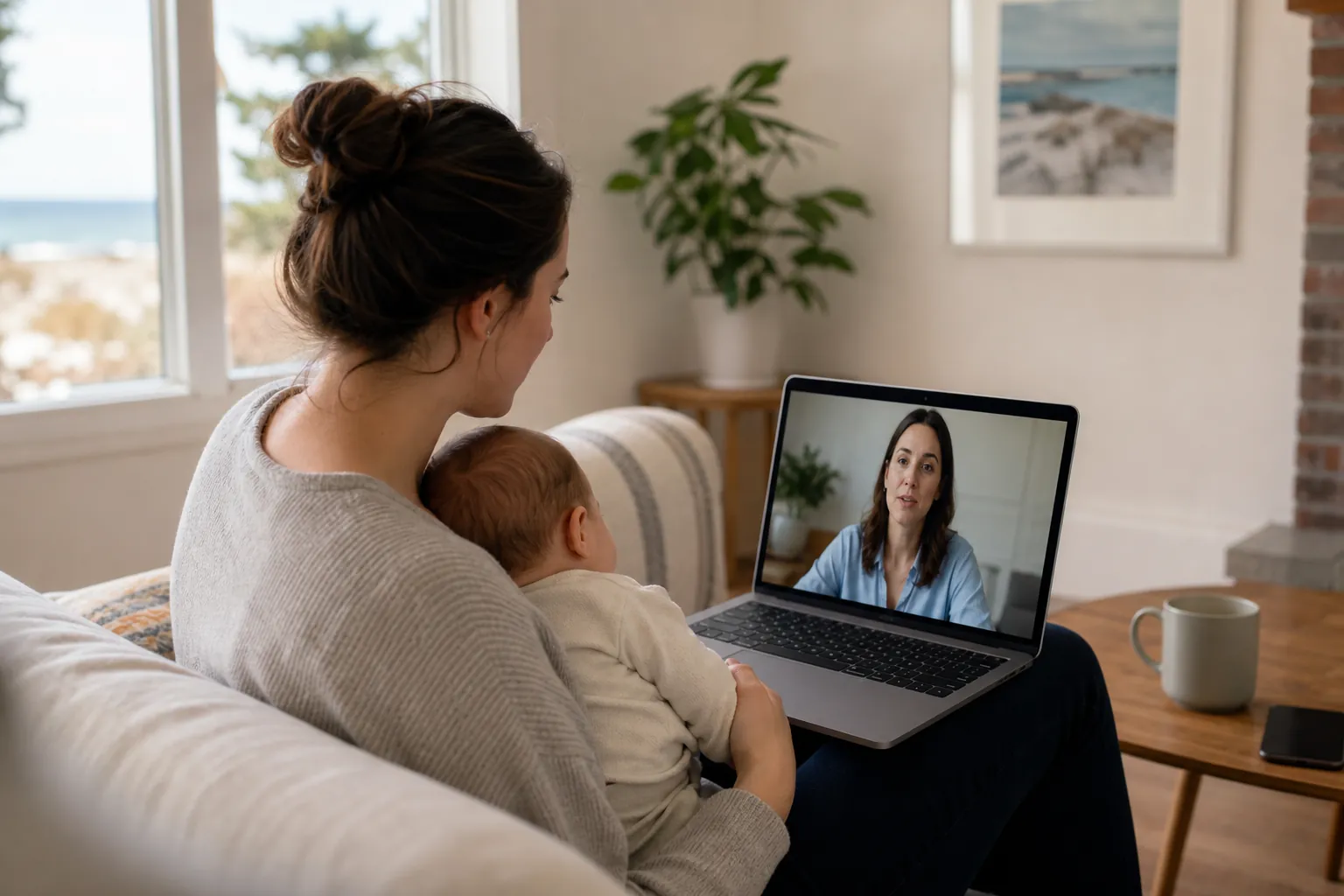
A virtual IOP treatment day generally follows a planned schedule rather than an open-ended video call. Participants sign in from a private location and attend structured clinical sessions. Exact schedules and services vary according to the program and individualized treatment plan.
A treatment day may involve:
- Group therapy focused on emotional regulation, coping skills, relationships, boundaries, or managing stressful thought patterns
- Opportunities to understand postpartum mood changes and identify personal triggers or warning signs
- Individual check-ins or therapy when included in the treatment plan
- Medication-related support when clinically appropriate and available within the program
- Goal setting and practical planning for using new skills between sessions
- Coordination with established outpatient professionals when proper consent is in place
- Discharge planning for continued support after intensive treatment ends
Virtual participation still requires focused attendance. Feeding needs, infant care, and postpartum recovery are real considerations, but participants should expect to engage in sessions without routinely multitasking. Admissions staff can explain attendance expectations before enrollment so you can decide whether the format is workable.
If you are considering care now, call 978-233-9597 to discuss virtual program options and the assessment process.

Creating Privacy and Childcare Coverage
Joining from home removes travel time, but it does not remove the need for privacy. Group members may discuss sensitive experiences, so headphones and a quiet space can help protect confidentiality and support active participation.
Before starting, identify where you would attend sessions and who could help with childcare. A separate room with a door is ideal when available. If that is not possible, consider a bedroom, home office, or another private location where conversations cannot be easily overheard.
Arrange dependable coverage during treatment hours whenever possible. A partner, relative, trusted friend, or childcare provider may be able to help. It is also useful to create a backup plan for schedule changes, feeding needs, pediatric appointments, or a caregiver becoming unavailable.
Technology preparation matters too. Test your internet connection, camera, microphone, charger, and headphones before the first session. Ask admissions what device, platform, and physical location requirements apply. Joining from a parked car, public area, or shared workplace may not provide adequate privacy or consistency.
If home-based care cannot offer sufficient privacy or uninterrupted attendance, discuss alternatives during your assessment. MVBH's in-person adult programs are located in Amesbury. Some adults may also want to ask about the women's PHP program if they need a different degree of structure.
Verify Benefits Before Enrollment
Insurance coverage for virtual behavioral health treatment depends on the specific plan, medical-necessity criteria, network status, and requested level of care. Do not assume that virtual sessions are covered in the same way as routine outpatient therapy.
Before enrollment, ask for a benefit review that addresses the proposed program. Helpful questions include whether authorization is required, whether deductibles or copayments apply, and whether there are limits related to virtual services. Verification provides useful information, but it is not a guarantee of payment.
You may be asked for your insurance card, identifying information, and details about prior or current treatment. Providing accurate information can help the admissions team review benefits and discuss possible financial responsibilities before care begins.
If a clinician is making the referral, timely records may support the review process. Ask what documentation is needed and where it should be sent through an approved, secure method.
Deciding Whether Home-Based Care Is Enough
The right level of care balances symptom severity, safety, treatment frequency, and your ability to participate. Staying home can reduce transportation barriers and make treatment more accessible during postpartum recovery. However, convenience should not replace an honest assessment of whether the setting offers enough support.
Consider whether you can attend consistently, speak openly, remain safe between sessions, and follow a treatment plan outside program hours. Also consider whether someone can help if symptoms worsen or caregiving demands interrupt treatment. Admissions staff can review these factors without expecting you to determine the correct level of care alone.
Virtual IOP can be one part of a broader plan that includes medical follow-up, individual therapy, medication management when appropriate, peer or family support, and ongoing postpartum care. Coordination among professionals can help clarify roles and maintain continuity.
Take the Next Step With MVBH Admissions
You do not need to wait until symptoms become unmanageable to ask about structured care. MVBH admissions can discuss current concerns, virtual participation requirements, and whether an assessment for IOP or another program may be appropriate.
Call admissions confidentially at 978-233-9597. You can also request free insurance benefit verification before enrollment. Virtual programs serve adults across Massachusetts, while MVBH's in-person adult programs are in Amesbury, Massachusetts.
For broader information about finding mental health care, see NIMH guidance on getting help.
