

Evaluating virtual mental health iop with hearing access needs means checking communication and care fit. For adults in Amesbury, MA, a remote format alone doesn't establish access. MVBH offers Virtual IOP, but specific tools aren't confirmed here. Talk about your needs before relying on captions, interpreters, or other support.
What Should You Know About virtual mental health iop with hearing access needs?
Start with two separate issues: clear communication and suitable mental health care. A screen connection doesn't settle either issue on its own. Review the Virtual IOP care option and use mental health admissions to discuss your needs. No specific hearing support should be assumed from the program's name.

IOP means intensive outpatient program, called Half Day Treatment at MVBH. PHP means partial hospitalization program, called Full Day Treatment here. These are outpatient options, without an overnight stay. The terms describe care options, not a confirmed schedule for you.
Hearing access involves more than making a voice louder. You may hear speech yet miss words or changes in speakers. You may rely on sign language, text, lipreading, or several methods. Those differences matter when considering a remote setting.
Keep access fit separate from whether treatment meets your needs. A program may sound suitable while its communication setup remains unclear. A clear video connection may still leave treatment needs unresolved. Neither issue should stand in for the other.
Treatment choices depend on your needs and health situation. A mental health professional can help weigh those factors. General guidance from NIMH on choosing mental health care supports this personal approach. It doesn't confirm any hearing tools at MVBH.
You don't need a perfect description before making contact. Everyday examples can make the concern easier to understand. Missing speech when people talk at once is one example. Needing written details after a spoken explanation is another.
The goal is a clear picture of possible participation. That includes receiving information, sharing your thoughts, and following changes. It also includes knowing what remains unresolved before admission.
What Communication Needs Matter Before Admission?
Describe how you receive speech and share your own thoughts. Access needs can differ across a call, video session, or group. Use mental health admissions to discuss participation needs, and contact MVBH care for an initial call. You don't need to gather records before reaching out.
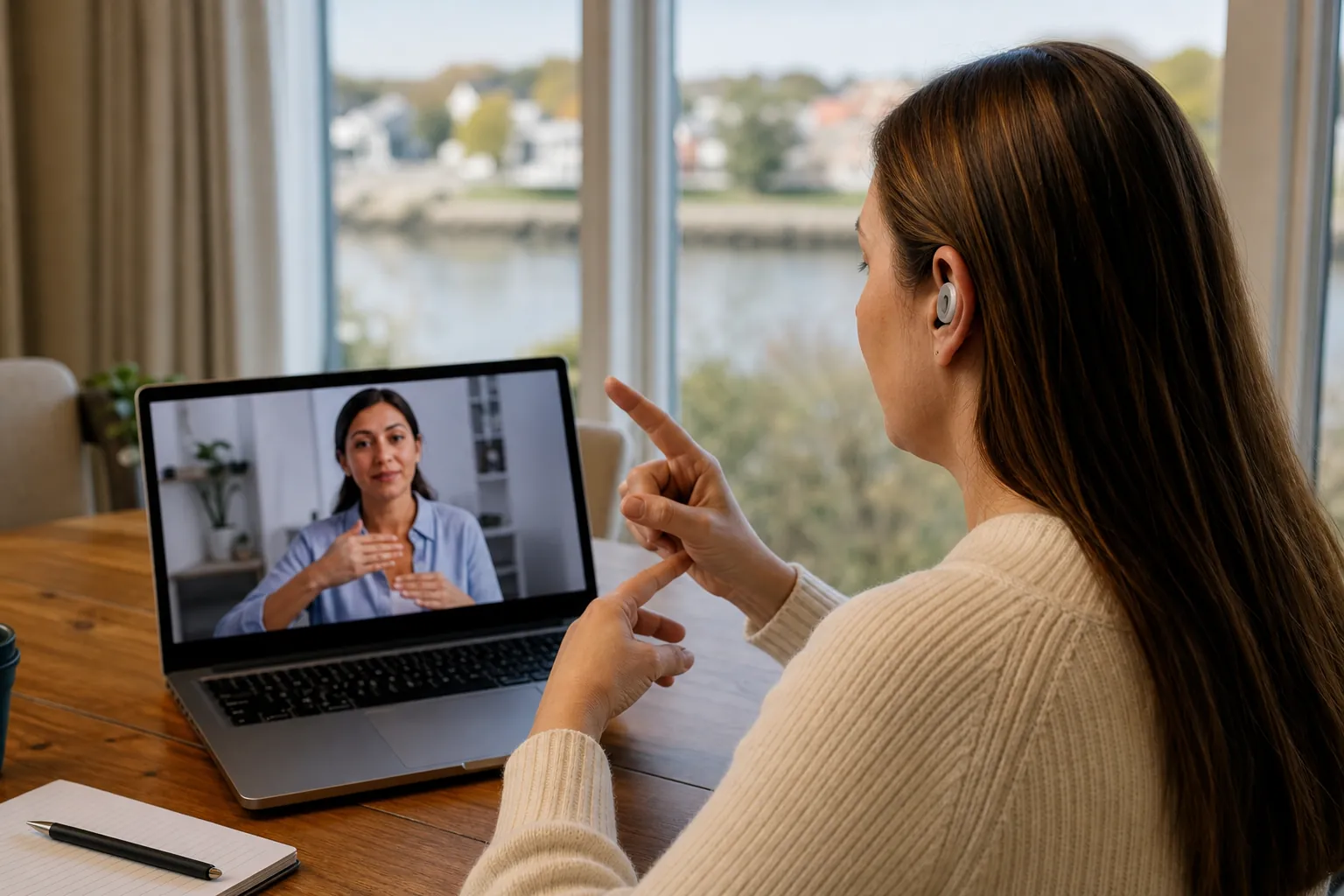
Broad labels may leave important details unclear. Two people with hearing loss may use different communication methods. One may prefer clear speech with a visible face. Another may need sign language or accurate text access.
A familiar phone call may work differently from remote care. Background noise, fast speech, and changing speakers can affect understanding. Think about the conditions that help you follow speech. You can describe them in plain words during a conversation.
- You may need each speaker's face to stay clearly visible.
- You may follow speech best when one person speaks at a time.
- You may need text access rather than louder sound alone.
- You may need time to read before giving a spoken response.
- You may use different communication methods for different kinds of information.
These examples describe possible needs, not services confirmed at MVBH. They aren't a checklist you must finish before calling. A simple explanation of what works can begin the discussion.
Receiving words and understanding their meaning are separate concerns. A sentence may be audible while a key detail remains unclear. Treatment conversations can include personal topics and unfamiliar terms. Clear communication should leave room to pause and clarify meaning.
Access needs may change with the setting or task. Following one speaker can differ from following several people. Reading a short notice differs from tracking a live exchange. Those differences deserve attention when considering participation.
Don't treat silence as proof that communication is working. A person may be waiting, reading, or missing part of the exchange. Your preferred way to signal a gap matters too.
Why Shouldn't Accessibility Tools Be Assumed?
A remote format doesn't confirm captions, interpreters, transcripts, or device support. Tool availability and usefulness are separate issues that need clear review. The Virtual IOP care option describes the service pathway. Use contact MVBH care to discuss access needs without assuming a particular feature is available.
Captions are text that represents spoken words on a screen. An interpreter conveys communication between languages, such as English and sign language. These supports serve different needs and aren't interchangeable for everyone. Neither support is confirmed as available at MVBH.
A feature on your own device may have practical limits. It may work for some sounds and miss others. It may cover your view of a speaker's face. Its usefulness may change with the software used for sessions.
Tool presence also doesn't establish clear communication. Text can appear while important meaning remains hard to follow. A delay can make it difficult to respond naturally. An unfamiliar layout can split attention between speech and text.
Consider how any proposed tool handles the full exchange. That includes your own comments and changes in speakers. It includes short remarks, names, and spoken directions. Access needs extend beyond the longest speaker's main point.
Written notes and live text serve different purposes. Notes may help preserve a few key details afterward. Live text may help someone follow the exchange as it happens. One shouldn't be treated as a substitute without careful review.
The same caution applies to personal hearing devices and headphones. Owning a device doesn't establish compatibility with a remote platform. A familiar setup at home may behave differently during a session. No specific device or connection is endorsed here.
Keep unconfirmed features clearly marked as unresolved. That prevents a possible option from becoming an assumed service. It also allows access fit to remain part of the admission discussion.
How Can Participation Stay Clear During Remote Care?
Clear participation means following the exchange and having a workable way to respond. It also means recognizing when part of the discussion was missed. Review the Virtual IOP care option alongside mental health admissions. Any communication approach needs review rather than an assumption that sessions use it.
A practical discussion can focus on the flow of communication. Speaker changes, pauses, and visual cues may affect access. Written material can create another layer to follow. These are participation details, not evidence of a particular treatment method.
- Identify how you can tell who is speaking during an exchange.
- Clarify how a missed word or unclear point can be addressed.
- Consider how reading text affects your ability to watch the speaker.
- Review how you can enter the conversation without missing the next point.
- Keep any unresolved communication issue separate from the decision about admission.
This sequence is a way to organize a care discussion. It isn't homework to complete before contacting MVBH. It doesn't describe rules currently used in its sessions.
Following a discussion involves more than receiving its main topic. Small details may change the meaning of a comment. A shift in tone may be hard to catch. You should have space to explain those gaps honestly.
Talk therapy aims to help people work with troubling thoughts and feelings. It can address behavior and ways to cope with stress. NIMH's explanation of talk therapy describes these general aims. It doesn't establish MVBH's specific methods or session format.
Clear communication supports a meaningful discussion about those aims. Understanding a prompt differs from feeling ready to answer it. You may understand every word and still need a pause. Access review should leave room for both concerns.
Missed information should remain a communication issue, without blame. Repeated guessing can hide the extent of a gap. A workable plan needs a clear way to acknowledge that gap.
How Do Home Setup And Location Affect Participation?
Consider sound, lighting, privacy, and the place where you'll attend. Virtual participants must be physically in Massachusetts during MVBH sessions. Review the Virtual IOP care option and contact MVBH care when discussing location or access concerns. Living in Massachusetts doesn't replace being there during each session.
A home setup can support access or add distractions. Light behind a speaker can make their face harder to see. Noise can compete with speech coming through a device. A small screen may make faces and text harder to follow.
These are practical considerations, not technical requirements confirmed by MVBH. You don't need to buy equipment before making contact. A new device alone wouldn't settle the broader access question.
- A steady view of the screen can make visual information easier to follow.
- A quiet space can reduce competing sound during a spoken exchange.
- Readable text needs enough screen space without blocking important visual cues.
- A private setting limits the chance that others overhear personal information.
- A change in location can change sound, light, and available privacy.
Privacy and hearing access may pull in different directions. A shared room may have better lighting or less noise. It may offer less privacy for a personal discussion. A secluded room may be private yet harder for communication.
Headphones may help some setups while creating problems in others. They may need to work with a person's hearing devices. Don't assume a particular model or connection will be suitable. No equipment recommendation is being made here.
Travel also matters when considering remote care. Being away from Amesbury may still mean staying within Massachusetts. Crossing a state line changes the location requirement. Enrollment or a Massachusetts home address doesn't remove that limit.
Home conditions are one part of the overall review. They don't establish the right level of care. They also don't confirm that needed communication tools are available.
How Should Remote And In-Person Care Be Compared?
Compare formats by communication fit and care needs, rather than convenience alone. Neither remote nor in-person care is automatically better for hearing access. Review the Virtual IOP care option and the in-person IOP care option. Specific access arrangements remain a separate matter for discussion.
Remote care places communication within a screen and audio connection. You may be able to control parts of your home setting. You may have less control over the speaker's sound or view. These differences can matter even with a familiar device.
In-person care removes some screen-related issues but can introduce others. Room noise, distance, and changing views may affect understanding. Seeing someone in the same room doesn't establish full access. A comparison should avoid assuming either format solves every barrier.
Consider the effort required to follow each kind of exchange. A format may be technically usable yet hard to sustain. Another may feel clearer but create different practical limits. These concerns deserve discussion without a predetermined answer.
The treatment decision should reflect your needs and health situation. NIMH guidance on treatment choice supports making that decision with a mental health professional. It doesn't identify the best format for every person. Hearing needs alone don't determine a level of care.
A clinician needs to hear about your current concerns too. Work, sleep, relationships, and daily life may be relevant. Access details help explain how you could take part. They don't replace a discussion of why you want help.
A format comparison can remain open while details are reviewed. Interest in remote care doesn't establish that participation will work. Interest in in-person care doesn't establish that support is available. Both require clear information rather than hopeful assumptions.
The useful comparison is specific to your circumstances. It weighs communication, treatment needs, and practical limits together. It doesn't turn one preferred feature into the whole decision.
What Happens Between Benefits Review And Admission?
Benefits review concerns your plan, while admission concerns your care and participation needs. They are separate steps, and coverage varies by plan. Use insurance benefits review for the coverage pathway. Use mental health admissions for the separate discussion of treatment fit and access concerns.
Financial information doesn't resolve whether communication will work. An access discussion doesn't settle what insurance will pay. Keeping these issues separate helps avoid a false sense of completion. Progress on one issue may leave another unresolved.
Benefits verification is a review of insurance information. It isn't the same as admission to a program. It also shouldn't be treated as a final coverage decision. The terms of your specific plan still matter.
A general statement about remote care may leave important details unclear. Coverage can depend on the service and plan terms. Don't treat coverage for another visit as proof about this program. This article doesn't identify any participating insurance carriers.
Admission involves talking about your needs and possible participation. It doesn't follow automatically from finding the program online. It doesn't follow automatically from a benefits review either. Unresolved hearing access needs should remain visible during that process.
You may have a preferred format before the discussion begins. That preference is useful information, rather than a final care decision. A clear description can help explain what matters to you. There's no need to prepare a formal intake script.
Some adults begin with a coverage concern. Others begin with doubts about following a remote conversation. Either concern is a valid reason to make contact. You don't need every issue settled before the first call.
Keep confirmed information separate from possibilities while plans take shape. A potential tool isn't a confirmed access arrangement. A benefits finding isn't admission. That distinction protects a clear understanding of the next step without implying a particular outcome.
What If Care Is Urgent Or Access Remains Unclear?
Unresolved access needs deserve attention, but a crisis shouldn't wait for admission. MVBH doesn't provide emergency care. Use contact MVBH care for non-emergency program information and mental health admissions for care discussions. Seek urgent assessment when concerns need prompt review; immediate danger requires emergency help.
Urgent assessment means a prompt review of current safety and care needs. It differs from routine planning for a future program. It also differs from crisis support during emotional distress. These paths serve different purposes and shouldn't be treated as interchangeable.
For emotional distress or thoughts of suicide, call or text 988. For immediate, life-threatening danger, call 911 or go to an emergency department. NIMH guidance on immediate help distinguishes these resources. Don't wait for benefits review or admission during a crisis.
Texting 988 provides a text-based route to crisis support. That option doesn't establish access features for other services. It also doesn't replace emergency care for life-threatening danger. Keep each resource's role clear when deciding how to seek help.
MVBH provides outpatient care rather than a place to stay overnight. It doesn't offer residential, inpatient, overnight, or emergency services. It also doesn't provide onsite detox or withdrawal-management care. Its Virtual IOP should never be treated as emergency coverage.
For non-emergency planning, uncertainty can be discussed without forcing a decision. A missing access detail is a reason for clarification. It isn't proof that remote care will work or fail. It also isn't a reason to hide your communication needs.
MVBH is located at 77 Elm St, Amesbury, MA 01913. Call 978-233-9597 to talk about Virtual IOP and hearing access needs. You don't need a written plan before calling. Specific tools, care fit, coverage, and admission remain matters for separate review.
Frequently Asked Questions
Does MVBH confirm captions or interpreters for Virtual IOP?
This article doesn't confirm captions, interpreters, transcripts, or specific device support. Virtual care alone doesn't establish those features. A tool's availability and its usefulness for you are separate concerns. Talk about your communication needs before relying on any feature. MVBH offers Virtual IOP, but no dedicated hearing access service is described here.
Can I attend Virtual IOP while outside Massachusetts?
No. MVBH Virtual IOP participants must be physically in Massachusetts during sessions. A Massachusetts address doesn't replace that requirement. Travel can change your eligibility to participate from a particular location. Being outside Amesbury is different from being outside the state. Location and hearing access both need attention when considering remote participation.
How can I explain my hearing access needs before admission?
Describe what helps you follow speech and share your thoughts. You might rely on visible faces, text, sign language, or clear speaker changes. Everyday examples can show where communication breaks down. You don't need records or a prepared script before calling. Discussing needs doesn't establish that a specific support is available.
Is in-person IOP always better for hearing access?
Neither format is always better for hearing access. Remote care may involve screen, sound, and text limits. In-person care may involve room noise, distance, or unclear speaker changes. Compare actual communication needs alongside treatment needs. A mental health professional can help review care fit. Hearing needs alone don't determine the right program.
What happens after benefits review?
Benefits review and admission remain separate steps. Coverage varies by plan, and verification isn't a final coverage decision. Admission requires a separate discussion of care needs and possible participation. Hearing access concerns also need review. A benefits finding doesn't confirm a communication tool or establish that Virtual IOP is suitable for you.
What should I do if I need crisis help?
Don't wait for Virtual IOP admission or benefits review during a crisis. For emotional distress or thoughts of suicide, call or text 988. For immediate, life-threatening danger, call 911 or go to an emergency department. Urgent assessment addresses concerns needing prompt review. MVBH doesn't provide emergency, inpatient, residential, or overnight care.
Editorial status
Approved by Clinical Staff
Written by Tim Francis. This guide is educational. Read our clinical review and sources policy.
