

How Do Short-Term And Chronic Insomnia Differ?
Short-term and chronic insomnia differ mainly in duration and weekly frequency. NHLBI describes short-term insomnia as lasting days or weeks. Chronic insomnia has a longer, frequent pattern and needs clinical assessment. Separate guides cover PHP and IOP differences and choosing outpatient mental health care, rather than sleep diagnosis.
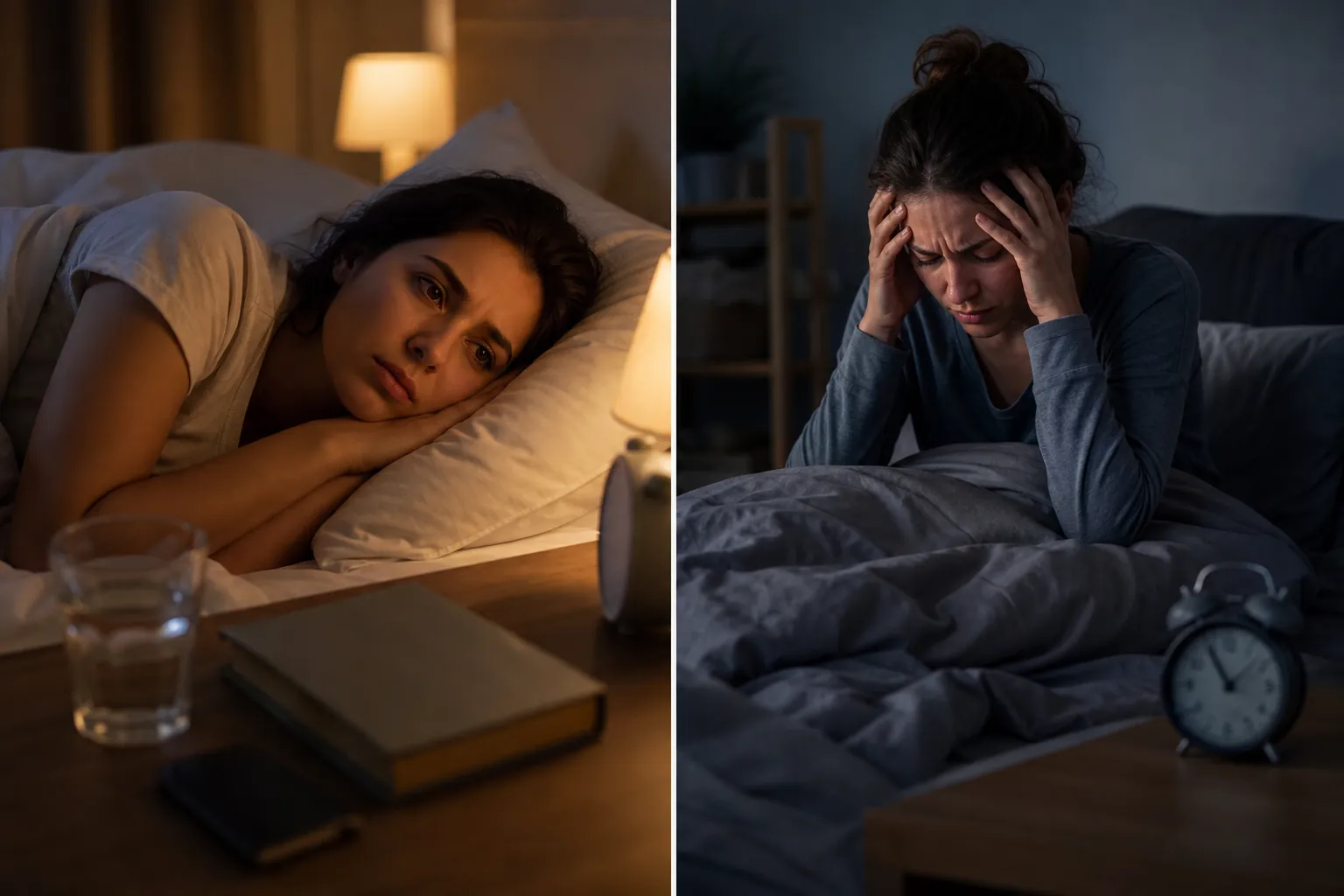
Insomnia means trouble falling asleep, staying asleep, or getting good-quality sleep. These problems happen despite having time and a suitable place to sleep. The term describes more than a night when bedtime was late.
NHLBI says chronic insomnia occurs three or more nights each week. The pattern lasts more than three months. Another health problem cannot fully explain the sleep trouble. Those parts belong together when describing the chronic pattern.
Short-term insomnia may follow stress or a schedule or environment change. The source says the problem can last a few days or weeks. That description does not predict when one person's sleep will improve.
A difficult night cannot establish the longer pattern on its own. Likewise, a rough week does not show three months of symptoms. Keeping the time frame clear helps separate a current struggle from a lasting pattern.
| Feature | Short-Term Insomnia | Chronic Insomnia |
|---|---|---|
| Duration | A few days or weeks | More than three months |
| Weekly frequency | No threshold stated here | Three or more nights |
| Context | May follow stress or changes | Not fully explained by another health problem |
| Sleep opportunity | Time and suitable setting exist | Time and suitable setting exist |
| Diagnosis | Provider assessment | Provider assessment |
What Counts As Insomnia Rather Than Too Little Sleep?
Insomnia involves trouble sleeping despite enough time and a suitable environment. Too little time set aside for sleep is a different starting point. A provider can help clarify the difference. Broader service information appears in structured mental health day treatment in Massachusetts and what structured outpatient care involves for adults.

NHLBI's definition includes the chance to sleep, not symptoms alone. Someone may spend too little time in bed because of a busy evening. That detail alone does not establish insomnia. The question is what happens when a real sleep opportunity exists.
For example, staying up to finish a task can shorten sleep time. Lying awake with time available describes a different concern. These examples clarify the wording, rather than diagnose either person. A provider needs the broader sleep history.
Trouble staying asleep can matter even when falling asleep seems easy. Poor sleep quality can matter, too. The definition does not require every type of sleep trouble together. Describing the actual problem is more useful than forcing one label.
The setting also belongs in the picture. NHLBI names changes in the environment as a possible short-term cause. A changed setting may help explain when the problem began. The setting alone does not establish the duration or diagnosis.
The distinction is not a judgment about sleep habits or effort. Someone can make room for sleep and still struggle. Clear descriptions help a provider understand what the person experiences.
- Trouble falling asleep can occur despite having enough time for sleep.
- Trouble staying asleep can be part of an insomnia pattern.
- Poor sleep quality can matter even when sleep occurs.
How Do Weekly Frequency And Duration Work Together?
Weekly frequency and duration describe different parts of chronic insomnia. Frequency means how many nights sleep trouble occurs. Duration means how long that pattern lasts. Both matter in NHLBI's description. These details differ from how long structured mental health day treatment lasts or Full Day and Half Day Treatment differences.
Three difficult nights during one week describe that week's frequency. They do not show that the pattern lasted more than three months. The longer history remains a separate part of the description. Counting nights alone misses that distinction.
The reverse also matters when someone describes a long-standing concern. Sleep trouble may have appeared at times over several months. That statement does not reveal how often the trouble occurs each week. A provider may need more detail about both parts.
NHLBI uses the words more than three months for chronic insomnia. Exactly three months is not the same wording. That boundary is a description, not a reason to delay care. Sleep problems can deserve attention before that point.
The weekly threshold does not mean every night must be difficult. Three or more nights differs from a nightly requirement. An occasional better night does not, by itself, describe the overall pattern. The history across time gives a fuller picture.
It can help to separate what is known from what feels unclear. Someone may know the trouble began weeks ago but lack exact dates. That uncertainty can be shared with a provider. A perfect count is not needed to start discussing sleep.
- Weekly frequency describes how many nights sleep trouble occurs.
- Duration describes how long the recurring sleep pattern has lasted.
- Other health problems remain part of the provider's assessment.
Does A Stressful Week Explain Every Sleep Problem?
Stress may help explain short-term insomnia, but stress alone does not settle the diagnosis. NHLBI also names schedule and environment changes as possible causes. The full sleep history still matters. Separate resources explain choosing outpatient mental health care and what structured outpatient care involves for adults.
A person might notice sleep trouble after a stressful event. That timing can be useful to describe. It does not prove that stress explains every difficult night. NHLBI says short-term insomnia may be caused by stress, rather than always is.
Changes in a daily schedule provide another possible context. A changed sleeping environment is another. Neither detail replaces questions about sleep opportunity, weekly frequency, or duration. A possible trigger and the resulting pattern are different pieces of information.
A familiar trigger can make the problem feel easier to name. Still, knowing when sleep changed does not establish how long trouble will last. The source gives a general short-term time frame. It does not provide a personal countdown to better sleep.
The chronic description includes another important limit. Another health problem must not fully explain the sleep trouble. Sorting that out is a clinical task. A reader should not rule health problems in or out from timing alone.
Ordinary descriptions are enough when first discussing the concern. Someone can say that sleep changed during a stressful week. They can also explain that the problem continued afterward. There is no need to choose between a stress explanation and seeking assessment.
Keeping cause and pattern separate helps avoid quick conclusions. A stress link describes context. Nights per week and months of symptoms describe the course. A provider can consider those details together.
How Can Both Sleep Patterns Affect Your Day?
Insomnia can disrupt daily activities and cause daytime sleepiness. NHLBI also notes effects on memory and concentration. The duration label does not capture every daily difficulty. Broader mental health care information appears in PHP and IOP differences and structured mental health day treatment in Massachusetts, which do not establish a sleep diagnosis.
Short-term does not mean the sleep problem feels minor. A few days of trouble may still interfere with daily activities. The label describes time, not a score for how hard life feels. Daily effects deserve their own place in the discussion.
For example, someone might notice trouble staying focused while reading. Another concern could be feeling sleepy during daytime tasks. These illustrate NHLBI's general description, rather than prove insomnia caused a specific symptom. The cause still needs assessment.
Memory and concentration are related but different concerns. Someone may describe trouble recalling something or staying with a task. Using plain examples can make the concern clearer. There is no need to use clinical words to explain the change.
The nighttime and daytime accounts provide different kinds of information. One describes falling asleep, waking, or sleep quality. The other describes what the person notices during daily life. Neither account should replace the other.
A person does not need to wait for the chronic threshold to speak up. NHLBI describes daily effects as part of insomnia generally. Raising a concern early does not require claiming a diagnosis. It simply gives a provider more information to assess.
Likewise, a long duration does not measure every person's daily experience. Two people may use the same label but describe different problems. The useful focus is the person's actual sleep and daytime concerns.
How Does A Provider Assess The Sleep Pattern?
A healthcare provider may assess insomnia by discussing sleep habits and requesting a sleep diary. The review helps clarify symptoms, timing, and possible explanations. A calendar threshold alone cannot diagnose the condition. Broader guides discuss choosing outpatient mental health care and how long structured mental health day treatment lasts.
NHLBI says a provider may ask about sleep habits. That discussion can help distinguish limited sleep opportunity from trouble sleeping. It can also clarify what falling asleep or staying asleep feels like. The source does not set one required assessment format.
A sleep diary is a written record of sleep. A provider may request one to help understand the pattern. NHLBI does not make a completed diary a condition for seeking help. Someone can discuss sleep concerns before keeping any record.
The assessment also matters because another health problem may explain the symptoms. The chronic description expressly includes that distinction. A reader cannot settle that issue by counting nights. The provider's review adds context that a simple timeline lacks.
It is reasonable to describe uncertainty during the conversation. Someone may recall a general start date but no exact day. They may know that several nights are difficult without knowing every date. Those limits are part of an honest account.
The goal is a clearer picture, rather than passing a checklist. Duration, frequency, sleep opportunity, and daily effects each add information. No single detail tells the whole story. A provider can explain what further review may be needed.
- A provider may discuss sleep habits to understand the concern.
- A provider may request a sleep diary during the assessment.
- A provider considers possible health explanations before reaching a diagnosis.
Does A Chronic Pattern Change The Next Step?
A chronic pattern supports seeking assessment, not choosing a treatment program from duration alone. NHLBI describes several ways providers may help manage insomnia. The plan depends on clinical review. Separate pages explain Full Day and Half Day Treatment differences and choosing outpatient mental health care for broader care questions.
NHLBI says a provider may recommend healthy habits, including a regular sleep schedule. The source also names cognitive behavioral therapy for insomnia and medicines. These are general options, not personal treatment instructions.
A provider can discuss which approach fits the assessed concern. A reader should not infer a medication choice from the duration label. Nor does the label identify a specific therapy provider. General source information does not verify a local service.
Chronic describes a lasting pattern rather than an instruction to enter intensive care. The sleep timeline alone does not establish PHP or IOP fit. Those broader care decisions require a separate clinical assessment. This distinction keeps the sleep question from becoming a program recommendation.
MVBH offers adult outpatient mental health services, not a claimed insomnia specialty. The NHLBI treatment overview does not establish that MVBH offers sleep-specific therapy. Readers seeking sleep treatment can discuss the concern with a healthcare provider. The next step can begin with the symptom, without a self-diagnosis.
Urgent concerns should not wait for a duration threshold or admission decision. Seek urgent clinical assessment when symptoms raise an acute safety concern. Call 911 for immediate danger or a medical emergency, or 988 for Suicide and Crisis Lifeline support.
NIMH's help guidance distinguishes crisis support from routine paths to care. MVBH does not provide emergency or overnight care. For non-emergency sleep concerns, a provider can review the pattern and discuss appropriate next steps.
Questions about next steps? Call MVBH at 978-233-9597 or review php.
Frequently Asked Questions
Does One Good Night Rule Out Chronic Insomnia?
One good night does not, by itself, rule out the chronic pattern. NHLBI describes sleep trouble on three or more nights weekly, not every night. Duration and other possible health explanations also matter. A provider assesses the broader history rather than drawing a conclusion from one better night.
Can Poor Sleep Quality Count If I Fall Asleep Easily?
Poor sleep quality can be part of insomnia even when falling asleep is easy. NHLBI includes trouble falling asleep, staying asleep, or getting good-quality sleep. Adequate time and a suitable sleep environment remain part of the definition. A provider can assess the concern without requiring all three problems.
Should I Wait Until More Than Three Months To Seek Help?
You do not need to wait more than three months to discuss sleep trouble. That duration helps describe chronic insomnia; it is not a waiting period for care. NHLBI notes that insomnia can affect daily activities, memory, and concentration. Those concerns can be discussed while the sleep problem is still recent.
Do I Need A Finished Sleep Diary Before Contacting A Provider?
A finished sleep diary is not required by NHLBI's overview before seeking help. The source says a provider may ask you to keep one during assessment. You can start by describing the sleep problem in plain words. The provider can explain whether a record would help clarify your particular pattern.
Does Chronic Mean That Sleep Trouble Is Permanent?
Chronic describes the duration and frequency of the sleep problem, not a prediction that trouble is permanent. NHLBI lists ways providers may help manage insomnia. The label alone cannot predict one person's course or identify the right approach. An assessment can clarify the concern and support a discussion of care.
Sources
- Insomnia: What Is Insomnia?, NHLBI
- Help for Mental Illnesses, NIMH
Editorial status
Approved by Clinical Staff
Written by Tim Francis. This guide is educational. Read our clinical review and sources policy.
