

How Do Seasonal Depression And Holiday Stress Differ?
Seasonal depression follows a recurring seasonal pattern, while holiday stress centers on demands or events. A holiday date alone cannot explain SAD. When mood changes affect daily life, guides to depression care options and PHP and IOP differences offer care context, but neither can establish a diagnosis.

The National Institute of Mental Health, or NIMH, makes this distinction clear. Winter-pattern SAD relates to changes in daylight hours, not the holiday calendar. Holiday blues can involve sadness or anxiety around family visits, seasonal obligations, or changes in routine.
The two patterns can look alike on a difficult day. Feeling low during a gathering does not reveal the cause. A clinician looks beyond that moment to symptoms, daily impact, and the pattern across seasons.
Consider the difference between an event and a season. Sadness tied to an upcoming visit points to a different context than depression spanning the darker months. Neither example, by itself, gives enough information for a diagnosis.
| Feature | Seasonal Depression | Holiday Stress |
|---|---|---|
| Main pattern | Returns during a particular season | Linked to demands or events |
| Winter context | Changes in daylight hours | Holiday plans and expectations |
| Calendar clue | Can extend beyond holidays | Centers on holiday circumstances |
| Clinical meaning | A form of depression | Not the same as SAD |
| Reason to seek help | Persistent symptoms or daily impairment | Distress or daily impairment |
Which Symptoms Matter More Than The Holiday Label?
Persistent low mood, lost interest, and changes in sleep or appetite deserve attention beyond a holiday label. No single symptom proves SAD. If symptoms limit daily life, care options for depression and choosing outpatient mental health care explain care decisions without replacing an assessment of the seasonal pattern.
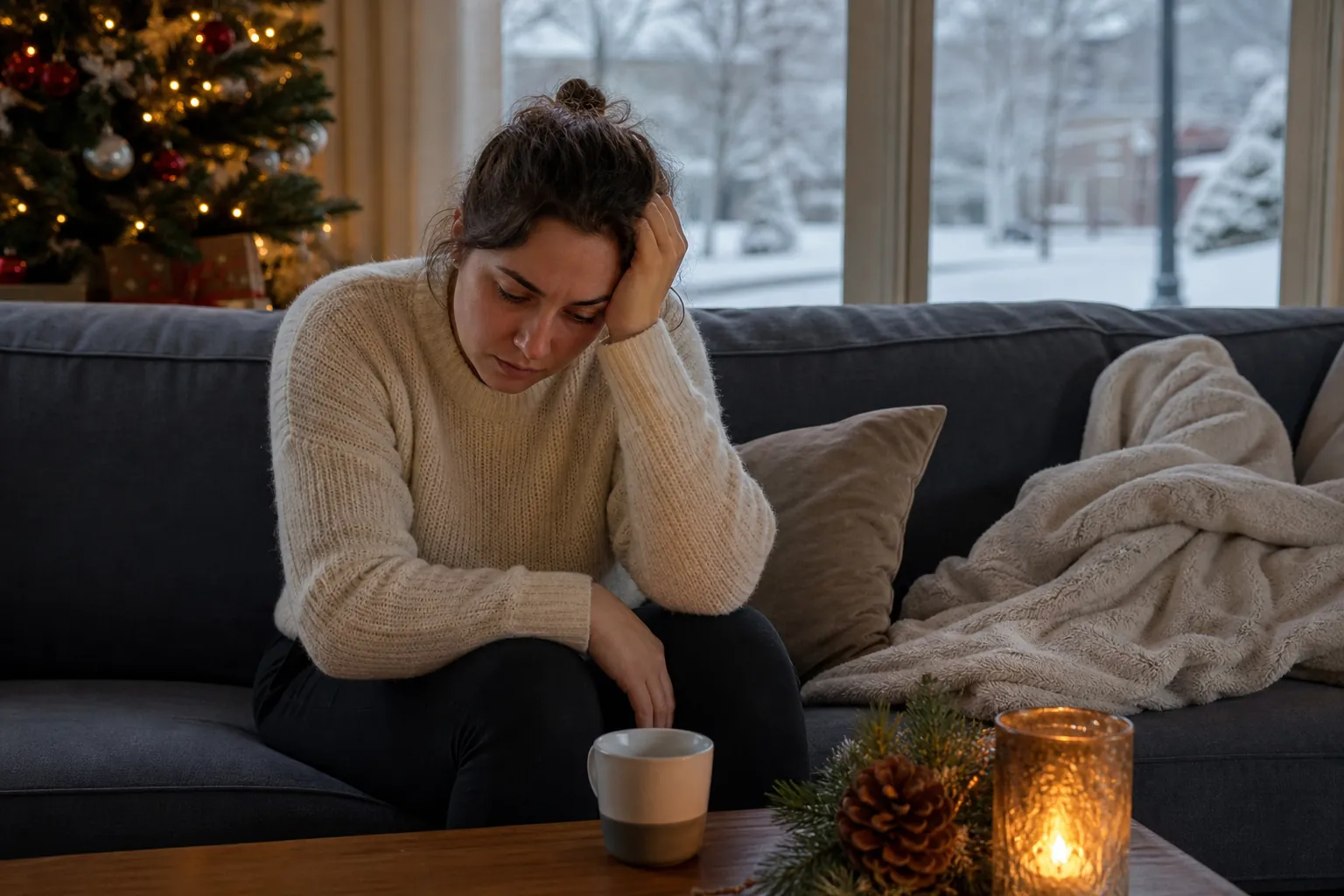
NIMH lists persistent sadness, anxiety, or an empty mood among depression symptoms. Other signs include low energy, hopelessness, and trouble making decisions. A person may lose interest in hobbies that once felt rewarding.
Winter-pattern SAD can bring oversleeping, overeating, and social withdrawal. Some people crave more carbohydrates or gain weight. These changes matter as part of a broader pattern, rather than as separate proof of seasonal depression.
For example, sleeping late after one busy gathering reveals little. Sleeping much more while losing interest in usual activities deserves closer attention. The difference rests on the whole picture, including how much daily life has changed.
The following changes are useful to recognize without turning them into a checklist. Not everyone with SAD has every symptom. A clinician can help sort out what the changes mean.
- Loss of interest can affect activities that usually bring pleasure.
- Low energy and trouble concentrating can make everyday tasks harder.
- Winter-pattern SAD can include oversleeping, overeating, and pulling away socially.
- Persistent hopelessness or feelings of worthlessness deserve prompt professional attention.
How Does Timing Help Separate SAD From Holiday Blues?
Timing helps distinguish SAD because clinicians look for depression that returns during particular seasons. One hard holiday period does not establish that pattern. Resources on depression treatment care levels and choosing an outpatient care setting address support options, while diagnosis requires a review of symptoms across time.
According to NIMH, winter-pattern symptoms often begin in late fall or early winter. They tend to go away during spring and summer. Symptoms can last for months, well beyond the holiday season.
A SAD diagnosis includes seasonal depressive episodes for at least two consecutive years. Seasonal episodes must also be more frequent than episodes at other times. These are clinical criteria, not a reason to delay getting help.
Not everyone with SAD has symptoms every year. A season without symptoms does not settle the question alone. A clinician reviews the broader history rather than relying on a single winter.
A change after holiday demands ease may help clarify the context. Symptoms continuing into later winter offer different information. Neither pattern is enough for self-diagnosis, and persistent depression deserves attention regardless of its label.
- Symptoms beginning before holiday plans may point beyond the holiday calendar.
- Mood changes lasting beyond gatherings deserve attention to the broader pattern.
- Repeated changes in the same season are useful clinical information.
- Depression at other times of year matters when reviewing seasonal symptoms.
Can Holiday Pressures And Seasonal Symptoms Happen Together?
Holiday pressures can be present during a seasonal depressive episode, so the distinction need not be either-or. Shared timing does not prove a shared cause. Guides to depression care options and selecting outpatient mental health support can add care context when both concerns affect daily life.
NIMH separates SAD from sadness or anxiety linked to seasonal stresses. Family visits and predictable schedule changes are examples of those stresses. Their presence does not establish SAD, even when they occur during darker months.
Someone may dislike holiday demands and also have a recurring winter mood pattern. The demands describe one part of the experience. The recurring loss of interest, sleep changes, and low mood describe another.
A missed gathering can have more than one meaning. Avoiding a tense visit differs from losing interest in nearly all social contact. The reason, wider pattern, and effect on daily life help make that distinction.
There is no need to rank one kind of distress as more valid. Holiday-linked sadness can be painful without being SAD. Seasonal depression also should not be dismissed as a reaction to a busy calendar.
- Distress about a family visit describes an event-linked concern, not a SAD diagnosis.
- Loss of interest across many activities deserves attention beyond one difficult gathering.
- Seasonal schedule changes are not the same as daylight-linked depression.
- Both the event context and the longer mood pattern can matter.
Why Does Daylight Matter More Than The Calendar?
Daylight matters because SAD relates to seasonal changes in day length, rather than specific holidays. Researchers are still studying the causes. For symptoms that disrupt daily life, comparing PHP and IOP care and depression care level options explain support choices, not the cause of an individual mood change.
NIMH describes research on brain chemicals and the body's daily rhythm. That rhythm helps organize sleep and waking across the day. Changes involving serotonin and melatonin may help explain seasonal mood and sleep changes.
Serotonin helps regulate mood, while melatonin helps regulate sleep and waking. These findings do not provide a home test for SAD. Feeling sleepy in winter cannot reveal a person's brain chemical levels.
Winter-pattern SAD occurs more often in places with shorter winter daylight hours. NIMH names New England as one such region. Living in Massachusetts, however, does not establish a diagnosis or explain every winter mood change.
SAD can also follow a summer pattern, though that pattern is less common. Summer symptoms can include trouble sleeping, poor appetite, anxiety, and restlessness. SAD therefore means a recurring seasonal form of depression, not simply feeling sad in December.
Researchers know less about summer-pattern SAD than winter-pattern SAD. Some proposed explanations remain untested. The careful conclusion is that seasonal patterns matter, while the full causes remain under study.
Does The Difference Change How Symptoms Are Treated?
The difference matters because treating SAD requires assessing depression and its seasonal pattern, rather than assuming holiday demands explain everything. Treatment depends on individual needs. Guides to depression treatment care options and choosing outpatient mental health care explain care settings, but do not identify a person's treatment needs.
NIMH describes light therapy, talk therapy, antidepressant medication, and vitamin D in its SAD guidance. Some approaches apply to winter-pattern SAD, while others treat depression more broadly. A health care provider reviews the benefits and risks.
Talk therapy can help people work on thoughts, behaviors, and habits linked to depression. NIMH describes a form adapted for seasonal symptoms. That source does not establish that MVBH provides a particular therapy or specialty.
Light therapy uses a specialized bright light, rather than ordinary room lighting. Certain eye conditions and medicines can affect its suitability. The source does not support treating every winter mood change with a light box.
Vitamin D research has produced mixed results for SAD. Supplements can also interact with some medicines. A winter mood change does not prove a deficiency, and the article cannot establish a need for supplementation.
For someone with a known seasonal pattern, treatment timing may be worth discussing. NIMH notes that research on prevention is still limited. A personal plan should account for the person's history rather than promise symptoms will not return.
Holiday-linked distress deserves a careful response as well. Lack of a SAD diagnosis does not make distress unimportant. A clinician can assess symptoms without forcing them into a seasonal label.
When Should A Seasonal Mood Change Lead To Help?
A seasonal mood change warrants professional attention when symptoms persist, cause distress, or interfere with daily life. You do not need a confirmed SAD diagnosis to seek help. Care options for depression and outpatient mental health care choices provide context, but urgent safety concerns require a different response.
A clinician can review mood, sleep, appetite, energy, and the seasonal pattern. NIMH notes that assessment may include a questionnaire. The goal is to understand the experience, not simply attach a holiday or winter label.
There is no need to wait for another winter before seeking support. The repeated-season criterion helps clinicians make a diagnosis. That criterion does not mean current symptoms should go without attention.
People can seek help even when they still manage some daily tasks. A person may keep commitments while losing pleasure or feeling persistently hopeless. Distress deserves attention before every part of life has been disrupted.
Worsening symptoms or concerns about staying safe call for urgent assessment. Call 911 for immediate danger or a life-threatening emergency, or call or text 988 for the Suicide and Crisis Lifeline. Do not wait for an outpatient admission when urgent safety help is needed.
MVBH provides outpatient care, not emergency, inpatient, or overnight services. Its admissions or clinical team can discuss the assessment process for non-emergency concerns. This educational distinction does not establish a local SAD specialty or determine which care setting fits.
Questions about next steps? Call MVBH at 978-233-9597 or review php.
Frequently Asked Questions
Does Feeling Better After A Holiday Rule Out SAD?
Feeling better after a holiday does not, by itself, rule out SAD. Relief may offer useful context about event-linked stress, but diagnosis rests on the broader seasonal history. NIMH describes recurring depressive episodes during particular seasons. A single good day or a change after one gathering cannot settle that question.
Can Someone Have SAD Without Oversleeping Or Overeating?
Yes, a person can have SAD without every listed symptom. NIMH states that symptom patterns vary. Oversleeping and overeating are associated with winter-pattern SAD, but they are not a complete diagnostic test. Clinicians consider depression symptoms, seasonal recurrence, and the overall history rather than requiring every symptom on a list.
Is Disliking Winter The Same As Seasonal Depression?
Disliking winter is not the same as seasonal depression. NIMH notes that negative thoughts about a season can occur in people with SAD and others. SAD involves depression with a recurring seasonal pattern. Frustration with darkness or cold alone does not establish that pattern, though significant distress still deserves attention.
Does Having A Relative With SAD Mean I Will Develop It?
Having a relative with SAD does not mean you will develop it. NIMH notes that SAD sometimes runs in families and may be more common with certain family mental health histories. Family history is context, not a diagnosis. Your own symptoms and seasonal pattern still require individual assessment.
Is SAD The Same As A Brief Case Of Winter Blues?
SAD is different from a brief period of feeling down in winter. NIMH describes SAD as depression with a recurring seasonal pattern that can affect feelings, thoughts, and behavior. Brief mood changes do not automatically indicate SAD. Persistent symptoms or changes that interfere with daily life deserve professional attention.
Sources
Editorial status
Approved by Clinical Staff
Written by Tim Francis. This guide is educational. Read our clinical review and sources policy.
