

How Can Perinatal Depression Affect Bonding Feelings?
Perinatal depression can involve trouble forming an emotional connection with a baby. Emotional distance is one possible symptom, not a diagnosis by itself. A clinician considers the wider picture. The guides to choosing outpatient mental health care and what adult IOP involves explain broader care settings, not bonding tests.

Perinatal depression means depression during pregnancy or after childbirth. NIMH lists trouble bonding or forming an emotional attachment among possible symptoms. NIMH also lists sadness, anxiety, fatigue, and loss of interest. People can have a few symptoms or several.
Bonding means the emotional connection someone feels with their baby. A person may describe that connection as distant, faint, or hard to feel. Another may struggle to find words for the experience. These descriptions help explain a concern, but they cannot establish its cause.
Bonding experiences vary, so one feeling cannot tell the whole story. A tender moment does not rule out distress at other times. A difficult moment does not define the whole relationship, either. The concern deserves attention without turning each interaction into a test.
NIMH advises people with symptoms to see a health care provider. The provider can assess depression and other possible explanations. You do not need a clear label before seeking help. Describing the distance in your own words is a valid starting point.
The goal is to understand how you feel and function. The goal is not to grade your warmth or parenting. Support can take your distress seriously without treating your feelings as proof of failure.
Does Feeling Distant Mean You Do Not Love Your Baby?
Feeling distant from a baby does not establish a lack of love. Depression can involve emotional disconnection, guilt, and doubts about caregiving. NIMH states that perinatal depression is not the parent’s fault. Broader support information appears in choosing outpatient mental health care and depression PHP and IOP differences.
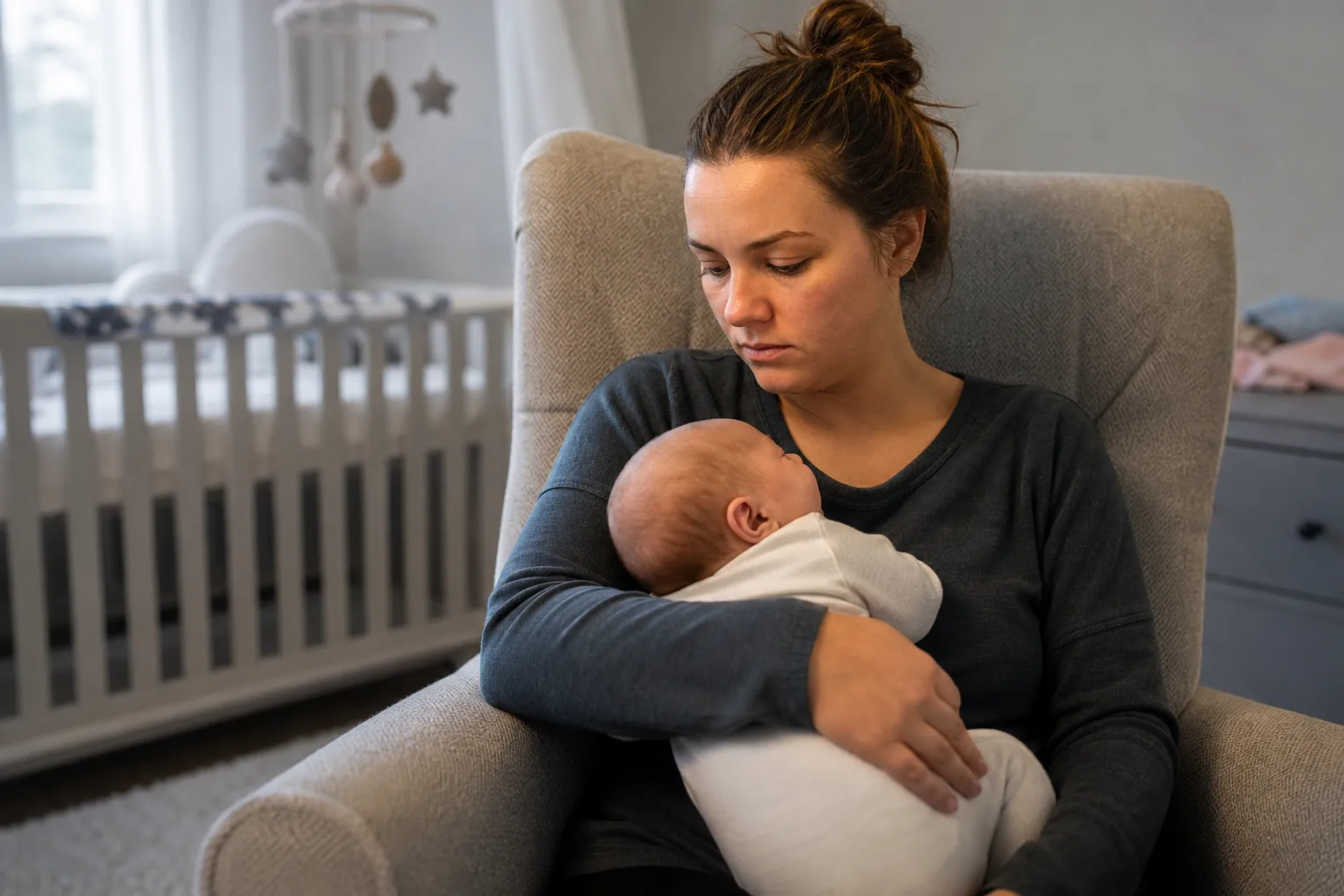
A painful feeling is not a moral verdict. Someone may care deeply about a baby’s needs while feeling little warmth. The gap between expected feelings and actual feelings can be upsetting. That gap deserves a calm conversation, rather than blame.
NIMH identifies guilt, worthlessness, and helplessness as possible depression symptoms. NIMH also lists persistent doubts about the ability to care for a baby. Those doubts need clinical attention. They should not be treated as reliable proof that someone is unfit.
Completing care tasks and feeling connected are different concerns. For example, someone may meet a baby’s daily needs while feeling emotionally absent. Another person may need practical help as well as emotional support. Neither description is enough to decide a diagnosis or safety level.
Comments such as “you should feel grateful” can turn attention toward defending feelings. A more useful response makes room for an honest account. Family members can take distress seriously without arguing about how much love exists.
There is no need to prove affection before asking for help. You can discuss emotional distance even when caregiving appears to be going well. You can also ask for help when daily care feels hard. Both concerns deserve individual attention.
What Other Symptoms Matter Alongside Trouble Bonding?
Trouble bonding deserves attention alongside changes in mood, energy, sleep, and daily functioning. NIMH lists several symptoms that may occur with perinatal depression. No single symptom decides the diagnosis. The guides to depression PHP and IOP differences and choosing outpatient mental health care provide broader care context.
A clinician needs more than a snapshot of one interaction. Feeling distant while feeding a baby is useful information. So are ongoing sadness, loss of pleasure, or trouble making decisions. Sharing the wider picture helps the provider assess what may be happening.
Sleep concerns deserve clear descriptions because caring for a baby interrupts rest. NIMH specifically includes difficulty sleeping even when the baby is asleep. That distinction may help explain your experience. Sleep symptoms alone still cannot confirm perinatal depression.
- A sad, anxious, or empty mood may persist through much of the day.
- Activities that once felt enjoyable may bring little interest or pleasure.
- Guilt, helplessness, or doubts about caring for the baby may persist.
- Low energy and trouble concentrating may make daily tasks harder.
- Sleep or appetite may change alongside distress about emotional connection.
How Is Depression Different From The Baby Blues?
Baby blues are mild, short-lasting mood changes after childbirth. Perinatal depression can involve more severe or lasting distress, including trouble bonding. NIMH advises assessment when symptoms are severe or continue beyond two weeks. General PHP and IOP care differences and outpatient mental health care choices cannot diagnose those symptoms.
NIMH describes baby blues as worry, unhappiness, and exhaustion during the first two weeks. Caring for a newborn can feel tiring and overwhelming. Still, the baby blues label should not dismiss severe distress. Intensity matters as well as how long symptoms last.
Perinatal depression can begin during pregnancy, before there is a newborn to care for. Depression after childbirth is called postpartum depression. These terms describe when depression occurs. They do not measure how much someone wants or loves a baby.
The two-week distinction is not a reason to delay help. Someone with severe symptoms deserves attention sooner. Thoughts about harm or signs of losing touch with reality need prompt action. A calendar cannot determine whether a person is safe.
Bonding difficulty alone cannot separate baby blues from depression. A provider considers mood, daily tasks, other symptoms, and safety. The assessment can also explore whether something else explains the distress. An online checklist cannot settle that question.
Comparisons with other parents rarely answer the clinical question. Another person’s early joy or hard days cannot define your experience. What matters is your own pattern of symptoms and needs. You can seek support without waiting to match someone else’s story.
What Can You Tell A Clinician About Emotional Distance?
A clinician can work with a plain description of emotional distance. Explain what feels different, how daily life is affected, and any safety concerns. You do not need polished language. Broader outpatient mental health care guidance and adult IOP program information do not replace an individual assessment.
You can begin with the feeling that concerns you most. Feeling blank, detached, worried, or unable to enjoy time together can be described directly. You do not have to decide which clinical term fits. The provider’s role includes helping clarify the experience.
A useful distinction is between feelings and daily tasks. A person may feel distant but still manage care tasks. Another may struggle with both connection and basic routines. Neither pattern should be assumed from appearance alone.
NIMH recommends seeing a health care provider for perinatal depression symptoms. That provider may be a primary care doctor or mental health professional. Mention pregnancy or nursing because those details matter to care discussions. You do not need to complete homework before contacting a provider.
If you already receive care, bonding concerns still deserve attention. A discussion focused on sleep or sadness may miss emotional distance. Bringing up the concern gives the provider a fuller picture. That does not mean a particular treatment change will be needed.
Assessment is meant to understand symptoms, possible causes, and support needs. A symptom list cannot choose a program or level of care. NIMH’s general treatment information also does not establish any facility’s specialty. Local services and clinical fit require separate confirmation.
How Can Family And Friends Help Without Adding Pressure?
Family and friends can offer emotional support, practical help, and encouragement to seek care. NIMH includes help with appointments and daily tasks among useful supports. Support should not depend on visible affection. General resources on choosing outpatient mental health care and what adult IOP involves explain additional care context.
A helpful response starts by taking the person’s words seriously. Feeling detached does not call for a debate about gratitude. Family members can listen without demanding reassurance about love. They can also acknowledge that describing these feelings may be hard.
Practical help addresses real needs without requiring a change in emotion. NIMH includes assistance with caring for the baby or home. That support is different from telling someone to try harder to connect. Help can be offered while clinical care is being arranged.
- Listen to descriptions of emotional distance without judging the person’s character.
- Offer practical help with baby care or household tasks.
- Help with getting to appointments when the person wants assistance.
- Encourage contact with a health care provider about ongoing symptoms.
- Take safety concerns seriously rather than dismissing them as ordinary stress.
When Do Bonding Concerns Need Urgent Or Emergency Help?
Bonding concerns need prompt safety assessment when thoughts of harm or severe symptoms occur. Immediate danger requires emergency care, rather than waiting for outpatient support. NIMH distinguishes crisis help from emergency response. General outpatient mental health care choices and mental health PHP information are not emergency services.
Emotional distance alone does not establish an emergency. Thoughts of death, self-harm, or harming the baby change the concern. A health professional should assess those thoughts promptly. Do not assume their meaning or dismiss them without assessment.
Call 911 for immediate danger or a medical emergency; call or text 988 for the Suicide and Crisis Lifeline. Crisis support can help when someone is struggling or having suicidal thoughts. Immediate danger needs emergency response. Do not wait for a routine appointment or program opening.
NIMH describes postpartum psychosis as a psychiatric emergency after childbirth. Psychosis involves losing touch with reality. Signs can include false beliefs, hearing or seeing things others do not, and confusion. NIMH advises immediate emergency help for these symptoms.
Feeling emotionally distant is not the same as losing touch with reality. These concerns should not be treated as interchangeable. A provider needs to assess what is happening. Severe confusion or other signs of postpartum psychosis require emergency evaluation, not routine outpatient planning.
MVBH does not provide emergency, inpatient, or overnight care. That limit matters when symptoms require immediate protection or hospital care. For urgent concerns without immediate danger, seek prompt clinical assessment. NIMH’s Help for Mental Illnesses resource explains general pathways to support.
Questions about next steps? Call MVBH at 978-233-9597 or review php.
Frequently Asked Questions
Can depression affect connection during pregnancy?
Perinatal depression can occur during pregnancy or after birth. NIMH calls depression during pregnancy prenatal depression. Concerns about connection are worth discussing alongside sadness, anxiety, fatigue, or other changes. Feelings during pregnancy alone cannot establish a diagnosis or predict a future relationship with the baby. A provider can assess the full picture.
Can I have warm moments and still need help?
Warm moments do not rule out a need for help. A provider considers the broader pattern of symptoms and daily functioning. You do not need to feel distant during every interaction to discuss distress. Describe both the moments of connection and the difficult periods, without using either as proof of a diagnosis.
Is perinatal depression caused by something a parent did wrong?
Perinatal depression is not caused by a parent’s moral failure. NIMH states that a person is not at fault for having the condition. There is no single cause; genetic and environmental factors can contribute. Trouble feeling connected should therefore lead to support and assessment, rather than blame or demands to feel differently.
Does accepting help with baby care mean I have failed?
Accepting practical help is not evidence of failure. NIMH specifically identifies assistance with baby care and household tasks as useful family support. Help can address daily needs while a provider assesses emotional concerns. Practical support does not replace treatment when treatment is needed, and needing assistance does not establish a diagnosis.
Will depression treatment make bonding feel better right away?
There is no fixed timeline for a change in bonding feelings. NIMH states that perinatal depression can be treated, but that does not predict an individual bonding outcome. Tell your provider if emotional distance continues, even when other symptoms change. Care should address your experience rather than require a particular feeling by a deadline.
Sources
- Perinatal Depression, NIMH
- Help for Mental Illnesses, NIMH
Editorial status
Approved by Clinical Staff
Written by Tim Francis. This guide is educational. Read our clinical review and sources policy.
