
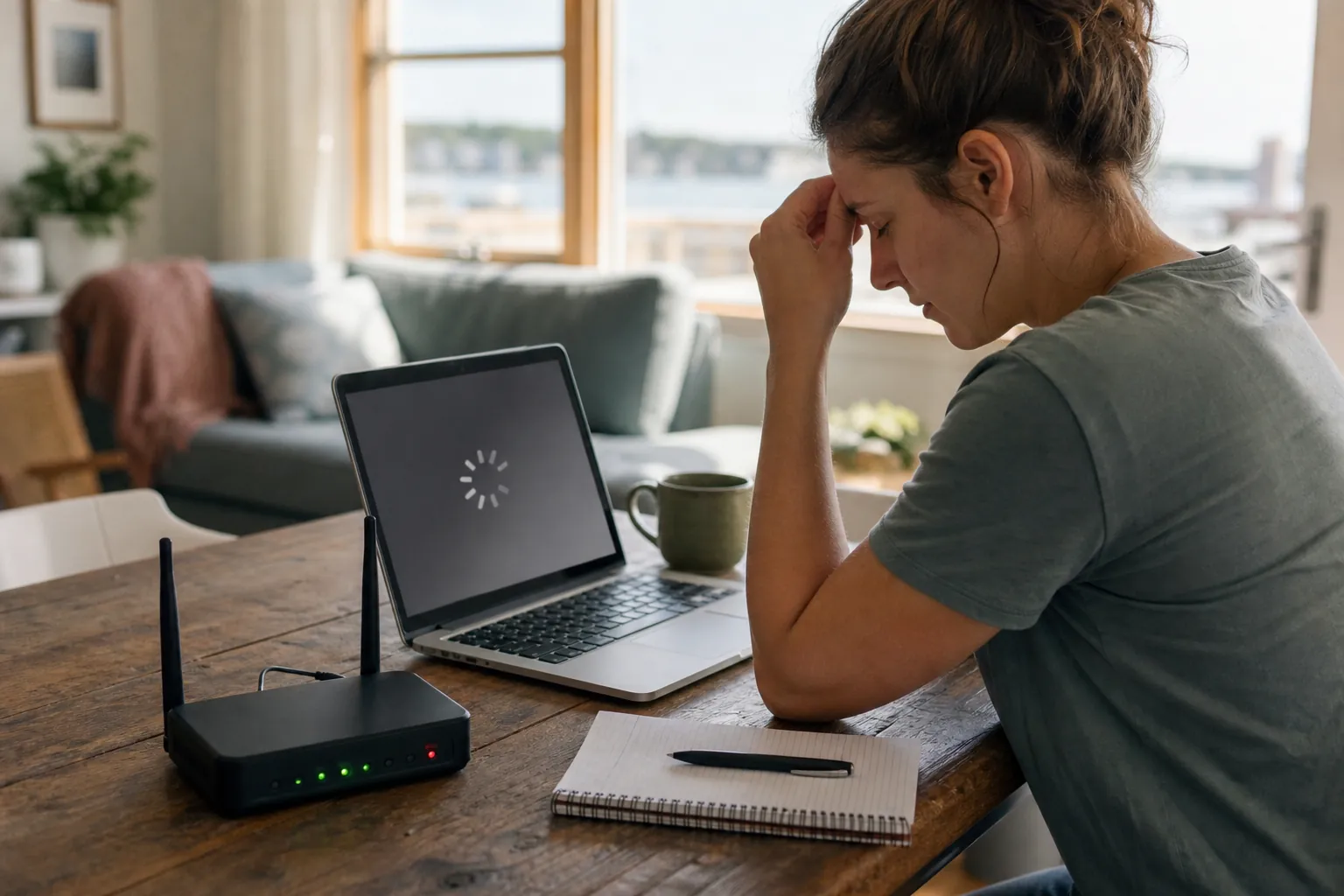
Can virtual IOP work with unreliable internet?
Virtual IOP can be hard to take part in when an unstable connection repeatedly interrupts sessions. Whether the format can still work depends on several things. These include how often breaks happen and whether you can hear and take part. The clinical assessment of your needs matters too. See Virtual IOP in Massachusetts and Half Day Treatment IOP for adults for details.
It can also assess if another outpatient path should be discussed.
Clinical assessment determines fit.
An occasional brief outage is different from a connection that regularly drops during group or individual sessions. When breaks happen often, a person may miss parts of group talk. They may have trouble responding to others. They may also lose track of the session. Those disruptions can affect both participation and the care team's ability to communicate with the person.
Searching for virtual iop unreliable internet information does not mean virtual treatment is automatically ruled out. What matters is whether a person can take part in a steady, private way. This depends on the connection and device they have to use. An assessment can help show if virtual IOP may fit. It can also help show if another outpatient service should be considered instead.
Merrimack Valley Behavioral Health offers virtual IOP for eligible adults. They must be physically in Massachusetts during their sessions. The program provides outpatient day care. It does not provide residential care, overnight care, emergency care, or onsite detox care. The clinical team determines if the service fits after assessment.
How do connection problems affect virtual IOP sessions?
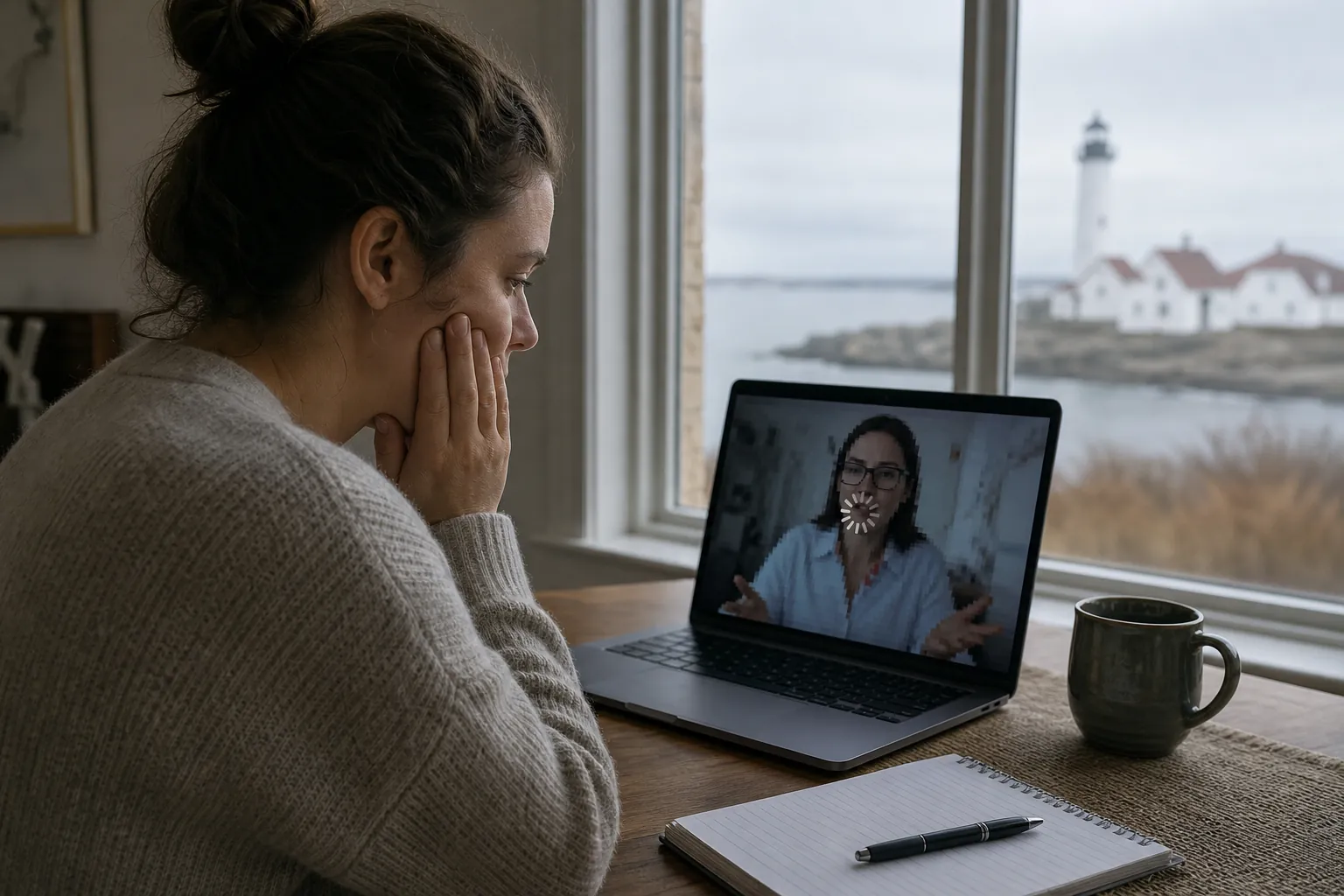
Connection problems can disrupt virtual IOP by cutting off sound, video, or access to the session. Frequent breaks may make group talk hard to follow. They may make it hard to share or stay present. The effect depends on the type and pattern of each break. See Virtual IOP in Massachusetts and Half Day Treatment IOP for adults for details.
A connection may seem to work well at first. It may then fail when several people share the network. It may also fail when a device switches between connections. Sound may break up even when the picture stays clear, or a person may lose the session altogether. These problems can make a group exchange difficult to follow from one moment to the next.
Virtual treatment depends on more than logging in. A person needs to hear and speak well enough to take part. They should also have a place for care talks. Those talks need to be private in that setting. Tech problems may block those basic needs time after time. The treatment team needs to know when this happens so it can assess the situation.
A person should not have to decide alone if every dropped connection makes virtual care unsuitable. The care team can check how much of a session is missed. It can also check if the connection is steady enough for the person to take part meaningfully. That discussion is about fit, not a promise that a particular workaround or format will be available.
- Repeatedly losing audio can make it hard to follow guidance or respond to another participant.
- A full disconnect during a group can cause a person to miss an important part of the discussion.
- Unstable service may make attendance feel unpredictable even when a person is ready to participate.
- A lack of privacy can limit what a person feels comfortable sharing during a remote session.

What internet access is needed for virtual IOP?
Virtual IOP needs an internet connection and a device. They must let a person hear, see, and speak during sessions. They should do this with fairly steady results. The exact tech needs depend on the program. A person should check the details with the care team. They should not rely on a general checklist for those needs. See Virtual IOP in Massachusetts and Half Day Treatment IOP for adults for details.
A steady connection matters because virtual care involves live talks. It is not simply getting written materials after a session has ended. A device should work with the program's way of meeting. The person must be able to use it in a place where talk stays private during the session. Specific device or software requirements should be confirmed directly with the provider.
Internet quality can vary by location and time of day. A connection that works for browsing or short calls may not remain steady throughout a longer treatment session. Some people share internet service with others at home. Others rely on mobile data for their service. In either case, the connection may change from one session to the next.
During an assessment, it can help to describe how breaks occur. For example, the signal may drop for a short time. Or the session may become too hard to use. That information gives the clinical team a clearer picture than a general label like poor internet. The team can then check if virtual care seems workable. It should not assume that special supports or other tech will be offered.
Consider privacy as well as signal strength
A reliable connection does not by itself make a remote session workable. Participants also need enough privacy to listen and speak about personal concerns without unwanted interruptions. A person who cannot find a private place may want to raise that concern during the assessment.
Privacy needs can differ from one household to another. The provider can explain what it expects during virtual care. An assessment does not promise that a certain place, device, or setup will meet those needs.
What should you do when a virtual IOP connection fails?
When a virtual IOP connection fails, try to reconnect. Use the steps the program has stated for this. Contact the care team through its usual way to stay in touch. If breaks keep happening, explain their pattern to the team. The team can assess your ability to take part. It can discuss next steps that fit, without assuming another format is offered. See Virtual IOP in Massachusetts and Half Day Treatment IOP for adults for details.
A single disconnect may resolve quickly, while a longer outage may prevent someone from rejoining. Follow the provider's instructions for connection problems when they are available. MVBH's exact steps for a response are not described here. Check with the team about how to report a missed session. Check how to report a session that was cut off too.
Repeated technical problems are useful information for a clinical assessment. Describe what happens during sessions, how often it happens, and if it affects hearing or responding. This is not a test a person has to pass. It helps the care team understand what participation looks like in practice.
Tech may stop working during a session. A person may then feel ashamed about the break. They may worry others will see it as a lack of effort on their part. A dropped connection is a practical barrier, not proof that someone is unwilling to engage. Letting the team know can help separate connection issues from questions about treatment goals or readiness.
- Use the reconnection steps provided by the program when a session drops.
- Contact the care team through its usual method if you cannot rejoin or miss part of a session.
- Share if the problem affects audio, video, privacy, or the ability to attend steadily.
- Ask the team to assess if virtual participation remains workable or another care path should be talked about.
What care options may be considered if virtual IOP is not feasible?
Virtual IOP may not seem workable for a person. A clinical assessment may then look at other outpatient services. This depends on the person's needs and situation. Merrimack Valley Behavioral Health offers Half Day Treatment IOP. It offers Full Day Treatment PHP and outpatient care too. An assessment determines fit. It does not promise a specific placement. See Virtual IOP in Massachusetts and Half Day Treatment IOP for adults for details.
A change in care format is not automatic just because internet access is unreliable. The team needs to consider clinical needs and if a service is appropriate. For MVBH, IOP and PHP are day programs. They are not hospital or residential care, overnight services, emergency care, or onsite detox.
The choices below differ in how care is set up. The table does not decide which service is right for a given person and their needs. MVBH's adult half day IOP care page explains its IOP service. The full day PHP for adults page describes a different day program option. A clinical assessment is needed to consider fit.
A person may also talk about standard outpatient care if that service is suitable. The name of a level of care does not tell the whole story. It alone does not show that a person can get a certain schedule or format. For example, these facts do not show that every person can switch from virtual IOP to in-person IOP. That change may not be available.
| Service | Format stated | Connection consideration |
|---|---|---|
| Virtual IOP | Virtual day program | Internet must support participation |
| Half Day Treatment IOP | Day program | Ask the team about available format |
| Full Day Treatment PHP | Day program | Clinical assessment determines fit |
| Outpatient care | Outpatient service | talk about choices with the care team |
How does MVBH assess fit for virtual IOP?
MVBH uses a clinical assessment to determine if virtual IOP is appropriate for an adult. The assessment can look at care needs and virtual fit. This includes whether a person can take part, with internet access and privacy. It does not promise admission or another service. See Virtual IOP in Massachusetts and Half Day Treatment IOP for adults for details.
An assessment lets the clinical team learn about the person's situation. The team can then look at which level of care may fit that person's needs. Internet reliability is one practical part of that discussion, not the only factor. The team may need to know how often breaks happen. It may also need to know if those breaks stop a person from taking part.
Virtual IOP also has a clear rule about location. People must be physically in Massachusetts during sessions to be eligible for this care. Being a Massachusetts resident is not a substitute for being in the state at the time of a virtual session. Adults considering care should talk about their situation with the provider.
MVBH is an adult outpatient provider with one physical location in Amesbury, Massachusetts. Its virtual service does not change the scope of care. PHP and IOP are day programs. They are not hospital, residential, overnight, emergency, or onsite detox care. A person's needs may call for a different type of support. The care team can talk about the assessment. It cannot promise a service that is not listed.
- Explain how often service drops and if the connection usually returns quickly.
- Describe if interruptions affect hearing, responding, or staying in a session.
- Share if you can take part from a private location while physically in Massachusetts.
- talk about the care choices the clinical team considers appropriate after assessment.
Assessment considers more than internet access
A connection that works well does not automatically mean virtual IOP is the right level of care. Clinical needs and the person's ability to participate also matter. The team considers those factors together rather than making a decision based on one technical detail.
Likewise, a poor connection alone does not decide a person's care. It does not mean they must use PHP or another service instead. A different level of care may or may not be appropriate. The clinical team can explain what choices are within MVBH's services after learning more about the person's needs.
How do coverage and program boundaries affect the next step?
Insurance coverage and approval rules vary by plan. So do network status and shared costs. A benefits review can help explain plan details. It cannot promise coverage or admission. The limits of the program matter too. MVBH provides outpatient day services. It does not provide emergency, residential, overnight, or onsite detox care. See Insurance benefits verification and Half Day Treatment IOP for adults for details.
A benefits review is separate from a clinical assessment. The review can look at the plan's rules. It cannot decide if virtual IOP or another service is the right clinical fit for a person. Likewise, a clinical assessment does not promise plan coverage for the care advised. It also does not promise that the person will be admitted to care.
People weighing virtual care may also want to understand the service itself before making a decision. The virtual IOP in Massachusetts page gives more context about the virtual program. For plan questions, see the insurance benefit verification page. It explains why coverage details must be checked for each person's own plan.
If a person's needs involve urgent danger, an outpatient virtual program is not emergency care. Contact emergency services for an emergency. For non-emergency concerns, talk with a qualified health professional or the MVBH team about the next appropriate step.
Questions about next steps? Call MVBH at 978-233-9597 or review admissions and care information.
For general information about therapy, see the NIMH psychotherapy information.
Frequently Asked Questions
Does a brief internet outage mean I cannot receive virtual treatment?
A brief outage does not automatically rule out virtual treatment. The clinical team needs to consider how often interruptions occur and if they prevent meaningful participation. Rare problems may affect a session in a different way than repeated outages. Only an assessment can tell if virtual IOP is a good fit for that person.
Can I join a virtual IOP session while outside Massachusetts?
MVBH virtual IOP participants must be physically in Massachusetts during sessions. A person may be outside the state for a short time. They should check their situation with the provider before counting on virtual care. This location rule is specific to the virtual service. It does not show whether another service is the right fit for a person's needs.
Does MVBH promise an in-person IOP option if my internet is unreliable?
No. The facts here do not promise an in-person IOP option for a given person. They also do not promise that a change in format will be approved. MVBH offers Half Day Treatment IOP, and the clinical team can assess fit and explain which services may be considered.
Can I use a phone hotspot for virtual IOP?
A hotspot may work for some online tasks. How well it works can vary by place and signal. Data limits can affect it too. MVBH's exact tech needs are not stated here. Contact the care team to check which connection and device meet the program's needs. An assessment can also consider if the setup supports steady participation.
Does a benefits review confirm that I can start virtual IOP?
No. Coverage and approval rules depend on each person's plan. Network status and shared costs depend on the plan too. A benefits review does not promise coverage or admission. Clinical assessment separately determines fit for care. Both steps may be relevant, and completing one does not replace the other.
Sources
- Psychotherapies, National Institute of Mental Health
- Mental Health and Substance Abuse Coverage, HealthCare.gov
Call 978-233-9597 to talk through next steps.
