
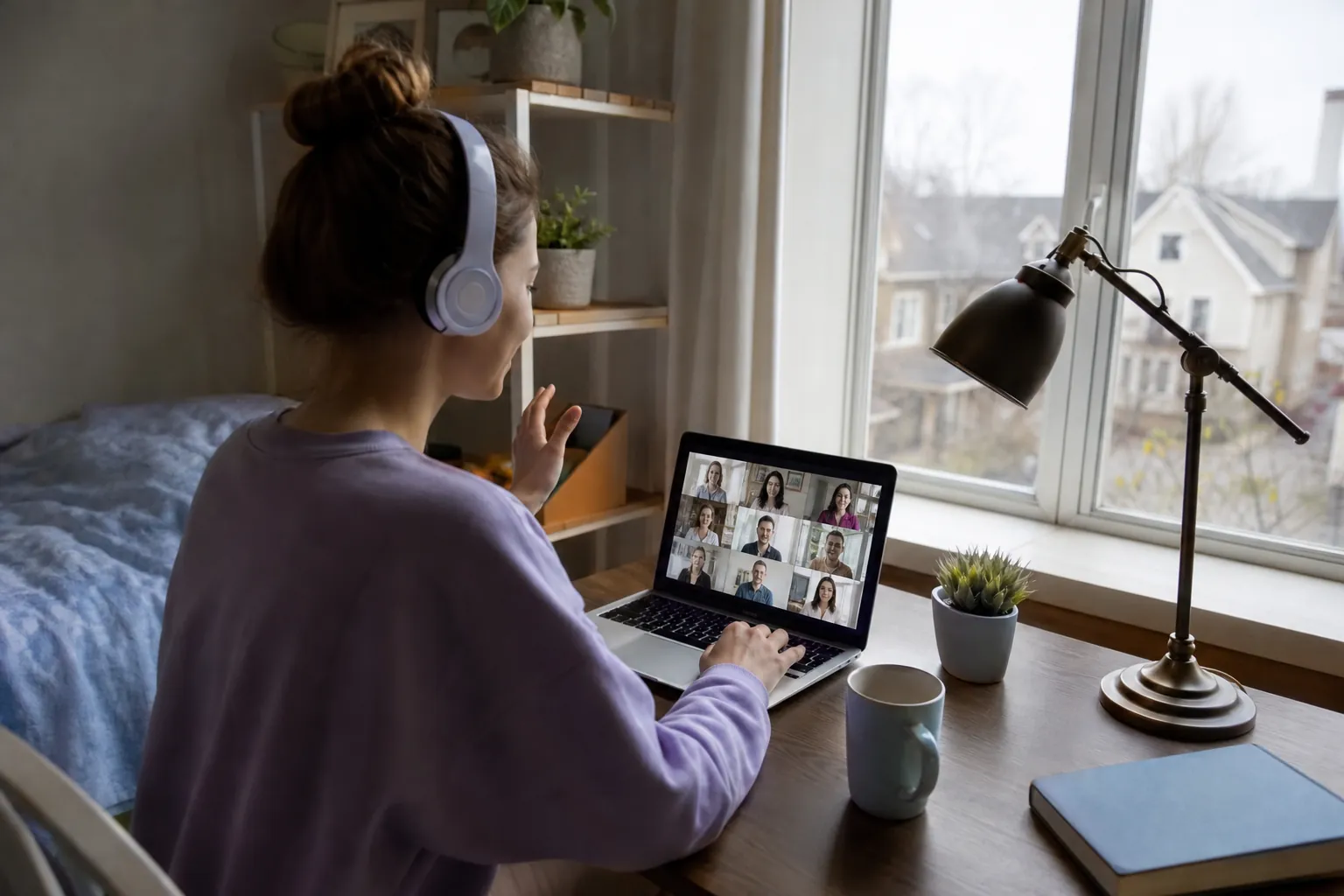
How can you protect privacy during virtual IOP in a shared home?
You can improve privacy during virtual IOP in a shared home. Choose a steady space for your sessions. Limit who can hear or see them. Agree on clear, simple limits with those at home. These steps may help, but they cannot promise full privacy. They cannot replace a talk with the clinical team. That talk helps assess if virtual care fits. See Virtual IOP in Massachusetts and Half Day Treatment IOP for adults for details.
They must be in Massachusetts in person during each session.
Clinical assessment determines fit, and a private setup cannot be assured.
A shared home does not always have a spare room or a door that locks. The goal is not a perfect space for therapy. It is a space that works for you. You need fewer breaks from others while you take part. You should feel able to speak with honesty.
Think about sound and visibility together. A spot may seem private because people cannot see your screen, yet talks from another room could still be heard. Likewise, a quiet corner may not feel private if other people can walk behind you or look at the display.
Consider what privacy means for your own participation. You may want to speak openly, listen without household members hearing, and keep session content off shared screens or devices. Those needs may seem hard for you to meet. If so, share that concern with the clinical team. Do not assume you must handle it on your own.
For an overview of the program itself, see adult IOP care options. Eligible adults may take part in IOP through virtual sessions. An assessment is still needed. It helps decide if this service fits a person's needs.
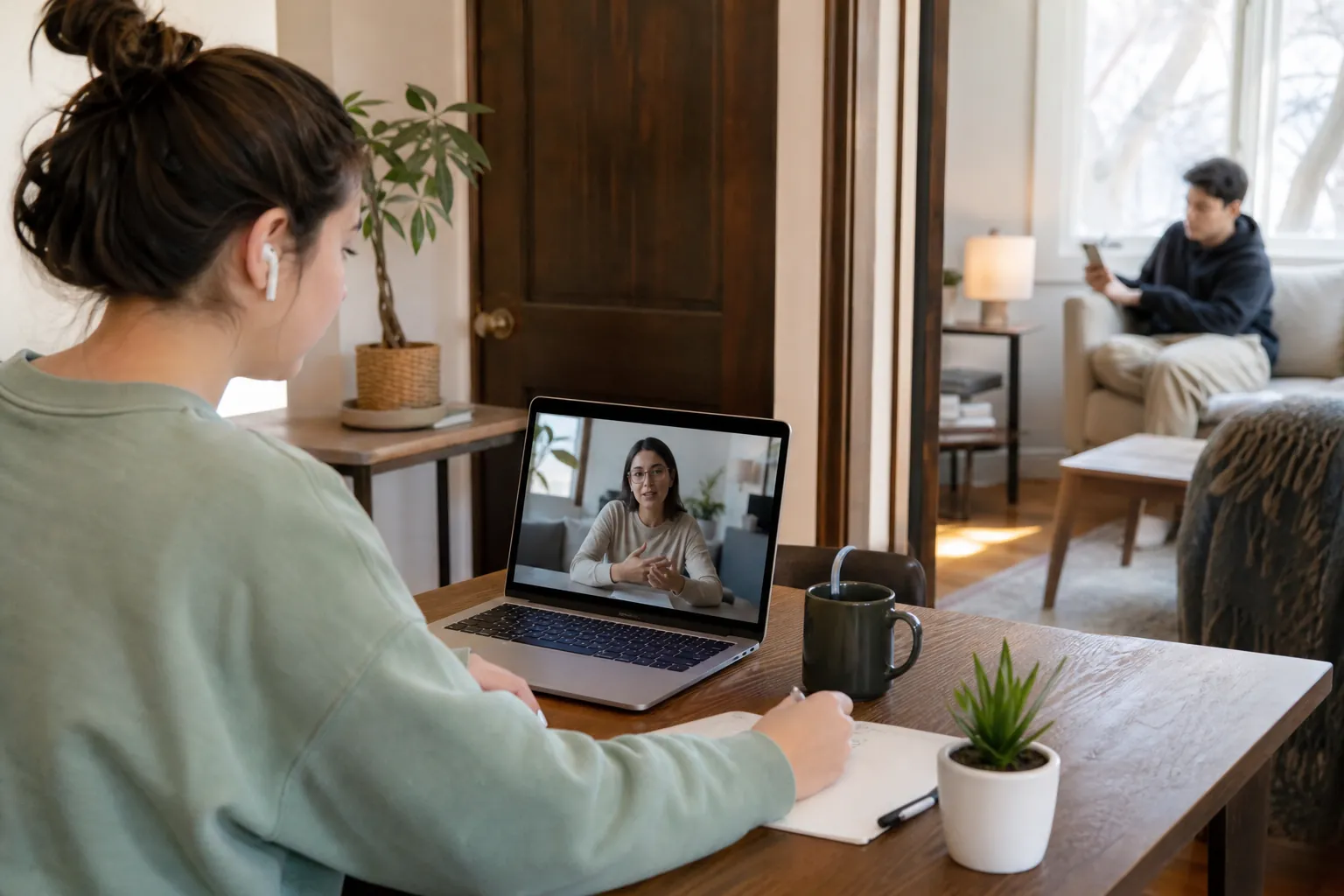
What should you consider when choosing a place for sessions?
Choose a space as quiet and private as your home allows. It should be a space you can count on. You need room for your device and to stay engaged. A bedroom, home office, or less-used space might work. The right choice depends on who shares your home. It also depends on how much privacy that space allows. See Half Day Treatment IOP for adults and Full Day Treatment PHP for adults for details.
Start by noticing the household’s usual patterns. A location that is quiet at one time may become busy when others return, prepare meals, or use shared rooms. Consider the full session period and if people can reasonably avoid entering the space.
Privacy can also be affected by thin walls, shared devices, or a spot near a television or talk area. You do not need special equipment to think through these issues. A simple test can show if your words reach nearby spaces. Sit in the space and speak at your normal volume. Notice if your voice carries to other areas.
Use the checklist below as a way to compare possible spaces, not as a standard you must meet. If no location seems suitable, that is useful information to talk about with the clinical team. Do not assume the program can provide a particular accommodation or change its requirements.
- Choose a location where household members are less likely to enter without warning.
- Check if people in nearby rooms can hear your normal speaking voice.
- Position your screen so other people are less likely to see session content.
- Consider if the space is likely to stay available for the full session.
| Possible space | Potential benefit | Possible limitation |
|---|---|---|
| Bedroom | May offer a door and separation | Could be shared or often entered |
| Home office | May support a regular routine | May not be available to everyone |
| Quiet corner | May be easy to use | Could lack sound or visual privacy |
| Shared room at a quiet time | May be temporarily less busy | Household activity can change |
Compare practical features, more than room names
The label on a room does not determine if it offers privacy. A bedroom may be shared with someone else. A common room may be quiet at certain times. Focus on what you can truly expect in that space.
Think about if you can hear the session, if others can overhear you, and how likely interruptions are. The table offers general considerations for comparing home setups. It does not promise that any location will be accepted or work for every participant.
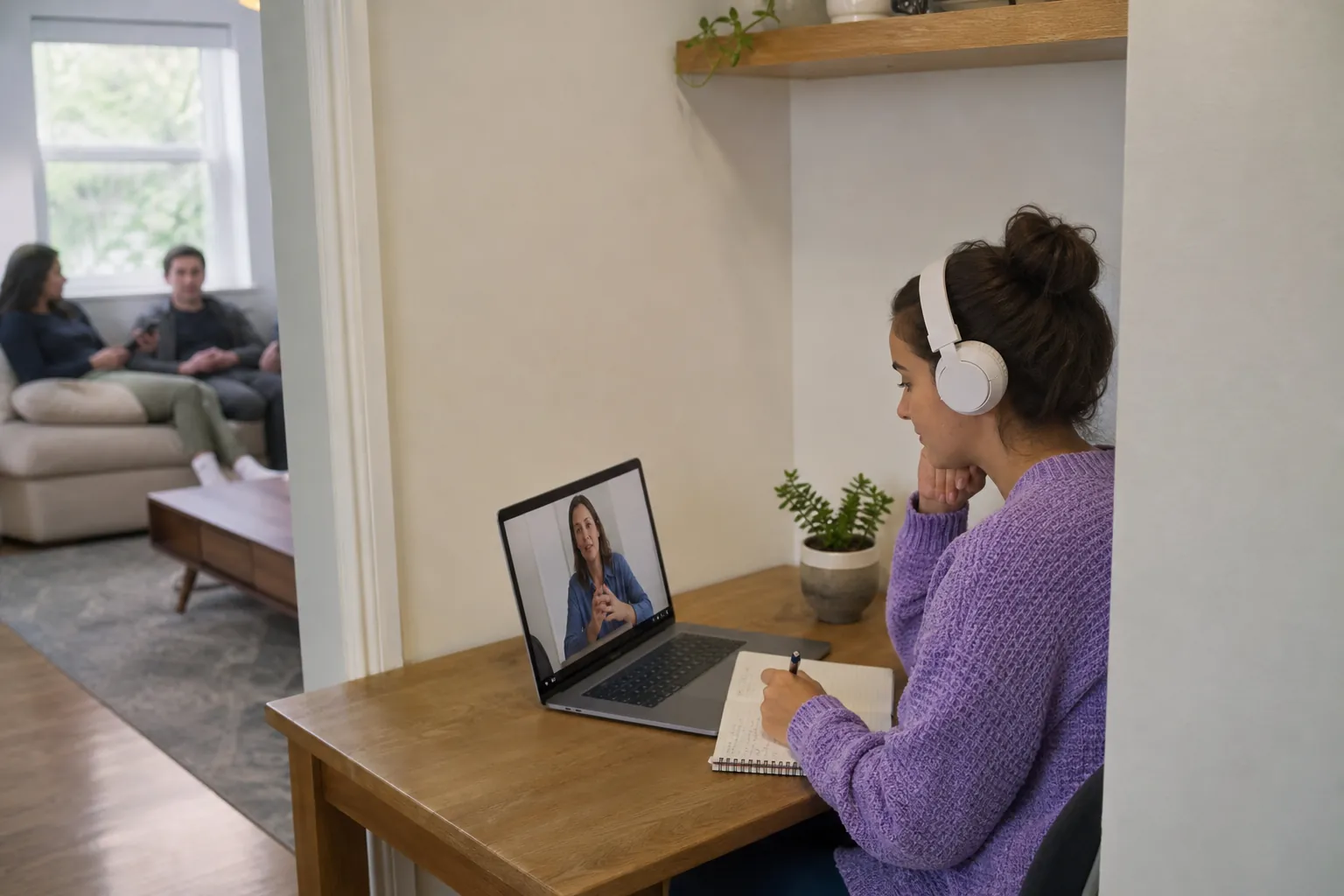
How can you set boundaries with people who share your home?
Clear, respectful boundaries can reduce avoidable interruptions during a virtual IOP session. Tell those at home when you will use the space. Explain what you need them to avoid. Agree on what to do if an urgent need comes up. Keep your care details private if you wish. See Virtual IOP in Massachusetts and Half Day Treatment IOP for adults for details.
A boundary does not require explaining your full treatment history. You can share just the facts that help others respect your session. Tell them when you will use a room. Let them know if they need to knock before they come in.
Household members may have different needs, work patterns, or access to shared spaces. A brief talk ahead of time can help set fair expectations. Others could use a different room when possible. They could also avoid loud tasks near your space. These arrangements depend on the household and may need to change.
You may not feel safe or at ease asking someone for privacy. If so, do not assume you need to confront that person. Consider if another location or format is possible and raise the concern with the clinical team. They can talk about the service and its limits, but no particular accommodation should be presumed.
- Agree on a simple signal that shows when you are participating in a session.
- Ask household members to avoid entering the space unless there is an urgent need.
- Decide where others can go if the session uses a shared room.
- Revisit the agreement if household routines or privacy needs change.
Can headphones and device settings make a session more private?
Headphones can help keep others from hearing session audio. Where you place your device may help too. Basic privacy settings may reduce unwanted views or breaks from others. They do not block each sound or stop all forms of access. They cannot promise that session content stays private in a shared home. See Half Day Treatment IOP for adults and Full Day Treatment PHP for adults for details.
If you use headphones, check that you can hear clearly and that the device is comfortable for the session. Headphones address audio coming from your device, but they do not keep your own voice from carrying through the home. A closed door may help with sound and breaks from others. Use one when it is available and safe. It will not solve the whole problem.
Position the screen so that people passing by cannot easily see it. You may share a device with others at home. Think about signing out of your own accounts after use. Avoid saved access on a screen that others use. Use the privacy controls on your own device. Do not assume the program requires a specific setting. Do not assume it supplies that setting for you.
Keep session materials and any notes somewhere other household members are less likely to access. Be mindful of smart speakers or other devices that may respond to speech in the room. You may be unsure how a device records or protects privacy. Check the maker's information on its settings. When possible, choose a different space or device instead.
What can you do if interruptions or limited privacy are likely?
You may expect breaks from others or a lack of privacy. Name the exact problem. Talk with the clinical team before you rely on your home setup. They can explain what the program expects when you take part. They can say if an offered care option may fit. They cannot promise a change in format or a specific adjustment. See Half Day Treatment IOP for adults and Full Day Treatment PHP for adults for details.
First, separate the issue into parts. Think about your main concern with privacy at home. Others may hear you or enter the room. You may share your device with someone else. Your internet may not work well. Knowing what is hard can help you weigh your choices. Focus on choices that could work for you. Do not expect one fix to solve each concern.
Some people may be able to use a different room or choose a quieter time in their household. Others may not have control of the space. They may live with people who need that room. They may have no reliable place to speak in private. Those differences matter, and it makes sense to explain them. Share them when you discuss whether taking part in virtual care could work for you.
Merrimack Valley Behavioral Health offers in-person outpatient care too. This includes Half Day Treatment IOP. It also includes Full Day Treatment PHP. The programs differ in structure and time commitment, and clinical assessment determines fit. Read about Full Day Treatment PHP for adults if you are considering how another day-program level differs from IOP.
Privacy may be the main barrier to virtual care. You can also read virtual IOP in Massachusetts. It gives general information about that service. The clinical team can explain what the program expects. A benefits review, discussion, or assessment does not promise admission. None of these steps promises coverage either.
Is virtual IOP appropriate if you cannot participate privately?
Virtual IOP may not be a practical fit for some people. A person needs enough privacy to take part and engage in the sessions. The clinical team assesses fit. Do not treat the service offered as emergency care. It is not residential, overnight, or detox care either. See Virtual IOP in Massachusetts and Half Day Treatment IOP for adults for details.
The ability to use a quiet place is only one part of deciding if a program fits. Clinical assessment considers a person’s needs and the level of care that may be appropriate. A spare room or headphones cannot settle a clinical question alone. Do not base a care choice just on whether a home has either of these.
Merrimack Valley Behavioral Health offers outpatient services. These include Full Day Treatment PHP and Half Day Treatment IOP. They also include outpatient care and virtual IOP for eligible adults. Dual-diagnosis outpatient services are offered too. Virtual IOP participants must be physically in Massachusetts during sessions. The program has one physical location in Amesbury. Taking part in virtual care does not mean care from an overnight setting. It is not care from a residential setting either.
PHP and IOP are day programs, not hospital care. They are not emergency services or residential treatment. They are not overnight care or onsite detox. A person may need a different level or type of care. The clinical team can discuss what the provider offers. They can discuss if an outpatient option fits that person's needs. For general substance-use treatment resources, see SAMHSA’s treatment information.
How do privacy needs affect choosing a virtual or in-person option?
Privacy needs can guide a talk about outpatient care. You can discuss virtual or in-person care. Privacy needs alone do not decide admission or clinical fit. Virtual IOP is only for eligible adults. They must be in Massachusetts during sessions. In-person services take place at the Amesbury location. See Virtual IOP in Massachusetts and Half Day Treatment IOP for adults for details.
A home setting may feel more private for one person and less private for another. Think about whether you can speak freely and manage breaks from others. Can you use a device without those at home accessing session content? Those conditions may not be realistic in your home. If so, explain what is going on. Do not force yourself to take part in a setup that does not work.
In-person care may ease some privacy concerns from a shared home. But you must go to the provider's physical location to take part in that care. It should not be assumed to be available in a different city or at another site. The appropriate option depends on assessment and the services offered.
The provider offers dual-diagnosis outpatient services too. This does not mean a specific type of specialty care is offered. It does not mean a specific care plan is available. Ask the clinical team to explain the program’s scope and the next steps for assessment. For questions about plan benefits, see insurance benefits review. Coverage, authorization, network status, and your share of costs vary by plan. A benefits review does not promise coverage. It does not promise admission either.
Questions about next steps? Call MVBH at 978-233-9597 or review admissions and care information.
For general information about therapy, see the NIMH psychotherapy information.
Frequently Asked Questions
Do I have to tell everyone in my household that I am in treatment?
You can ask for practical privacy in your home. In most cases, you do not need to share personal care details with each person who lives there. You may choose to explain only that you need a quiet, uninterrupted space for a scheduled activity. The provider can explain what it expects when you take part. Talks with those at home are your choice. Those talks should reflect what feels safe to you.
Is using headphones enough to keep a virtual session confidential?
No. Headphones may keep others from hearing sound from your device. They do not stop others from hearing your voice. They do not stop people from seeing your screen or entering the space. Think about sound, views, device access, and breaks from others together. Your home setup may still not feel right. If so, share your concerns with the clinical team.
Can I join virtual IOP while I am outside Massachusetts?
No. Merrimack Valley Behavioral Health's virtual IOP is for eligible adults. They must be in Massachusetts in person during each session. You must be in Massachusetts while you take part. Being enrolled does not replace this rule. Nor does staying at a Massachusetts address. Contact the provider about program expectations if your location may change.
Does a benefits review mean I will be admitted to virtual IOP?
No. A benefits review can explain plan information, but coverage, authorization, network status, and cost sharing vary. It does not promise that a plan will cover services or that a person will be admitted. Clinical assessment determines fit, so financial review and clinical decisions are separate steps.
Can virtual IOP provide emergency help or supervised detox at home?
No. Virtual IOP is a day-program service, not emergency care, residential treatment, overnight care, or onsite detox. It should not be used as a substitute for urgent medical attention or supervised withdrawal care. A clinical team can explain the provider’s outpatient services and talk about if they may fit a person’s needs.
Sources
- Substance Use Treatment, SAMHSA
- The ASAM Criteria, American Society of Addiction Medicine
- Mental Health and Substance Abuse Coverage, HealthCare.gov
Call 978-233-9597 to talk through next steps.
