
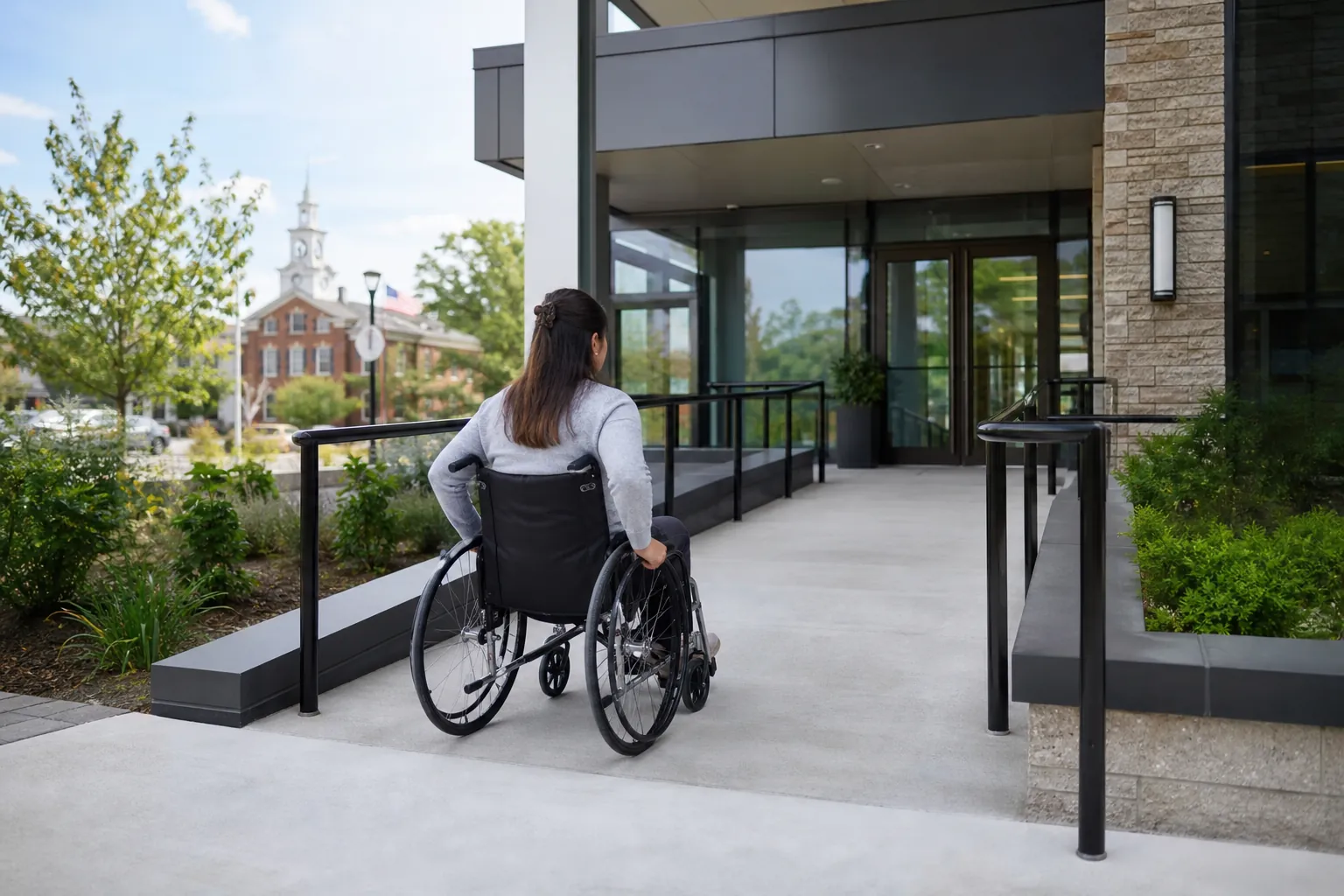
Assessing mental health php with mobility access needs takes two separate reviews. The building must work for your access needs. The care must fit your mental health needs, too. In Amesbury, MA, MVBH offers outpatient PHP, but its address alone doesn't confirm accessible entry, rooms, restrooms, or travel arrangements.
How does mental health PHP fit mobility needs?
PHP may be worth exploring, but access and care fit remain separate. MVBH calls its partial hospitalization program Full Day Treatment. Its outpatient mental health care page describes that care option. Through mental health admissions, you can discuss your needs without assuming the building will meet them.

MVBH's PHP is outpatient care without an overnight stay. The word hospitalization doesn't establish hospital access features or services. It also doesn't mean MVBH provides inpatient or emergency care.
Mobility needs may affect how you enter, move, sit, and leave. Some adults use a wheelchair, walker, cane, or other aid. Others walk without an aid but need rest or support. Those needs can differ across people and from day to day.
A program label cannot tell you how a space will work. An accessible doorway would address only one part of a visit. The route to a room or restroom may matter equally. Physical comfort throughout the visit is another separate concern.
Care fit requires its own discussion with a mental health professional. Treatment choices depend on your needs and medical situation. Mobility needs alone don't determine the right level of care. NIMH explains how treatment plans depend on individual needs.
You don't need to resolve every access detail before calling. A first call can begin a discussion about your circumstances. It needn't commit you to a visit or program. Access planning should make care clearer, without adding pressure to enroll.
The key is to avoid treating either review as complete. A suitable care plan doesn't prove the space is usable. A usable space doesn't establish that PHP fits your needs. Both parts deserve attention before an in-person start.
Which daily mobility needs matter for an in-person visit?
Your daily access needs matter more than a broad mobility label. Consider the parts of a visit that affect movement and comfort. You can contact MVBH care to discuss those needs. A separate conversation through mental health admissions addresses the kind of mental health support you need.
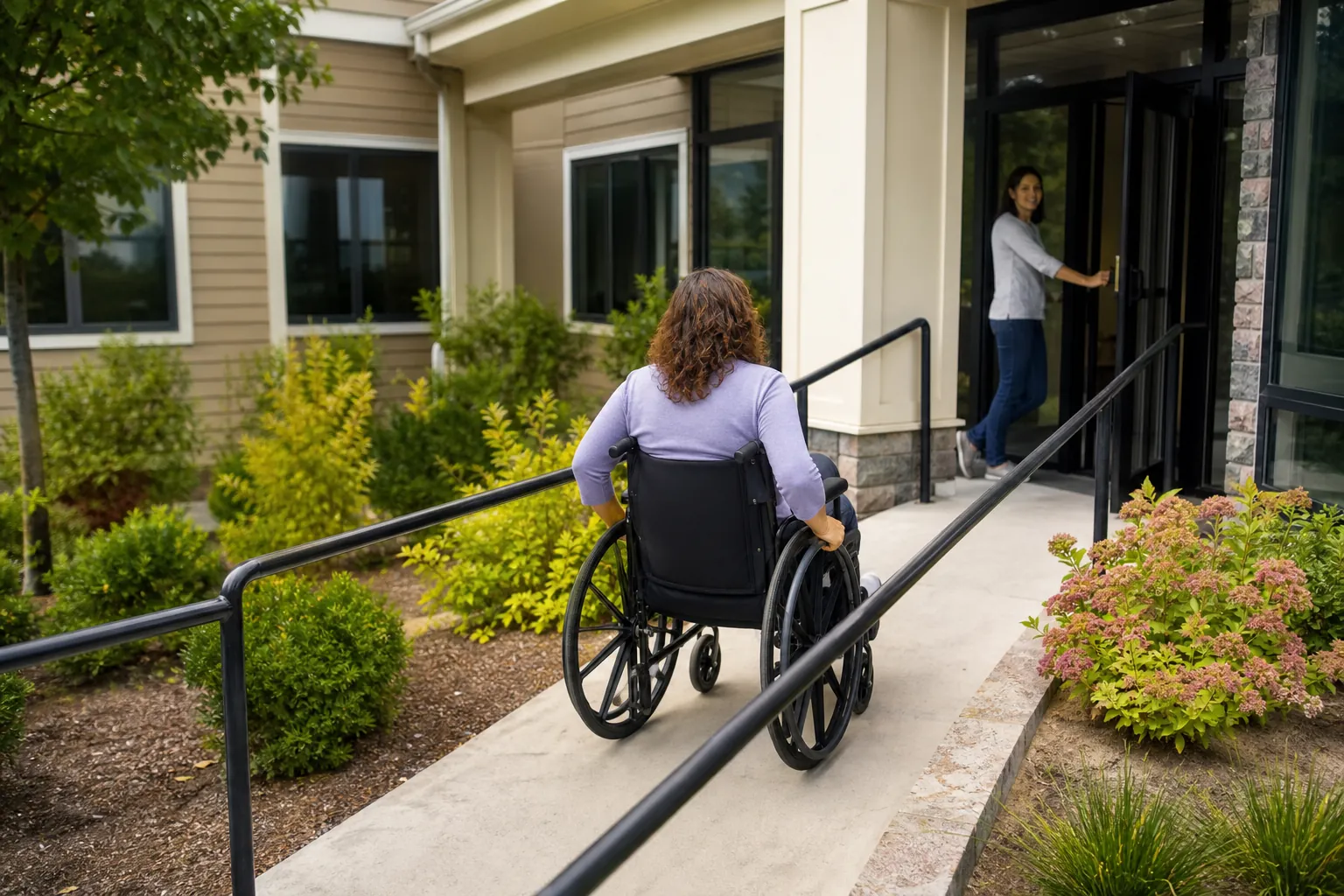
A label such as wheelchair user leaves many details unclear. Two people using similar chairs may need different clearances or support. Someone using a cane may find standing harder than walking. Your own experience gives the most useful picture of daily access.
Movement is only one part of using a treatment space. Sitting, reaching, turning, and using a restroom may matter too. A route that works briefly may feel different over time. Full Day Treatment makes comfort across the visit worth considering.
- The route from your arrival point may involve surfaces, slopes, doors, or steps.
- Your mobility aid may need enough space for turning and moving safely.
- Seating may affect comfort, transfers, and your ability to change position.
- Restroom access may depend on door clearance, layout, and usable space.
- Fatigue or pain may change what feels manageable across a visit.
These are planning factors, not verified features of MVBH's building. They don't establish which equipment or help is available onsite. Your needs may involve several factors or only one. None should be inferred from a general description of outpatient care.
You don't need a polished written summary before reaching out. You can describe what affects your daily life in plain words. A support person may help you explain your usual needs. Their presence during care is a separate detail to confirm.
The aim is an accurate picture, rather than a perfect account. Needs that vary are still important to discuss. A good day doesn't erase the limits of a harder day. Planning can reflect both without assuming what the program can provide.
How can the actual building be assessed without assumptions?
The actual location needs review at the level of specific features. MVBH is at 77 Elm St, Amesbury, MA 01913. You can contact MVBH care about the setting before arranging travel. Its outpatient mental health care page identifies the program, but doesn't establish access features.
An address identifies a destination, rather than a usable route. It doesn't show door width, steps, elevators, or restroom layout. Photos may show only selected parts of a building. A map pin cannot establish how you would enter or move inside.
The full route matters more than a single feature. Entry may work while another part of the visit remains unclear. A room might be reachable without offering suitable turning space. A restroom might be nearby without meeting your personal access needs.
Building review is most useful when it follows the actual visit. That includes the arrival point, entrance, care space, and restroom. It also includes the route back out of the building. Details about one area shouldn't stand in for the whole route.
Terms such as accessible can mean different things to different people. Specific details make the meaning clearer for your circumstances. A statement about an entrance doesn't describe every indoor space. Likewise, step-free entry doesn't establish seating or restroom usability.
A visit may help clarify a space, if one can be arranged. This article doesn't establish that MVBH offers access tours. Photos, measurements, or other information may help when available. None should be assumed to exist or replace clear, current details.
Keep unresolved features separate from features that have been confirmed. An unknown feature isn't proof of access or lack of access. It is a detail that still needs clarification. Avoid building travel plans around a favorable guess.
You can begin with a call rather than an unplanned arrival. Calling doesn't require you to know technical building terms. The goal is to understand the space you'll actually use. It isn't to infer access from the program's name or address.
How do travel and arrival affect the access plan?
Travel planning includes reaching the building and completing the final approach. A ride to the address doesn't settle entry or comfort. You can contact MVBH care about location details. Keep that discussion separate from insurance benefits review, which doesn't establish transport or physical access.
The last part of a journey can be easy to overlook. A drop-off point may differ from the entrance you would use. Distance, ground conditions, and exposure to weather can affect that route. This article doesn't confirm MVBH parking or drop-off arrangements.
Travel also involves the journey home after a full-day visit. A route that feels manageable on arrival may feel harder later. Your usual experience with travel and fatigue can guide planning. That doesn't establish the program's exact hours or daily schedule.
- The final approach matters, even when the main journey uses a vehicle.
- Weather can change how manageable an outdoor route feels on arrival.
- A return trip needs its own workable plan after the visit.
- A helper's availability doesn't establish permission to attend treatment sessions.
These points describe practical travel needs, rather than available MVBH services. Don't assume the program provides rides, escorts, or personal assistance. The same applies to equipment handling or help with transfers. Any needed support requires a clear discussion before relying on it.
Insurance coverage and transport arrangements are different issues. A review of treatment benefits doesn't confirm travel coverage. It also doesn't establish that a transport provider can serve you. Separate facts should stay separate when weighing an in-person option.
You don't need to book travel before making an initial call. Nor do you need to test the route on your own. Early discussion can identify details that remain unclear. That leaves room to plan without treating enrollment as settled.
A useful travel plan fits the journey you can actually make. It accounts for arrival, time onsite, and the return home. Its value comes from clear details rather than hopeful assumptions. Clinical fit still needs review alongside those practical facts.
What physical comfort needs matter during Full Day Treatment?
Physical comfort involves more than reaching the treatment room. Sitting, changing position, and using a restroom may affect the visit. Discuss access details through contact MVBH care. The outpatient mental health care page describes PHP, but doesn't confirm furniture, breaks, personal care help, or room arrangements.
Full Day Treatment makes the whole onsite experience important. MVBH's program name doesn't establish exact hours or break times. It also doesn't confirm how activities move between rooms. Those details cannot be supplied by general information about PHP.
Different seating can create different demands for each person. Seat height, armrests, and space nearby may affect usability. A wheelchair user may have different needs from someone who transfers. No specific furniture or transfer support is confirmed here.
Comfort needs can include room to shift position or manage fatigue. Someone may also need space for a mobility aid. These needs deserve attention without assuming a specific adjustment is available. Naming a need isn't the same as confirming how it will be met.
- Seat height and support may affect how comfortable an in-person visit feels.
- Space near seating may matter for a wheelchair, walker, or other aid.
- Restroom usability may require more detail than its distance from treatment rooms.
- Position changes and rest needs may affect what feels manageable across the visit.
Some daily needs involve help from another person. That might include transfers or other personal care tasks. This article doesn't confirm that MVBH staff provide such help. It also doesn't establish rules for a support person onsite.
Physical health concerns need their own review when relevant. Some mood or focus changes can have a physical cause. A health care provider can help assess that possibility. NIMH explains the role of checking for physical health issues.
You don't have to minimize discomfort to pursue mental health care. At the same time, no particular onsite support should be assumed. Clear details can show where the proposed visit remains uncertain. That information belongs alongside the clinical review, rather than beneath it.
How can mental health php with mobility access needs be assessed?
Assess access, treatment needs, and coverage as distinct parts of planning. A positive answer in one area doesn't settle the others. Through mental health admissions, you can talk about your care needs. Through insurance benefits review, you can explore plan details without assuming admission or coverage.
Physical access review concerns how you would use the setting. Clinical review concerns which care fits your mental health needs. Benefits review concerns the terms of your insurance plan. Each has a different purpose and leaves other matters unresolved.
The distinction helps prevent one fact from carrying too much weight. A treatment recommendation doesn't confirm building access. A usable building doesn't establish a suitable treatment plan. A benefits review doesn't mean admission has been completed.
- Access review focuses on the route, spaces, and support needed for a visit.
- Clinical review focuses on your mental health needs and suitable care options.
- Benefits review focuses on coverage details under your specific insurance plan.
- Admission remains a separate step from building review and benefits verification.
This sequence explains the issues, rather than assigning you tasks. You don't need to finish each step before calling MVBH. Some discussions may overlap, while their purposes remain separate. An initial call can start the conversation without settling every detail.
A mental health professional should guide treatment planning based on your situation. No article can select PHP for a particular reader. Your access needs matter within that discussion, alongside clinical needs. NIMH describes the need for person-specific treatment planning.
Coverage varies by plan, and benefits verification isn't coverage approval. It also doesn't establish the amount you would owe. Admission and the review of care needs remain separate. A review of benefits cannot substitute for those decisions.
There is no need to treat uncertainty as a personal failure. You may have clear needs while some details remain unknown. The useful next step is clarification, rather than a rushed commitment. A practical access plan and a suitable care plan both matter.
Can another care format address some access barriers?
Another format may reduce travel needs, but clinical fit still matters. MVBH offers intensive outpatient care, called Half Day Treatment. It also offers Virtual IOP. You can discuss options through mental health admissions and reach contact MVBH care without assuming a particular format suits you.
Intensive outpatient care is shortened to IOP. MVBH's IOP name is Half Day Treatment, while PHP means Full Day Treatment. These names don't supply exact schedules or attendance requirements. They also don't establish that the options meet the same clinical needs.
Virtual IOP removes travel to an onsite session. It doesn't resolve every access or participation concern at home. Device use, seating, and a suitable space may still matter. This article doesn't confirm equipment support or any specific virtual platform.
Virtual participants must be physically in Massachusetts during sessions. Living in Massachusetts isn't enough when attending from another state. A trip outside the state can therefore affect participation. The location requirement remains separate from insurance and clinical review.
Remote care can involve a therapist helping someone at a distance. NIMH describes several forms of digital mental health care. That general information doesn't verify MVBH's particular methods or session structure. NIMH explains options for mental health care at a distance.
Virtual IOP shouldn't be treated as an automatic substitute for PHP. A travel barrier doesn't select the right care format. The same applies to choosing Half Day Treatment for convenience. A mental health professional can help weigh needs and suitable options.
In-person IOP still involves a physical setting and travel. A shorter program name doesn't prove fewer access barriers. Entry, restrooms, seating, and needed support would still matter. The actual visit needs review rather than assumptions about duration.
You can explore more than one option without committing to one. The purpose is to understand what may be workable and suitable. Access barriers deserve attention, without replacing the review of treatment needs. Clear limits are useful when comparing any care format.
What is a useful next step when access remains unclear?
A simple call can start the discussion without requiring completed access plans. Call 978-233-9597 to contact MVBH care about an in-person PHP setting. You can also explore mental health admissions as a separate matter. Neither conversation requires you to assume building access, clinical fit, coverage, or enrollment.
You don't need technical terms to describe your daily needs. Plain details about moving, sitting, or using a restroom are useful. You can begin with the issue that matters most to you. There is no need to prepare an intake script.
If a feature remains unknown, keep that uncertainty visible in planning. An unanswered detail should remain unresolved rather than become an assumption. It may affect how practical an in-person visit would be. It doesn't determine your need for mental health support.
Time-sensitive mental health concerns require attention separate from access planning. If symptoms need urgent assessment, seek prompt help from a health care provider. Crisis support and emergency care have different roles. Don't wait for building details, benefits review, or admission during a crisis.
For suicidal thoughts or emotional distress, call or text 988. The service connects people with crisis support. For immediate danger, call 911 or go to the nearest emergency department. NIMH explains crisis support and emergency help.
MVBH provides outpatient care, rather than emergency or overnight care. It doesn't offer residential, inpatient, or onsite detox care. An outpatient admission discussion isn't a replacement for urgent or emergency help.
For a non-emergency next step, call MVBH at 978-233-9597. You can discuss care and access without having everything settled. The goal is a clear picture of the actual setting. That picture can support a separate, informed discussion about your care needs.
Frequently Asked Questions
Does MVBH's address confirm wheelchair access?
No. The address identifies the location, rather than its access features. MVBH is at 77 Elm St, Amesbury, MA 01913. That doesn't confirm door clearance, steps, elevators, restroom layout, or seating. Call 978-233-9597 to discuss the actual setting. Keep any unresolved feature separate from details that have been confirmed for your needs.
What does PHP mean at MVBH?
PHP stands for partial hospitalization program. MVBH calls this Full Day Treatment. It is outpatient care without an overnight stay. The name doesn't establish exact hours, breaks, or building access. A discussion about your mental health needs remains separate from confirming how you would use the physical space.
Do I need a written access plan before calling?
No. You can call without a written plan or technical building terms. Plain details about movement, seating, restroom use, or needed support can begin the discussion. You don't need to visit first or arrange travel before calling. The call starts a conversation; it doesn't settle access, treatment fit, insurance coverage, or admission.
Can Virtual IOP replace PHP when travel is difficult?
Virtual IOP may reduce travel barriers, but it isn't an automatic replacement for PHP. The care format still needs to fit your mental health needs. MVBH offers Virtual IOP, and participants must be physically in Massachusetts during sessions. Home seating, device use, and a suitable space may still affect how workable remote care feels.
What happens after benefits review?
Benefits review provides information about your insurance plan, while coverage varies by plan. It doesn't establish building access, clinical fit, or admission. A separate discussion about your care needs is still needed. Admission remains a separate step. You can begin discussing access before every coverage detail is settled, without treating enrollment as complete.
What if I need urgent help while access is unresolved?
Don't wait for access details or admission during a crisis. Seek prompt assessment from a health care provider for urgent concerns. For suicidal thoughts or emotional distress, call or text 988. For immediate danger, call 911 or go to the nearest emergency department. MVBH offers outpatient care and doesn't provide emergency care.
Editorial status
Approved by Clinical Staff
Written by Tim Francis. This guide is educational. Read our clinical review and sources policy.
