

If your family wants PHP but you think IOP is enough, an assessment can help clarify the right support without turning care into a contest. A mental health PHP or IOP family disagreement in MA should center on your needs, safety, daily life, and preferences, with room for specific family concerns.
What concerns are driving my family's preference?
Your family may favor PHP because daily tasks have become harder or support at home feels stretched. Their concerns deserve a fair hearing, but do not settle which care fits. Full Day Treatment in Amesbury and how MVBH helps adults choose PHP or IOP explain options that an assessment can put in context.
Relatives may notice missed meals, lost sleep, or days when ordinary tasks become hard. You may experience those same days differently. Neither view shows the full picture on its own. Details about what changed, how often it happens, and what help you need are more useful than labels such as lazy or unstable.
A family's wish for PHP can also reflect fear. A loved one may feel that more time in treatment means less time worrying. That fear is real, but the program still needs to fit your clinical needs. A clinician can consider the concern without treating a loved one's comfort as the main measure.
- A loved one has seen daily tasks become harder and worries that current support is falling short.
- Someone at home feels stretched by the help they have been providing between appointments.
- A past period of distress makes a family member fear that the same pattern is returning.
- Your family thinks full day PHP includes a place to stay overnight, which it does not.
These concerns point to different issues. Changes in daily function belong in an assessment. Strain at home matters when judging which supports are realistic.
A misunderstanding about the program calls for clear facts. MVBH's PHP is adult outpatient care, so full day treatment does not mean living at the facility.

What is driving my preference for IOP?
Your preference may reflect work, caregiving, or comfort with treatment. These reasons belong in the assessment. Compare Half Day Treatment in Amesbury and outpatient care for professionals when considering how care fits your daily responsibilities.
Wanting to keep part of your usual routine does not mean you are refusing help. Work may provide income, contact with others, and a sense of purpose. Caregiving may be central to your life. The assessment still needs to consider whether you can keep up with those roles or need help with the strain they add.
It also helps to separate a preference for IOP from fear of PHP. Some adults hear partial hospitalization and picture a hospital stay. At MVBH, Full Day PHP is outpatient care. Knowing where and how care takes place can change that view.
| Feature | Full Day PHP | Half Day IOP |
|---|---|---|
| Format | Full day outpatient | Half day outpatient |
| Who receives care | Adults | Adults |
| Overnight stay | No overnight care | No overnight care |
| Program fit | Individual assessment | Individual assessment |
A problem with time or travel is not proof that IOP is enough. It deserves care, along with your health needs.
Likewise, help from someone at home does not prove that PHP is needed. The reason for the care plan should be clear. So should the time and travel it may involve.
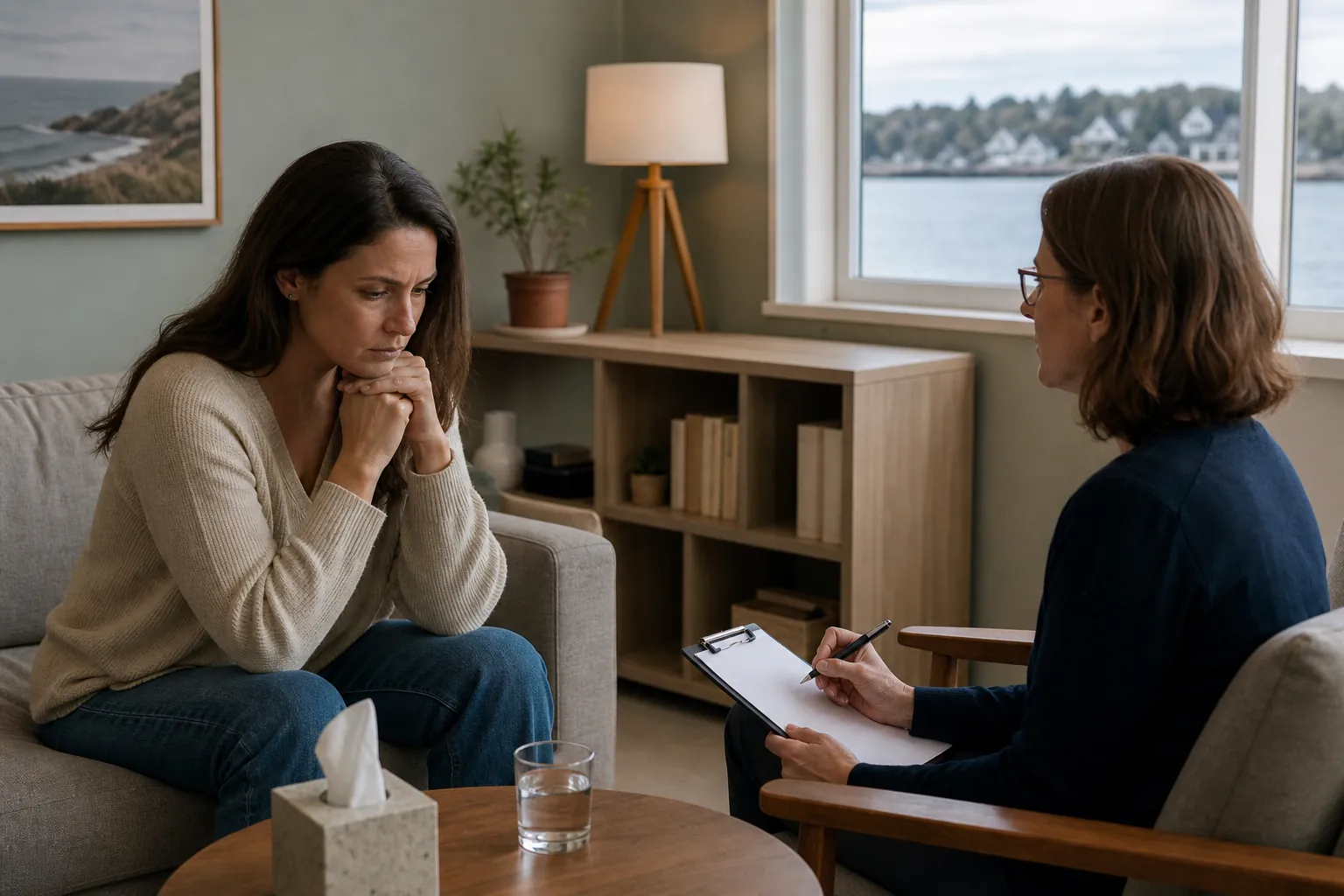
Which facts can a clinical assessment clarify?
A clinical assessment can examine symptoms, daily function, past care, safety, and the help you have outside treatment. It can place your views and what your family has seen in context. The guide to choosing a level of care explains the broader decision, while adult outpatient admissions in Amesbury describes MVBH's entry process.
The key issue is how you are doing across daily life, not whether you can sound calm during one conversation. A person may manage one task but struggle with others. A care review can look at that whole picture without assuming that a good morning cancels out a difficult week.
How you feel also matters. Family members cannot directly see the effort it takes to get through a day.
At the same time, you may not notice every change they see. Both views can help. Clear details allow a clinician to explore where the views differ, without blame.
The National Institute of Mental Health's psychotherapy guidance states that treatment plans should fit each person's needs and health, with guidance from a mental health professional. It also notes that a health care provider can help rule out physical causes of symptoms. A family disagreement cannot replace that clinical work.
Past care adds context rather than a fixed answer. An earlier benefit from IOP does not show that it fits your needs now. A hard past experience with more hours of care also matters. That experience may affect trust or how you feel about a new care plan.
Good clinical guidance explains why the care plan fits and what remains unclear. Naming PHP may not end the dispute if the reason for it is unclear. A plain reason links the proposed care to your needs. It does not promise a result.
The assessment may also find needs beyond these two types of outpatient care. The goal is care that fits your needs. Some needs fall outside PHP or IOP. MVBH's adult outpatient scope is one part of that decision.
How can I discuss support without feeling pressured?
Support can mean listening, respecting privacy, and offering practical help without making agreement a test of loyalty. Family support should have a clear purpose and limits. You can contact MVBH in Amesbury about the care process or review Virtual IOP for adults physically in Massachusetts when the home setting affects participation.
A discussion becomes less useful when every concern turns into a demand. You do not have to settle the clinical question during a family argument. A calmer talk can make clear what your loved ones have seen and what they want to do about it. Both can inform a clinical care plan without deciding it.
Privacy can be especially sensitive before enrollment. A loved one may want to know every detail because they feel they must help. That wish does not mean you must share all details with your family. You can discuss how care affects daily life without sharing all that you discuss in treatment.
- A loved one can offer practical help while being clear about what they can realistically provide.
- Family members can describe changes they have noticed without using blame or threats to demand agreement.
- You can value someone's concern while keeping personal treatment details outside the family discussion.
- A wish to help does not give a loved one the skills to decide which care you need.
Virtual care brings these limits into daily life. If someone can overhear sessions at home, privacy may affect your ability to speak freely. The NIMH guidance on virtual mental health care notes that privacy, internet access, and device problems can make virtual care harder. Ease of access alone does not settle whether that format fits.
At MVBH, virtual participants must be physically in Massachusetts during sessions. Virtual IOP does not remove the need to assess whether IOP meets your needs. It also does not fix a tense home setting by itself. Both the format and the level of care need a close look.
How can assessment resolve a mental health PHP or IOP family disagreement in MA?
An assessment can clarify the clinical basis for care even when loved ones still disagree. The next focus is why the care plan fits and which concerns it addresses. Gaps in what is known also matter. Review Full Day Treatment in Amesbury and Half Day Treatment in Amesbury in light of those reasons.
If a family member still favors PHP after IOP is recommended, ask which concern remains: support at home, a past experience, or uncertainty about IOP. That gives the clinician a specific concern to address.
If you prefer IOP after PHP is recommended, your reasons still matter. A work conflict, fear of losing privacy, and a belief that symptoms are mild are different concerns. Calling them all a refusal can hide the part of the dispute that needs more care.
In a hypothetical example, an adult prefers IOP to keep working, while a sibling favors PHP after seeing meals and basic tasks fall away. The clinician's role is to review daily life and care needs, along with the effect of work. Neither the sibling's worry nor the adult's schedule settles the choice alone.
That example does not show which care would fit someone else. It shows why two people can disagree honestly while each knows part of the story. Clear reasoning can help them understand a decision even if they do not share the same comfort level with it.
A second clinical opinion can provide another professional view when uncertainty remains. Its value is a fresh review and clear reasons for care. The goal is not to find someone who agrees with a plan chosen in advance. Existing care should not be stopped or changed solely to win the dispute.
When do safety concerns require more immediate help?
Immediate danger requires emergency help rather than a debate about outpatient schedules. Call 911 for a life threatening emergency; call or text 988 for suicidal thoughts or emotional distress. Guidance on choosing a level of care and ways to contact MVBH in Amesbury address outpatient care, not emergency response.
A family disagreement about treatment time is different from an immediate safety concern. Looking calm, wanting IOP, or having a family that favors PHP does not prove you are safe. If there is immediate danger, help should not depend on reaching agreement about which outpatient program sounds better.
The NIMH guidance on finding mental health help directs people to call 911 or go to the nearest emergency room when someone's life is at risk. It identifies 988 as a resource for suicidal crisis or emotional distress. These routes serve a different purpose from an outpatient admissions call.
MVBH does not provide emergency, inpatient, residential, or overnight care. Full Day PHP does not mean staff support after the treatment day ends. If the family's central concern is safety during evenings or overnight, that concern needs clinical review rather than an assumption that PHP provides round the clock protection.
Outside an emergency, new or worsening problems still deserve prompt clinical review. Losing the ability to meet basic needs can affect which care fits. So can major changes in daily life.
These changes need a trained professional's review. They do not give loved ones a sure way to choose a program on their own.
You can take a serious concern to heart without choosing a level of care before assessment. Your views belong in the review, even when the concern is serious. Clinical guidance can clarify whether your needs fit outpatient care. Some needs call for help outside MVBH's scope.
How can admissions help clarify the care decision?
Admissions can explain MVBH's outpatient programs and the steps toward assessment, so neither you nor your family has to guess how enrollment works. Adult outpatient admissions in Amesbury outlines the process, and you can request an insurance benefits review to clarify plan details separately from the clinical decision.
MVBH's admissions process has several stages, from first contact to treatment. A phone call does not show that a program fits, that care is covered, or when care can start. The stages explain how to move forward. Your own needs still guide the care choice.
- Initial contact begins with a call or a website form for callback details.
- Insurance verification reviews benefits, with coverage depending on your plan.
- A prescreen comes before intake as part of the admissions process.
- Intake follows the prescreen before a person starts treatment.
- Treatment follows intake if enrollment proceeds, without a guaranteed start date.
Benefits and care needs can cause separate disagreements. A family may worry about cost while you are focused on treatment time, or the reverse. Coverage varies by plan. Contact MVBH to confirm benefits; no general program description establishes what a particular plan will cover.
MVBH provides in-person treatment at 77 Elm St, Amesbury, MA 01913. Both Full Day PHP and the Half Day Intensive Outpatient Program (IOP) are adult outpatient options without overnight stays. Confirm travel requirements before making arrangements; do not assume the program can arrange transportation.
After weighing the information here, you can call MVBH at 978-233-9597 to discuss the admissions process and program options. A call can clarify how to move toward assessment when your family favors PHP and you prefer IOP. It does not require you to settle the dispute first.
You can contact admissions before resolving the family disagreement. Your preferences and your family's specific observations can both inform the assessment.
Frequently Asked Questions
Does preferring IOP mean I am refusing treatment?
No. Preferring IOP can reflect a wish to keep working, meet family duties, or receive care in a format that feels manageable. That preference deserves attention during assessment. It does not, by itself, establish that IOP provides enough support. Your reasons and current clinical needs both matter in the recommendation.
Does choosing PHP mean I have to live at MVBH?
No. MVBH's Full Day PHP is adult outpatient care at its Amesbury, Massachusetts location. It does not include a residential placement or overnight stay. This distinction matters when relatives favor PHP because they assume it provides continuous supervision. A need for overnight or emergency support requires evaluation for appropriate services outside MVBH's outpatient scope.
Can I obtain another clinical opinion if the recommendation feels unclear?
Yes. Another qualified mental health professional can assess your needs and offer a separate clinical view. The purpose is to understand the recommendation and address uncertainty, rather than secure a preferred answer. Share concerns about current care with your treating provider, and do not stop treatment solely because you or your family disagrees with a program recommendation.
Can virtual IOP resolve a disagreement about travel?
Virtual IOP may reduce travel concerns, but it does not settle whether IOP is clinically appropriate. At MVBH, participants must be physically in Massachusetts during sessions. Reliable technology and a private place to participate also matter. A virtual format cannot be assumed to meet a need for more treatment support just because it is easier to reach.
Does insurance verification decide whether PHP or IOP is right for me?
No. Insurance verification addresses benefits under your plan, while clinical assessment addresses your care needs. The two can affect practical planning, but they answer different questions. Coverage varies by plan, and contacting MVBH to confirm benefits does not guarantee coverage, admission, or a start date. A relative's payment preference does not replace the clinical assessment.
Call 978-233-9597 to talk through next steps.
