

How Does Post-discharge Isolation Affect Mental Health PHP In MA?
Mental health PHP after discharge can offer structured outpatient care during the day, while a person lives elsewhere. MVBH calls this Full Day Treatment, and the Half Day Treatment IOP program and Full Day Treatment PHP overview explain related care options.

Leaving a hospital can bring relief, stress, or both. The change may feel sharp after days of close support. At home, a person may have more quiet time and fewer check-ins. That gap can add to loneliness, even when family or friends are nearby.
A hospital discharge plan and an outpatient program serve different roles. A hospital team may help set up follow-up care before a person leaves. An outpatient team then reviews the person's needs and whether its services fit. Contacting a program does not replace urgent help when safety is at risk.
MVBH provides Full Day Treatment (PHP), Half Day Treatment (IOP), outpatient care, Virtual IOP, and dual-diagnosis outpatient services. These are non-hospital services. They do not include housing, overnight supervision, emergency care, or onsite detox.
The phrase post-discharge isolation can mean many things. Someone may lack people to call, feel cut off from daily life, or struggle to return to usual routines. A clear plan can name support people and care contacts. It should also state what to do if needs change.
How Does PHP Differ From Inpatient Care And IOP?
PHP is outpatient day treatment, while inpatient care includes a hospital stay and IOP is a less intensive outpatient level. MVBH offers Full Day Treatment and IOP, not inpatient care. The Half Day Treatment IOP program and Full Day Treatment PHP overview describe MVBH's outpatient options.
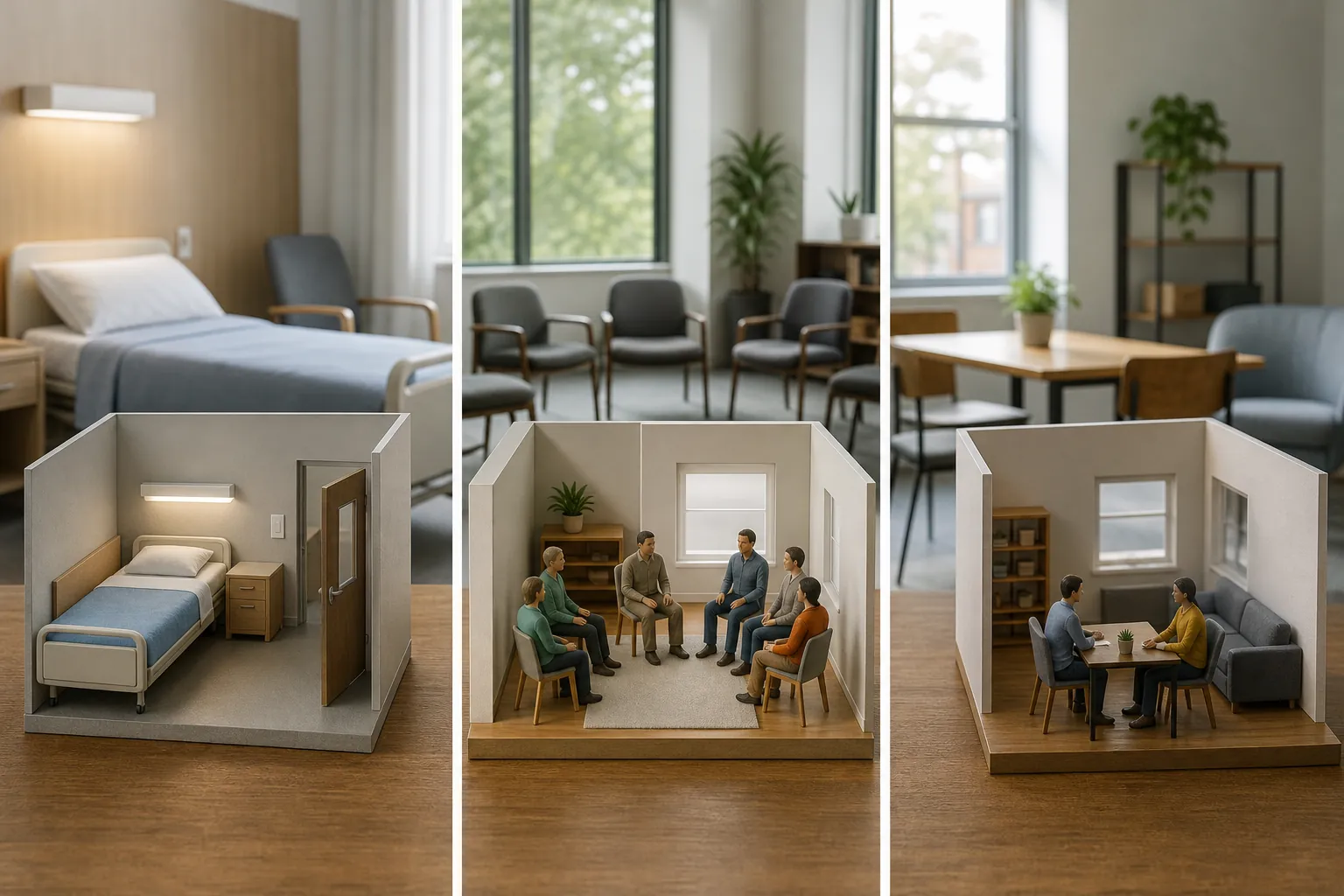
People sometimes use PHP to mean a hospital service with a particular schedule. Program names and details can vary by provider. At MVBH, PHP means Full Day Treatment, delivered in a non-hospital setting. It does not mean a hospital stay, and it does not provide a place to live.
The table gives a broad view of how settings differ. Exact services and fit depend on the provider and the person's assessment. MVBH can explain its own outpatient services, but it cannot provide inpatient or overnight care.
A hospital discharge does not by itself show which outpatient level fits next. A person's current needs, daily support, and safety matter in that decision. The outpatient team reviews the person's situation before determining whether a service is appropriate.
A move between settings can take planning. The person may need a clear handoff, follow-up visits, and a way to reach support at home. Those steps can help reduce confusion, but they do not turn outpatient care into around-the-clock supervision.
| Setting | Where care happens | MVBH service |
|---|---|---|
| Inpatient hospital | Hospital, with overnight stay | Not offered |
| Full Day Treatment (PHP) | Outpatient, during the day | Offered |
| Half Day Treatment (IOP) | Outpatient, at a lower level of intensity than PHP | Offered |
| Outpatient care | Visits while living at home | Offered |
How Can Home Support Ease Isolation After Discharge?
Home support can reduce long stretches of isolation by making contact and daily routines easier to reach. It cannot replace clinical care or close monitoring when those are needed. The Virtual IOP in Massachusetts details and Half Day Treatment IOP program explain outpatient options.
A useful home plan is simple and specific. It can name the people who are available, the best way to reach them, and what kind of help they can offer. One person may help with meals, while another can sit together or provide a ride.
Support should respect the person's wishes and privacy. Ask before sharing personal details with friends or relatives. Some people want company but not advice. Others may prefer a quiet visit or brief check-in rather than a long talk.
Small routines can give shape to a day after a hospital stay. Regular meals, rest, and planned contact may make home feel less empty. These steps are not a substitute for care. They are practical supports that can sit alongside a treatment plan.
Family and friends may feel unsure about what to do. They can listen without pressing for details and keep plans realistic. If the person says that a plan is not helping, adjust it together when possible. A care team can also help clarify the role of outpatient support.
- Choose one trusted person for regular check-ins at home.
- Set up simple shared activities, such as a meal or short walk.
- Write down care contacts and the next planned appointment.
- Agree on a backup person if the first support person is unavailable.
What Belongs In A Home Transition Plan?
A home transition plan should name care follow-up, daily support, and steps for changing needs. It should also make clear that outpatient programs do not provide housing or overnight supervision. The Full Day Treatment PHP overview and Half Day Treatment IOP program describe two outpatient choices.
A plan works best when it reflects the person's real home life. It can include who will be present, what support is available, and how the person will get to care. It should also note limits, such as long periods alone or a lack of safe transportation.
Before discharge, the hospital team may share follow-up guidance. The person can keep that guidance with appointment details and any contact information the team provides. A family member can help organize papers if the person wants that help. Do not assume a new outpatient program has received the hospital's records.
Work and privacy may affect how a person plans care. Federal family and medical leave rules may protect eligible workers in some situations, but eligibility depends on the facts. The U.S. Department of Labor explains federal FMLA rules for mental health conditions. Massachusetts leave rules are separate.
Privacy rules also have limits and exceptions. HIPAA does not create a blanket ban on sharing information with family in every situation. The person's choices and the specific circumstances matter. MVBH can explain its own process, but the plan should not assume that every detail stays private in all cases.
- Keep the discharge plan and outpatient contact details in one place.
- Name support people who have agreed to help.
- Plan for meals, transport, and time alone at home.
- Add a clear route to urgent help if safety needs change.
Can Virtual IOP Help When Leaving Home Feels Hard?
Virtual IOP may make outpatient sessions easier to reach for adults who meet program requirements, but it does not provide home monitoring. MVBH requires virtual participants to be in Massachusetts during sessions. See the Virtual IOP in Massachusetts details and Half Day Treatment IOP program.
Virtual care can reduce travel and make it easier to join from home. For some people, that may lower one barrier to outpatient support. It does not supply company between sessions or replace urgent assessment when a person may be unsafe.
At MVBH, Virtual IOP is for adults who are physically in Massachusetts during sessions. Being at home does not change that location rule. A person outside the state during a session cannot take part under this service detail.
A private place and a steady connection may help someone take part in virtual care. The person may also need a backup plan if a session drops or they cannot join. The care team can explain how its virtual service works and assess whether the option fits.
The right format can depend on more than travel. A person may need in-person contact, a different level of care, or support that outpatient services do not provide. An assessment helps sort through these needs. No format should be treated as a substitute for emergency care.
How Do Insurance, Work, And Privacy Affect Follow-Up?
Insurance review, work leave, and privacy each involve separate rules, so none should be assumed from a hospital discharge. MVBH says coverage varies by plan and benefits review is separate from admission. See the insurance benefits verification details and Half Day Treatment IOP program.
A benefits check can help explain how a plan may handle a service. It is not a coverage decision for every request, and it does not decide admission. MVBH reviews benefits separately from its assessment and admission steps. The written plan terms and the specific service matter.
Work leave also needs a separate review. Federal FMLA rules apply only to eligible workers and qualifying situations. An employer or benefits office can explain its process. Do not assume that a hospital stay or outpatient visit automatically meets every leave rule.
A person may choose to share only the details needed for a work or care task. Privacy rights depend on the situation and the rules that apply. The HHS guidance on mental and behavioral health records explains some HIPAA limits and permissions. It does not define every employer's duties.
When Is Outpatient Support Not Enough?
Outpatient support may not fit an immediate safety crisis or a need for overnight care. A person at immediate risk needs emergency help, not a wait for admission or an insurance decision. See the Full Day Treatment PHP overview and Half Day Treatment IOP program for outpatient limits.
A person's needs can change after leaving the hospital. New danger, severe distress, or inability to stay safe calls for urgent assessment. An outpatient program can explain its services, but it does not provide emergency response or overnight monitoring.
For immediate danger, call 911 or go to an emergency department. For suicide or mental health crisis support in the United States, call or text 988. These are different routes: 911 is for immediate danger, while 988 offers crisis support.
Do not wait for an outpatient admission, benefits review, or appeal when danger is immediate. Those steps address care access and coverage, not emergency response. If a hospital discharge plan names a crisis route, follow that guidance while seeking urgent help.
MVBH does not offer inpatient, residential, overnight, or emergency care. It also does not provide onsite detox or withdrawal management. A person needing those services must seek an appropriate provider or urgent service. An outpatient assessment can address outpatient fit, not replace emergency evaluation.
Questions about next steps? Call MVBH at 978-233-9597 or review admissions and care information.
Frequently Asked Questions
Does PHP provide a place to stay after a hospital discharge?
No. MVBH's Full Day Treatment (PHP) is outpatient care, so participants live elsewhere. It does not offer housing, overnight supervision, or inpatient care. A person who needs a safe place to stay should raise that need with the hospital discharge team or another suitable local service before leaving the hospital.
Can family take part in a person's outpatient care?
Family involvement depends on the person's wishes, privacy rules, and the care setting. A person can ask the outpatient team how support people may take part. HIPAA does not bar every disclosure to family in all cases, but it also does not mean family can access all care details.
Can someone join MVBH Virtual IOP while outside Massachusetts?
No. MVBH requires virtual participants to be physically in Massachusetts during sessions. Being an MVBH participant while at home in another state does not meet that location rule. The program can explain its current service details and other outpatient options.
Does a benefits check mean MVBH has approved admission?
No. Benefits verification and admission are separate steps, and coverage varies by plan. A benefits review can clarify plan information, but it does not decide whether a person meets program criteria. MVBH completes a separate assessment and admission process.
What if a person feels alone but is not in immediate danger?
Feeling alone after a hospital stay is worth discussing with a trusted support person or care provider. A home plan can set regular contact and follow-up care. If safety changes or the person may be in immediate danger, seek urgent help rather than waiting for a routine outpatient visit.
