

What Does Mental Health IOP After Pet Loss Mean?
adult intensive outpatient care after pet loss means considering half-day outpatient treatment when a person needs more structure than standard outpatient care may offer. Pet grief does not automatically call for treatment, and an assessment helps determine whether an IOP is a suitable level of care. Compare full-day partial hospitalization care when considering care.
The death of a pet can affect a close bond, daily habits, and a person's sense of home. People may miss feeding times, walks, or the quiet company that shaped ordinary days. Those changes can make the loss feel present from morning to night.
An IOP is a day program, not a hospital stay or overnight service. MVBH offers Half Day Treatment (IOP) for adults. The program is one outpatient option, not a claim that grief is an illness or that every grieving person needs formal care.
For some adults, the helpful next step is simply learning which level of care may fit. The Half Day Treatment IOP overview explains the service more broadly. A clinical assessment at MVBH helps consider personal needs rather than assume that pet loss means a particular diagnosis.

When Might IOP Be Appropriate After a Pet Dies?
An adult intensive outpatient care may be considered when distress after a pet dies makes daily responsibilities harder and a person may benefit from a structured day program. The decision depends on an individual assessment, including current needs and whether outpatient care can provide an appropriate level of support. Compare full-day partial hospitalization care when considering care.
Grief can change from day to day. Some people keep up with work, relationships, and basic routines while feeling deep sadness. Others find that sleep, focus, or ordinary tasks have become harder to manage. Those changes are reasons to seek a conversation, not proof of a disorder.
The level of care should reflect the whole picture, more than the event that happened. A clinician can consider how distress affects daily life, what support is already present, and whether a half-day program is appropriate. The assessment may also point to another type of care.
A person who needs a different level of support may be referred toward an option that better fits. MVBH also offers Full Day Treatment (PHP), but PHP and IOP are both day programs. Full Day Treatment PHP for adults describes that separate service.
- Difficulty keeping up with usual responsibilities may be worth discussing with a clinician.
- A loss of daily structure can make ordinary routines feel unfamiliar or demanding.
- Ongoing distress may be a reason to seek support without labeling the grief.
- Immediate danger calls for emergency help, not a routine outpatient assessment.
How Can Pet Loss Affect Attachment and Daily Structure?
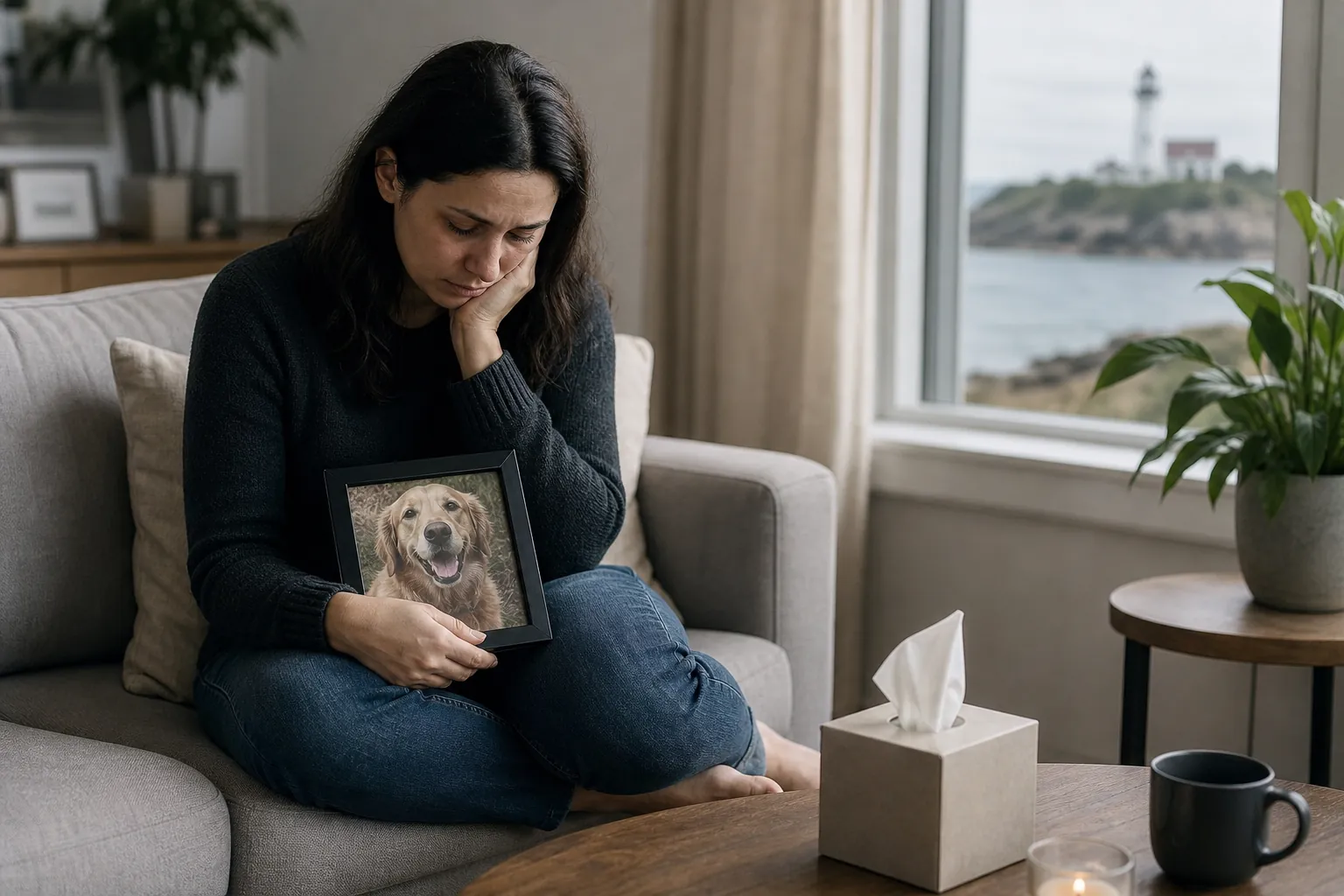
Pet loss can affect attachment and daily structure because a companion animal may be part of routines, comfort, and a sense of connection. The impact differs from person to person, so changes in sleep, focus, or habits should be understood in context rather than treated as a diagnosis by themselves. Compare adult intensive outpatient care and full-day partial hospitalization care when considering care.
A pet may greet someone at the door, share a regular walk, or stay nearby during quiet hours. These small moments can become meaningful anchors. After a death, familiar cues may bring comfort one moment and sharpen the sense of absence the next.
The bond can also be hard to explain to others. Someone may hear that the loss was “only a pet,” even when the relationship felt central to family life. Such reactions can add loneliness or make a person less willing to talk about the loss.
Grief does not follow one timetable. A person may feel more settled in one part of the day and more affected in another. The goal of an assessment is not to judge whether someone is grieving correctly, but to understand what support, if any, may be useful.
Notice changes without turning them into a label
Changes in routine can help explain why the loss feels so disruptive. A missed walk, an empty feeding spot, or a quieter home can be a repeated reminder. These experiences can be shared with a clinician as context, without treating any one reaction as proof of a mental health condition.
Personal, family, and cultural views of pet loss also matter. One person may want to talk often, while another may prefer quiet company. Neither response alone tells whether an intensive outpatient program is needed.
What Does IOP Offer, and How Is It Different From Other Care?
An IOP is a half-day outpatient program, while full-day partial hospitalization care is a full-day program and standard outpatient care is another service option. virtual intensive outpatient care in Massachusetts changes where eligible adults take part, not the need for an assessment. None of these MVBH services is overnight, hospital, emergency, or onsite detox care.
These options differ mainly in their program format and level of structure. A clinical assessment helps determine which service may match a person's needs. The names alone cannot show whether someone is a good fit, and a person should not have to choose a level of care without guidance.
The table gives a basic view of the services MVBH lists. It does not promise a particular schedule, admission, or clinical result. If a person's needs exceed outpatient care, the assessment can help clarify that distinction and point toward an appropriate next step.
| Option | Format | Key distinction |
|---|---|---|
| Half Day Treatment (IOP) | Day program | Half-day intensive outpatient care |
| Full Day Treatment (PHP) | Day program | Full-day treatment |
| Outpatient care | Outpatient service | Not described as a day program |
| Virtual IOP | Virtual day program | Eligible adults must be in Massachusetts during sessions |
How Does an Assessment Decide Whether IOP Fits?
A clinical assessment considers a person's current concerns and whether outpatient adult intensive outpatient care is an appropriate level of care. Pet loss may be part of the story, but the decision should reflect the person's full situation rather than a label or a single symptom. Compare full-day partial hospitalization care when considering care.
An assessment gives the clinical team a chance to understand what has changed and what support is already available. The discussion may include daily functioning, mental health concerns, and other factors that affect care. The assessment is also where a person can describe what feels most difficult.
The result is not a guarantee of admission or a promise that one program will address every need. If IOP is not the right fit, a different outpatient option or another level of care may be more suitable. That distinction protects the person from being placed into a service that does not match their needs.
MVBH provides dual-diagnosis outpatient services. That service does not mean every person has a co-occurring condition, and this post does not diagnose one. A clinical assessment is needed to understand whether those services, IOP, or another option is relevant.
- An assessment looks at current needs rather than relying on the reason for seeking help alone.
- The clinician considers whether an outpatient day program is an appropriate level of care.
- The assessment can clarify when another service or a higher level of care may fit better.
- A discussion of options does not guarantee admission or a particular outcome.
Can Adults Join Virtual IOP After Pet Loss in Massachusetts?
Eligible adults may take part in MVBH virtual intensive outpatient care in Massachusetts only while physically present in Massachusetts during sessions. Virtual participation is still an outpatient day program, and an assessment determines fit. A remote format does not make adult intensive outpatient care emergency, overnight, or hospital care.
Virtual care can reduce the need to travel to an in-person location, but it is not available to everyone by default. Eligibility and clinical fit still matter. Participants must be physically in Massachusetts during sessions, even if they live elsewhere or are visiting from another state.
MVBH has one physical location in Amesbury, Massachusetts. In-person services are provided at that location; the virtual option is not a second physical site. The Virtual IOP in Massachusetts details can help explain the separate service format.
A person should consider whether a virtual setting makes sense for their situation and whether the program meets their needs. The clinical team can explain eligibility and assessment. A remote option does not change the limits of outpatient care or replace emergency support.
How Do Insurance and Benefits Affect Access to IOP?
Insurance coverage for adult intensive outpatient care depends on plan benefits, authorization rules, network status, and cost sharing. A insurance benefits verification can explain information available from a plan, but it does not guarantee coverage, admission, or a final cost for care.
A review can help identify what the plan says about outpatient behavioral health care and whether it requires authorization. Network status and cost sharing can also affect what a person may owe. These details vary by plan, so a general explanation cannot predict an individual's final coverage.
Benefits verification and clinical assessment answer different questions. A benefits review concerns plan information; an assessment considers whether a service may fit clinically. Neither process promises that a person will be admitted or that a plan will pay for treatment.
MVBH can review benefits information, while the plan determines coverage under its rules. Insurance benefits verification details explains that part of the process. A person can also contact the plan directly to confirm current terms and ask how outpatient services are handled.
- Plan benefits may describe whether outpatient behavioral health services are covered.
- Authorization rules may apply before a plan considers payment for care.
- Network status and cost sharing can change a person's financial responsibility.
- A benefits review does not confirm admission, coverage, or a final cost.
What Can Support Look Like While Someone Is Grieving?
Support while grieving can include trusted people, community resources, or professional care, depending on what the person finds helpful. There is no single correct way to remember a pet or move through loss, and an adult intensive outpatient care is only one possible service when assessment supports that level of care. Compare full-day partial hospitalization care when considering care.
Some people want to share memories, while others prefer not to talk much. A trusted friend or family member can offer company without setting a timetable for grief. Practical kindness, such as recognizing that routines have changed, may matter more than trying to find perfect words.
People differ in what feels meaningful. Some keep a photo or remember a familiar ritual; others choose a private way to mark the bond. These are personal choices, not treatment tasks or requirements. A person can decide what feels right without being told how quickly to feel better.
If grief is affecting daily life, a conversation with a qualified professional can help clarify options without assuming a diagnosis. SAMHSA also offers general information about treatment and support. Immediate danger or thoughts of suicide need urgent help; call 911 for an emergency or 988 for the Suicide and Crisis Lifeline.
Questions about next steps? Call MVBH at 978-233-9597 or review admissions.
Frequently Asked Questions
Does seeking IOP mean my grief is abnormal?
No. Considering an IOP does not mean that grief is abnormal or that a person has a diagnosis. People seek support for many reasons, including difficulty managing daily life after a loss. A clinical assessment can discuss needs and care options without treating pet grief itself as proof of a disorder.
Can someone use IOP only because they miss a pet?
Missing a pet alone does not determine whether IOP is appropriate. A clinical assessment considers the whole situation, including current needs and whether a half-day outpatient program may fit. Some people may prefer personal or community support, while others may benefit from a more structured service.
Does MVBH provide overnight care or emergency treatment?
No. MVBH's PHP and IOP are day programs, not hospital, residential, overnight, emergency, or onsite detox care. A person who needs immediate emergency help should call 911. For a mental health crisis involving suicide risk, call or text 988 for the Suicide and Crisis Lifeline.
Can virtual IOP be attended from outside Massachusetts?
No. MVBH virtual IOP participants must be physically present in Massachusetts during sessions. A person's home address alone does not meet this requirement if they are elsewhere during participation. Clinical assessment also determines whether virtual IOP is an appropriate service.
Does a benefits review mean insurance will pay for IOP?
No. A benefits review can clarify plan information, but coverage, authorization, network status, and cost sharing vary. The review does not guarantee payment or admission. The health plan's rules apply, and a clinical assessment separately determines whether the service may be a fit.
Sources
- Mental health therapy, NIMH
- What is mental health, SAMHSA
Call 978-233-9597 to talk through next steps.
