
Why Do Mental Health App Usability And Engagement Matter?
A tool cannot help someone practice a skill if they stop opening it. Ease of use is separate from a mental health app health claim and from any mental health app professional care the product provides. NIMH names usability and engagement as design concerns and suggests trying a tool for a few days.

Ease of use is a practical check, while health benefit is a separate research question. Both matter for an honest appraisal. A mental health app may ask for daily entries, offer lessons, or send reminders. Each task has a cost in time and attention. A person who understands the first screen may still find the routine hard to maintain. NIMH says app developers must consider whether people continue using an intervention. A feature that looks promising in a description may have little practical reach if it is rarely used.
Personal fit can be assessed directly. Is the text readable? Is the main task clear? Can the person find what happens to their data? Are reminders helpful or intrusive? These observations do not prove treatment effectiveness, but they reveal whether the tool is usable for its stated purpose. They also help distinguish a problem with the interface from a problem with the health claim.
NIMH suggests trying an app for a few days to see if it is easy to use and holds interest. A short trial can reveal friction but cannot show long-term clinical results. Someone may enjoy a tool and still need care. Someone else may dislike a tool that has promising evidence. These are different findings, and neither should be hidden behind a single star rating.
The point is not to force daily app use. A tool should serve a clear purpose, such as recording a pattern or practicing one skill. If the effort exceeds the value, that is useful information. A person can choose another way to reflect or practice, including a paper record or a direct conversation with a professional.
- Check whether the main task is clear on the first use.
- Notice whether reminders help or interrupt daily life.
- Revisit the tool after several days of actual use.
- Keep practical fit separate from evidence of health benefit.
What Does Engagement Actually Measure?
Engagement can describe openings, completed lessons, entries, or time spent. A study may count mental health app completed lessons or mental health app logged entries; neither count alone proves symptom relief. These measures show use of a tool, not necessarily a change in symptoms. NIMH discusses engagement because people must use an intervention to benefit from it.

The outcome a study measures should be read separately from the app’s activity statistics. A product may celebrate a long streak. The streak tells you that a particular action happened repeatedly. It cannot tell you whether the action was useful, whether someone felt better, or whether their daily life improved. Those questions require different evidence. A person should be free to stop an unhelpful routine without treating a broken streak as a health failure.
A research paper may report that participants stayed with an app for a period of time. That can support a feasibility finding. It does not automatically support a claim that the app treats depression or anxiety. NIMH identifies effectiveness and engagement as separate questions. Read the measured outcome rather than relying on the headline.
Some tasks need repetition to become familiar; others may only be needed at a difficult moment. A low opening count can mean the app failed to hold attention, or that the user no longer needed that feature. A high count can mean strong interest, or that someone is struggling and repeatedly checking it. Usage data require context.
A useful personal measure is whether the tool helps a person do the intended task. If a mood log makes a health conversation clearer, the log may be serving its purpose. If repeated prompts create stress, engagement metrics can look high while practical value is low. The user’s experience belongs beside the usage numbers.
How Can Design Support Or Hinder Use?
Clear language, readable screens, and a manageable task can make a tool easier to use. A confusing mental health app score can mislead; evidence and privacy checks are separate from a polished screen. Repeated prompts, confusing scores, or hidden settings can get in the way. NIMH advises looking at ease of use and interest.
Usability concerns whether the feature works for a person; clinical claims need separate evidence. A long daily check-in may be too much when energy and focus are low. A short prompt may fit better, but brevity alone does not make a question clinically meaningful. The design should match the task. A journal needs space for a person’s words; a reminder needs to be noticed at a useful time; a lesson needs a clear next step.
Scores deserve plain explanations. If an app changes a color or number without showing what inputs led to it, the user may draw a stronger conclusion than the tool supports. A clear design can state that a score reflects selected entries and cannot diagnose a condition. NIMH notes ongoing research about what digital tools can reliably infer.
Accessibility can affect whether a person can use the tool at all. Text size, contrast, sound, and the number of steps are practical features to inspect during a trial. These practical checks do not certify an app as accessible. A user can test whether they can read, hear, and complete the tasks they need on their own device.
Data settings are part of usability because a person must understand them to make a choice. If enabling a feature changes what is collected, the app should make that clear. MedlinePlus advises reviewing privacy terms before sharing health information. A smooth interface cannot compensate for an unexplained data request.
- Read one score explanation before trusting its color or number.
- Test the task during a low-energy day as well as a good day.
- Check text, sound, contrast, and number of steps.
- Review data settings when turning on a new feature.
Why Might People Stop Using A Tool?
People may stop because the task is burdensome, the content feels irrelevant, reminders are intrusive, privacy terms feel uncomfortable, or the need changes. A mental health app developer promise cannot turn mental health app engagement measures into evidence of recovery. NIMH treats continued use as a research challenge. Stopping does not by itself show personal failure or proof that every digital tool lacks value.
Stopping does not by itself show personal failure or proof that every digital tool lacks value. An app designed for daily practice may ask more than someone can give during a hard week. A tool that promised quick relief may disappoint because the promise was too strong. A different person may have learned the skill and no longer need prompts. These reasons differ, so a bare count of people who quit does not explain the product’s strengths and weaknesses.
A useful review asks when the friction appeared. Was account setup difficult? Did the first lesson make sense but later lessons repeat? Did a new permission request change comfort with the product? Each point suggests a different problem. The answer can guide a personal decision and, in research, help developers improve a tool.
Marketing may frame a stopped streak as a reason to buy more features. That claim should be judged like any other. NIMH warns about overselling app benefits. A paid upgrade has to solve a real barrier for the user; it should not turn ordinary disengagement into an unsupported health diagnosis.
If a person stops an app because symptoms worsen, the response should be direct human support. The app’s own statistics may not capture why use fell. A person can contact a treating professional about persistent concerns. For crisis support call or text 988, and for immediate danger call 911.
What Can A Short Personal Trial Show?
A few days can show whether the app is understandable, manageable, and comfortable to use. A short test may reveal friction; it cannot verify mental health app clinical evidence or a developer data-use promise. NIMH suggests this kind of trial for ease and interest. It cannot establish safety or treatment effectiveness. Pair the personal test with evidence and privacy checks before relying on a health claim.
Pair the personal test with evidence and privacy checks before relying on a health claim. Start with the feature that matters. If the goal is a simple record, see whether entries are easy to make and review. If the goal is skill practice, see whether the instructions are clear enough to follow. Trying every feature can obscure the main purpose and may enable data collection that was not needed.
Notice the demands outside the feature itself. Does the app require an account? Does it send frequent notifications? Is it clear how to change settings or stop using it? MedlinePlus recommends understanding privacy terms, and NIMH highlights privacy as an app concern. Practical comfort with the data request belongs in the trial.
Do not treat a short positive experience as a clinical study. Feeling calmer after one exercise can matter personally, but it does not prove the app treats a condition. Conversely, a confusing first use may make the product a poor fit for this person even if a method in it has supporting research.
A person can write a plain conclusion after the trial: what task did the app help, what was difficult, and what remains uncertain? That summary is more informative than a single rating. It may also help a conversation with a health professional if the tool is being considered as part of care.
- Choose one clear purpose before testing the selected app.
- Try the feature and the settings on the same device.
- Record what felt useful, difficult, or unclear during use.
- Check health evidence separately from the short personal trial.
How Does Human Support Change Engagement?
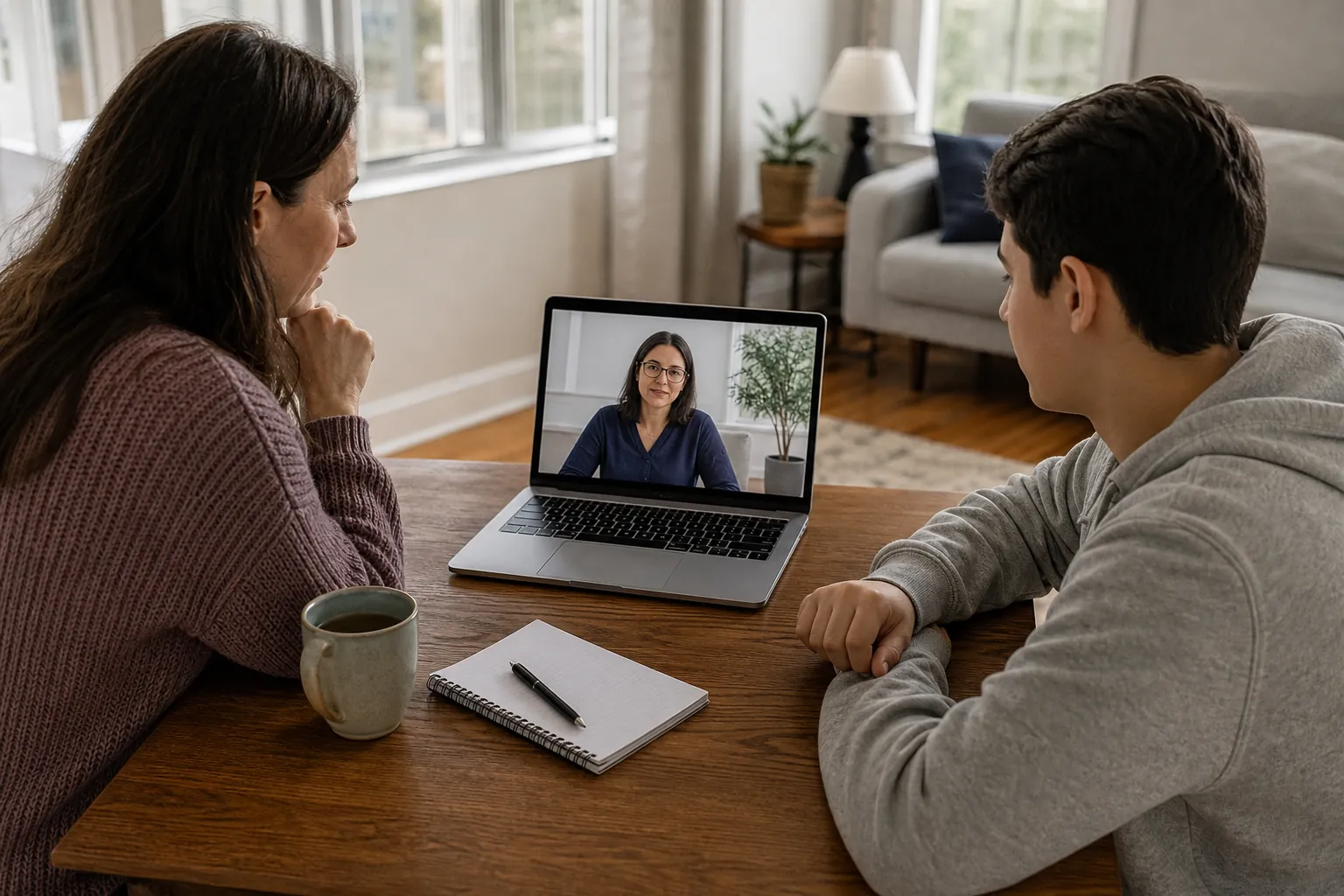
Some digital tools include a peer or trained professional; others are stand-alone. A peer or clinician role may change use, but a mental health app study outcome must still be measured separately. NIMH says researchers are studying how much human support app-based care needs. A human connection may help use feel relevant, but the role and response process must be stated.
Engagement still does not equal clinical improvement. A message from a person may encourage someone to complete a lesson. The meaning of that message depends on who sent it and what service they provide. A peer, coach, and licensed clinician have different roles. An app description should identify the role and avoid making the user infer clinical care from a friendly tone.
Human contact can also give context to a difficult experience with the tool. Someone may find an exercise upsetting or a prompt unhelpful. A treating professional can discuss that response as part of care. An automated program may offer a standard next screen instead. That difference matters when the app is being marketed as an alternative to treatment.
NIMH warns that oversold technology can turn people away from effective care. A tool that people enjoy using should not be advertised as a replacement merely because engagement is high. Research needs to ask whether the intended health outcome improved, for whom, and under what form of human support.
MVBH offers verified adult outpatient services, but this article does not establish that its clinicians use or monitor an app. If someone already receives care, they can describe the tool they use and the patterns they noticed. The professional can decide whether the information helps their work together.
Questions about next steps? Call MVBH at 978-233-9597 or review Full Day Treatment (PHP).
Frequently Asked Questions
Does Using An App Daily Mean It Is Helping?
No. Daily use shows engagement with a task. It does not prove a health benefit. NIMH treats engagement and effectiveness as different research questions. Look at whether the intended outcome was studied, and consider whether the routine has practical value for the user.
How Long Should I Try An App To Judge Ease Of Use?
NIMH suggests trying a tool for a few days to see whether it is easy to use and holds interest. That can reveal practical friction. It cannot prove treatment effectiveness or long-term safety. Review evidence and privacy terms separately.
Is A Streak A Clinical Measure?
A streak counts repeated use of a feature. It does not diagnose a condition or show symptom relief. An app may use a streak to encourage practice, but the person’s functioning and the health outcome require different assessment.
Why Would Someone Stop Using A Mental Health App?
The task may take too much effort, seem irrelevant, make uncomfortable data requests, or no longer be needed. NIMH identifies continued use as a design challenge. A stopped app should not be treated as personal failure. If symptoms are worsening, seek direct human care.
Can A Clinician Help Interpret My Experience With An App?
Yes, a treating professional can discuss what the app records, what was helpful, and what felt difficult. That conversation can put an app experience in context. This page does not claim that MVBH monitors or recommends any specific app.
Sources
- Technology and the Future of Mental Health Treatment, NIMH
- Evaluating Health Information, MedlinePlus/NLM
Editorial status
Approved by Clinical Staff
Written by Tim Francis. This guide is educational. Read our clinical review and sources policy.
