
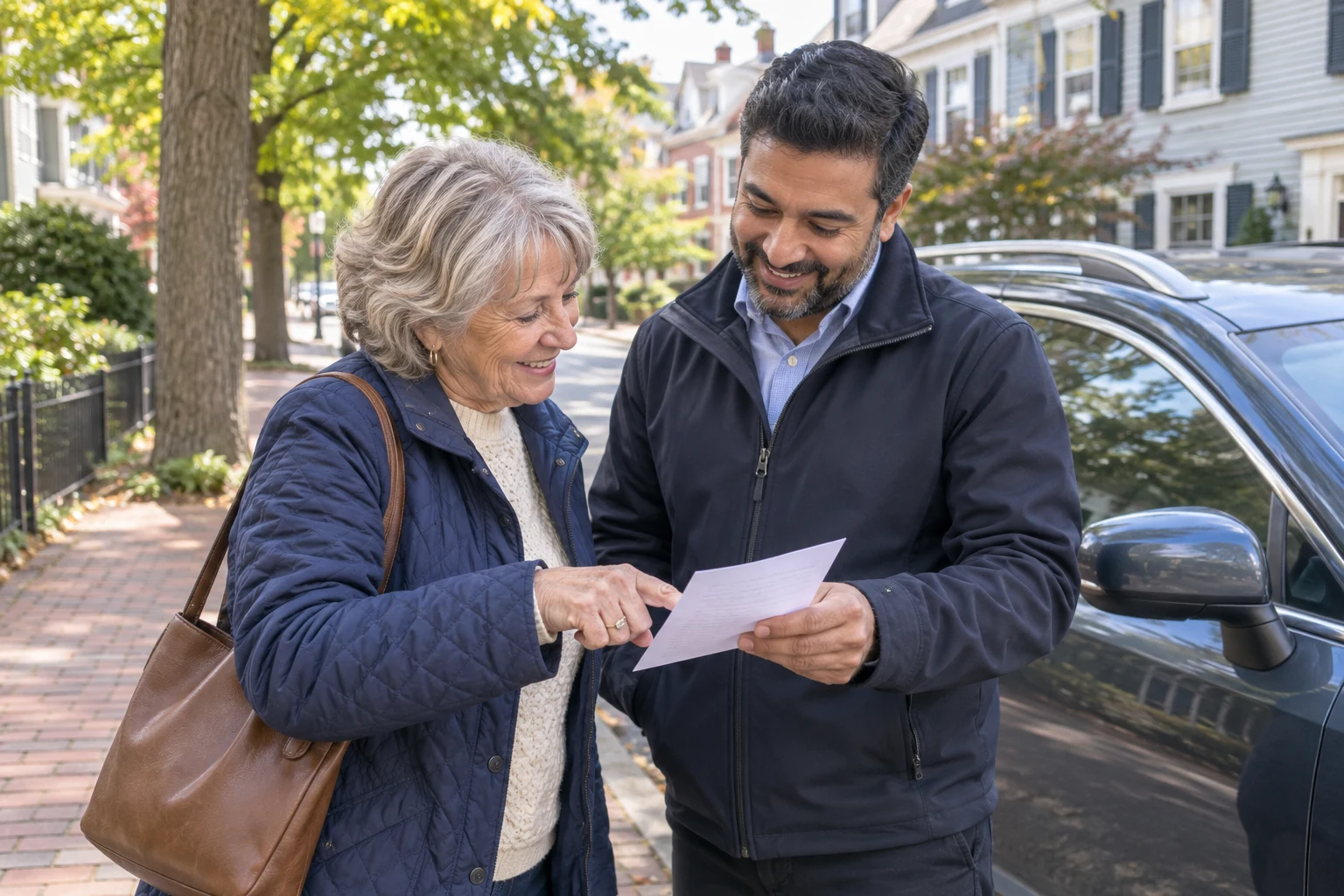
A workable ride plan answers four practical questions: where you will meet, when the driver should arrive, how you will contact each other, and what happens if something changes. The street address is a starting point, but it does not identify the correct entrance or establish where a vehicle may stop. Confirm those details before treating the ride as arranged.
At Merrimack Valley Behavioral Health, IOP means Half Day Treatment. PHP means Full Day Treatment, a separate outpatient program in MVBH's non-hospital setting. Neither program name supplies your personal arrival or departure time. Keep transportation arrangements separate from decisions about which program someone should attend.
For broader context, the guide to mental health treatment in Massachusetts explains outpatient options and the separate role of assessment. Once an appointment is confirmed, the ride plan can focus on getting to and from that appointment.
Confirm The Address And A Usable Meeting Point
MVBH lists its in-person location as 77 Elm St, Amesbury, MA 01913. Use the MVBH contact page to request current arrival instructions. Ask which entrance serves your appointment and whether there is a designated place for passenger drop-off or pick-up. A published address does not establish a loading area, parking permission, or an indoor waiting arrangement.
A meeting point is usable only if both people can identify it and the vehicle can stop there appropriately. Ask about the route from the proposed stopping place to the entrance, especially if steps, walking distance, or weather exposure matter to you. Describe the practical access concern without adding unrelated health information. Do not assume an entrance is accessible simply because a map shows it nearby.
The National Institute of Mental Health's tips for preparing for a health care conversation note that appointment time is limited and recommend thinking through questions beforehand. Apply that preparation method to logistics by writing down the few details that would change your transportation plan.
- Confirm the appointment address and entrance rather than relying only on a saved map pin.
- Request directions to an appropriate passenger meeting point and clarify any stopping restrictions.
- Identify any access need that affects the route between the vehicle and entrance.
- Record the confirmed instructions in a short note the driver can use.
Keep the initial conversation focused: “Which entrance should I use? Where may my driver stop? If that spot is unavailable, what alternative should we confirm?” These are requests for current information, not assumptions about facility arrangements. Before ending the conversation, repeat the directions back in plain language. If a location remains unclear, mark it as unresolved instead of filling the gap with a guess.
Match Pick-Up Timing To Confirmed Appointment Details
Separate the appointment start, requested arrival, expected finish, and driver arrival. Those times may serve different purposes. Ask MVBH what timing applies to your particular visit, including whether a first appointment has different arrival instructions. Do not calculate a pick-up time from the words “half day” or from general program information.
Once you have confirmed the appointment details, agree with the driver on how departure will work. A fixed pick-up time may be convenient when both people have predictable schedules. A message sent when you are ready may reduce uncertain waiting, but only if you can contact the driver and the driver can respond. Neither approach establishes that a vehicle may wait outside the building.
| Approach | Useful When | Detail To Settle |
|---|---|---|
| Fixed pick-up time | The appointment timing and driver's availability are confirmed. | How either person will report a delay. |
| Ready-to-leave message | The driver can travel after receiving your message. | Where you can appropriately wait while the driver travels. |
| Agreed check-in time | The driver needs an update before beginning the trip. | Whether you can make contact at that time. |
| Backup driver | The primary driver may become unavailable. | Who activates the backup and confirms the revised plan. |
Discuss the driver's travel time separately from the expected appointment finish. “I will message when I am ready” does not mean “I will be in the car immediately.” If the driver has a firm deadline afterward, decide whether the plan leaves enough room for the trip without relying on an unconfirmed early departure.
Ask MVBH whether there is an appropriate place to wait if your ride arrives later. Do not assume indoor space remains available after an appointment or that staff can supervise a wait. If the answer affects feasibility, resolve it before the visit. A transportation conflict belongs in an advance scheduling conversation rather than becoming a last-minute expectation that the appointment will change.
Create A Contact Plan Without Sharing Extra Details
Your driver generally needs travel information: the destination, meeting point, timing, and a way to reach you. A ride note can leave out the reason for treatment, session content, and other personal details that do not help the driver find you. This is a practical way to limit unnecessary sharing, not a statement about legal rights or clinic disclosure rules.
Choose a primary contact method and one fallback. Texting may be convenient for a friend; a driver who does not use text may need a call instead. Confirm the correct number before the appointment. If a shared device or message preview matters to your preferences, agree on neutral wording such as “Ready at the agreed entrance” rather than including treatment information.
- Primary contact: Agree whether the ready message will be a call or text.
- Reply signal: Decide how the driver will acknowledge the message so you know it was received.
- Missed connection: Set an agreed interval before trying the fallback method.
- Changed location: Require a clear update and acknowledgment before using a different meeting point.
A simple message might read: “Meet at the confirmed entrance. I will contact you when I am ready. Please reply before leaving for the pick-up.” Add the actual address and meeting instructions you have confirmed. Avoid vague phrases such as “the usual place” when a new driver is involved.
Plan for an ordinary phone problem without assuming the clinic can solve it. Ask whether an alternative contact method is available if your battery dies or your phone is unavailable. A written address and driver number can preserve essential information, but confirm how you could actually use that information. The fallback should be something both people understand before they separate.
Keep Driver Support Separate From Session Attendance
A person can provide transportation without attending any part of an appointment. Conversely, wanting someone present for support creates a separate participation question. Make that distinction explicit when arranging the visit: “My friend is driving me” and “I would like my friend to join part of the appointment” are different requests.
The NIMH psychotherapy overview explains that psychotherapy commonly takes place one-to-one with a professional or with other patients in a group setting. It also notes that therapy discussions are deeply personal. A driver's presence at the building should therefore not be treated as permission to enter a treatment space or participate in a session.
NIMH's appointment-preparation guidance describes how a friend or relative may help with support, note-taking, and remembering information. It also recognizes that some people prefer to meet alone before a companion joins a discussion. That general guidance does not establish MVBH's arrangements for a particular appointment. Ask whether companion involvement is possible, what advance steps apply, and which part of the visit, if any, could include that person.
Clarify the boundary with the driver before arrival. For example: “I am arranging transportation only; please wait for my message rather than coming inside.” If you do want help navigating the entrance, ask MVBH whether someone may accompany you for that purpose. Assistance reaching the appointment, waiting in the building, and attending treatment are three separate arrangements. Confirmation of one should not be understood as confirmation of the others.
Adapt The Plan For Different Drivers And Changes
When the same friend handles both trips: Agree separately on drop-off and pick-up. The easiest entrance for arrival may not be the confirmed place for departure. Make sure the friend knows whether to leave after drop-off, await a message elsewhere, or follow another arrangement that has actually been confirmed. Do not build the day around an assumed waiting area.
When two people split the driving: Give the second driver a complete ride note rather than relying on the first driver to pass everything along. Include the confirmed location, the timing method, and your contact number. Decide who tells the second driver if the plan changes. This avoids having several people act on different versions of the same arrangement.
When using a ride service: Review the service's current booking and cancellation terms directly. Enter the confirmed destination and check that any map pin matches the intended meeting point. If the application places the pin somewhere different, resolve that mismatch rather than assuming the driver will find the right entrance. Any request for a different stopping place still needs to be appropriate for the location.
When the driver is delayed: Request a revised estimate and confirm whether the original meeting point still works. If the delay creates a waiting problem, use the contact process you have established and ask about available options. Do not assume staff can extend a waiting arrangement, provide a ride, or manage the driver's arrival.
When the appointment or vehicle changes: Update only the details that changed, then ask for acknowledgment. A different vehicle description can matter as much as a revised time when meeting outside. If someone proposes a new location, make sure both people understand it and that it is an appropriate place to stop before switching.
Finish with one shared version of the plan. Label unresolved items clearly: an entrance may be confirmed while a waiting location is still unknown. Before the first trip, review the address, meeting point, arrival instructions, expected pick-up method, and fallback contact. The goal is not a complicated itinerary. It is a short, usable agreement that does not depend on an unverified facility arrangement or unnecessary personal disclosure.
Where should my driver drop me off for MVBH IOP in MA?
MVBH lists its in-person address as 77 Elm St, Amesbury, MA 01913. Confirm the entrance and an appropriate passenger drop-off point directly before the appointment. The address alone does not establish where a driver may stop, whether parking is available, or which route to use inside the building.
Can I choose a pick-up time based on the phrase Half Day Treatment?
No. Half Day Treatment is MVBH's name for IOP, not a personal transportation timetable. Ask for the arrival instructions and expected finish for your confirmed appointment. Then agree with your driver on a fixed time, a ready-to-leave message, or another workable arrangement, including how to communicate a delay.
Does giving me a ride mean my companion can attend a session?
No. Transportation and session participation are separate arrangements. If you want a companion involved, ask MVBH whether that is possible for the particular appointment and what advance steps apply. Also distinguish help reaching the entrance from waiting in the building or joining treatment. None should be assumed from the ride arrangement.
What information does my driver need?
Share the confirmed address, meeting point, timing method, your contact number, and the fallback plan. You can keep the ride note focused on transportation rather than treatment details. Agree on neutral messages if that suits your preferences, and do not assume clinic staff will communicate with the driver on your behalf.
What should I arrange if my driver's arrival is unpredictable?
Discuss a ready-message or check-in approach and establish how the driver will acknowledge it. Ask MVBH whether there is an appropriate place to wait while the driver travels. Confirm a backup contact or driver if needed. Do not rely on an unconfirmed waiting area, staff assistance, or an assumed change to appointment timing.