

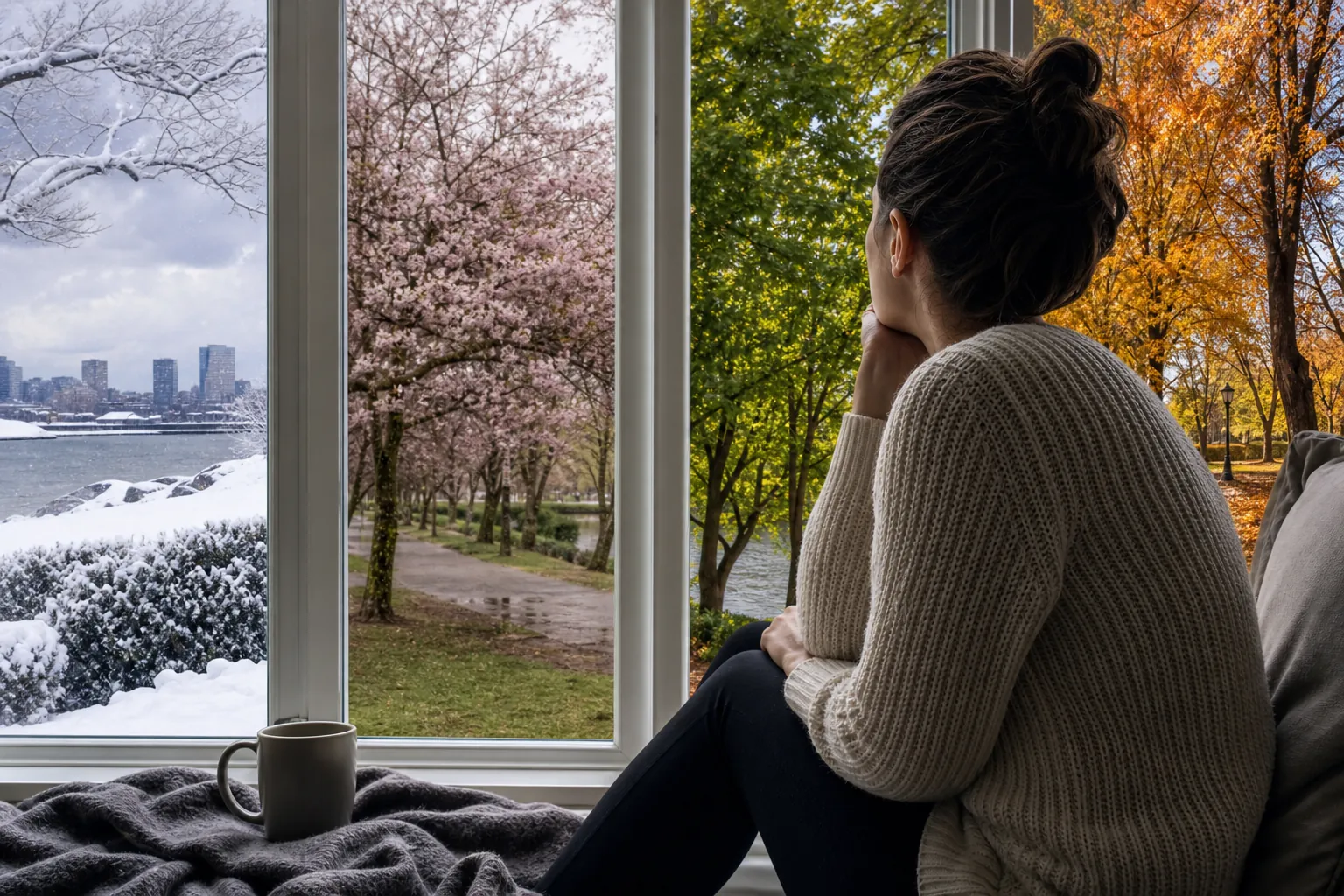
Yes, social anxiety symptoms can feel different as the seasons change. The season itself may not be the only reason. Shifts in routines, daylight, social expectations, work or school schedules, weather, and time spent alone can change how often a person encounters social situations and how difficult those situations feel.
For some adults, summer brings gatherings, travel, and pressure to be active. For others, winter means more isolation and fewer chances to maintain social confidence. Noticing a seasonal pattern can help you make informed decisions about support without assuming that every change has one simple cause.
Why social anxiety may seem seasonal
Social anxiety involves more than occasional shyness or nervousness. According to the National Institute of Mental Health overview of social anxiety disorder, people may experience intense fear of situations where they could be watched, evaluated, or judged by others.
Seasonal transitions can alter exposure to those situations. A new semester, holiday gatherings, workplace events, weddings, vacations, or community activities may increase social demands. Cold weather, shorter days, remote work, or fewer planned activities may reduce contact with others.
Less contact can bring short-term relief because there are fewer triggering situations. However, it may also make a later return to social settings feel more difficult. Increased activity can create more opportunities for connection, but it can also intensify anticipatory worry and self-consciousness.

Patterns worth noticing
A pattern matters when it affects daily life, relationships, work, education, health care, or participation in necessary activities. Social anxiety seasonal changes may involve emotional, physical, and behavioral signs.
- You may decline more invitations during a season with frequent gatherings or celebrations.
- You may spend days worrying about an upcoming meeting, event, appointment, or conversation.
- You may feel physical tension, nausea, sweating, trembling, or a racing heart in social situations.
- You may rely more heavily on avoidance when weather or shorter days make staying home easier.
- You may feel especially self-conscious during seasonal activities involving travel, clothing, eating, or meeting unfamiliar people.
- You may replay interactions afterward and judge yourself harshly.
Symptoms can also vary for reasons unrelated to the calendar. Stress, sleep disruption, health concerns, substance use, relationship changes, and new responsibilities may overlap with seasonal transitions. A qualified professional can help consider the broader picture rather than treating timing as proof of a particular diagnosis.
Deciding whether to seek support
Consider how much the anxiety limits your choices. Occasional discomfort before a party may be manageable. It may be time to seek an assessment when fear repeatedly leads you to miss work, avoid medical care, withdraw from relationships, use substances to tolerate interactions, or organize daily life around avoiding scrutiny.
The Merrimack Valley Behavioral Health guide to social anxiety offers additional information about symptoms and treatment considerations. Reaching out does not guarantee admission or establish that a particular program is appropriate. It begins a conversation about needs and possible next steps.
Practical ways to respond to a seasonal shift
You do not need to wait for the season to pass before addressing a difficult pattern. Small, realistic responses may help you preserve connection and clarify whether more structured care is needed.
- Keep social contact consistent where possible instead of moving between complete isolation and an overwhelming schedule.
- Choose manageable forms of participation, such as a shorter visit or a smaller gathering, rather than assuming attendance must be all or nothing.
- Maintain regular sleep, meals, movement, and daily structure when seasonal routines change.
- Notice whether alcohol or other substances are becoming a way to enter, endure, or recover from social situations.
- Discuss persistent avoidance or distress with a behavioral health or medical professional.
These steps are not substitutes for assessment or treatment. They can help you recognize what is changing and make deliberate choices rather than allowing avoidance to decide automatically.
What outpatient care may involve
Adult outpatient treatment can provide different levels of structure depending on clinical needs. Merrimack Valley Behavioral Health offers adult outpatient partial hospitalization programming, intensive outpatient programming, outpatient care, and dual-diagnosis care. Virtual IOP is available only while the participant is physically in Massachusetts. In-person treatment is located at 77 Elm St, Amesbury, MA 01913.
Care may focus on understanding anxiety patterns, developing coping strategies, reducing avoidance, addressing related concerns, and practicing healthier responses to distress. When anxiety and substance use occur together, dual-diagnosis care can address both concerns rather than viewing them in isolation.
Outpatient care is not appropriate for every situation. MVBH does not provide onsite detox, inpatient or residential care, overnight stays, or emergency care. People who need medical withdrawal management, continuous monitoring, overnight support, or emergency stabilization may require a different setting.
How family or trusted supporters can help
Support works best when it combines empathy with respect for the adult's choices. A family member, partner, or trusted friend can listen without dismissing the fear, avoid shaming the person for declining an event, and offer calm encouragement toward appropriate care.
Supporters can also avoid taking over every interaction. Routinely speaking for someone, canceling all plans, or arranging life around avoidance may provide immediate relief while reinforcing the belief that social situations cannot be managed. When welcome, a supporter can help the person make contact with a provider or understand the next step.
What happens when you call MVBH
To ask about adult outpatient options, call Merrimack Valley Behavioral Health at 978-233-9597. The initial call can address the reason for seeking care and basic program questions. Coverage varies by insurance plan, and callers can confirm benefits.
A prescreen can help identify current symptoms, safety considerations, substance use concerns, and the level of support being considered. If moving forward is appropriate, the next step may be an intake for a fuller assessment. This process does not promise admission or suitability. If MVBH's outpatient setting does not match the person's needs, another level or type of care may be more appropriate.
If symptoms involve an immediate safety crisis, call 988 or 911. MVBH does not provide emergency care.
Frequently asked questions
Does worse anxiety in winter mean I have a seasonal disorder?
Not necessarily. Winter routines, reduced social contact, shorter days, or other stressors may affect anxiety, but timing alone does not establish a diagnosis. A professional assessment can consider symptoms, duration, functioning, and other possible factors.
Can social anxiety become worse during summer?
Yes. Summer may bring travel, gatherings, changes in clothing, crowded settings, and pressure to socialize. These situations can increase fear of scrutiny or avoidance for some adults, even though others feel better during this season.
Can I use Virtual IOP if I am outside Massachusetts?
No. MVBH's Virtual IOP is available only while the participant is physically in Massachusetts. A call to 978-233-9597 can clarify program questions, benefits verification, and the prescreen and intake path.
