
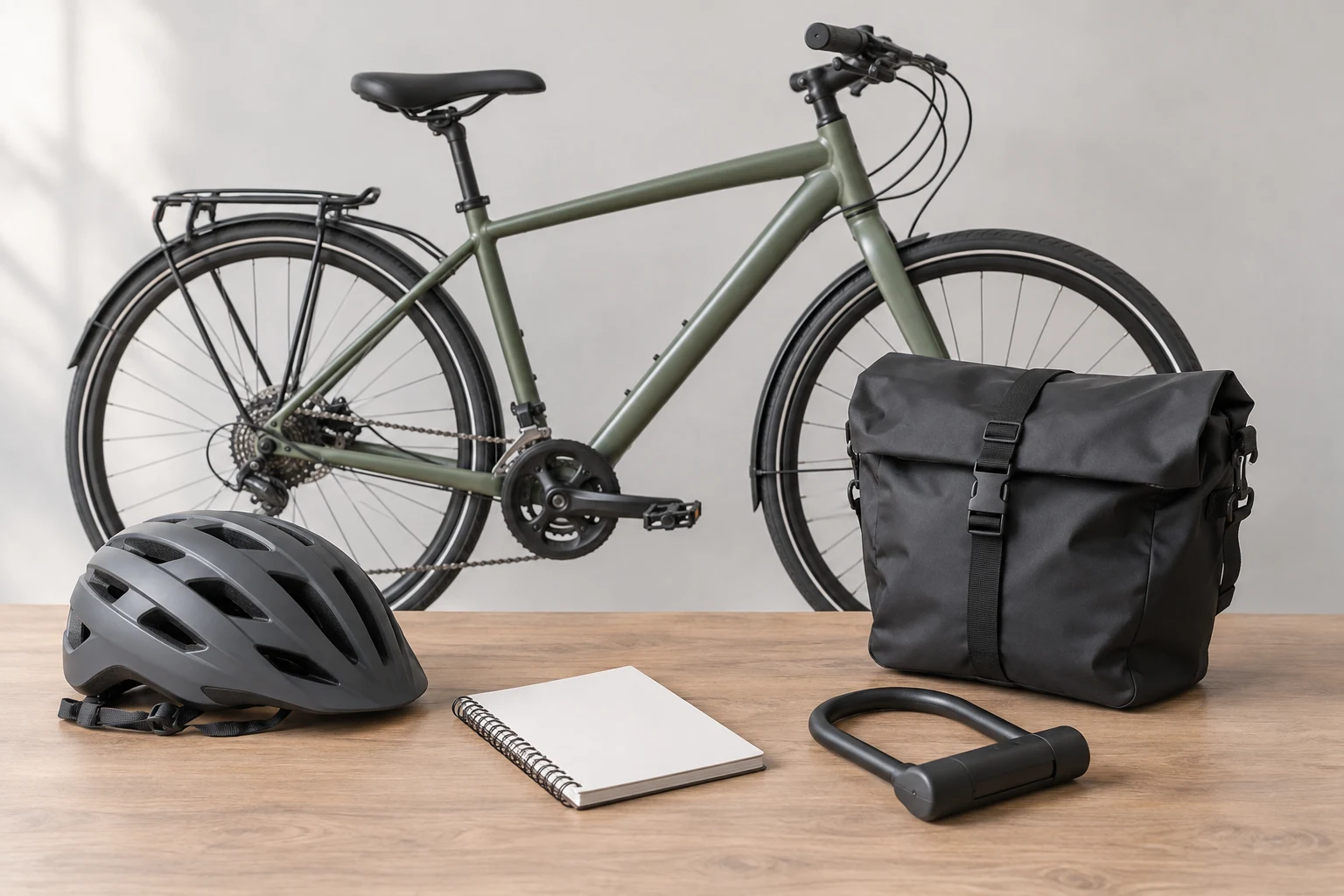
Before cycling to an appointment, confirm where you may leave your bicycle, what you can bring inside, and how you will retrieve everything afterward. A street address alone does not answer those questions. Neither does seeing a railing, a covered entrance, or an open space near a building.
Merrimack Valley Behavioral Health provides in-person care at 77 Elm St, Amesbury, MA 01913. Its Half Day Treatment program, also called IOP, is an outpatient service. The available information does not establish bicycle parking, indoor bicycle storage, permitted locking points, or equipment-storage rules. Confirm those details directly before relying on them for your trip.
This is an appointment-planning decision, not a way to choose treatment. A workable cycling arrangement does not establish program fit, admission, or a start date.
Confirm Storage Before Choosing To Cycle
Start with the detail that could change your transportation plan: whether there is a permitted place to leave your particular bicycle for the entire visit. Ask MVBH to identify the appropriate person to confirm bicycle arrangements. If someone needs to check with building management, keep the arrangement marked as unresolved until you receive a specific answer.
The National Institute of Mental Health recommends preparing questions and concerns before a health care visit, noting that appointment time is limited. That preparation principle can also help organize a short administrative inquiry. Write down the storage issue beforehand so it does not get lost among appointment details. NIMH does not establish any bicycle policy at MVBH.
Use the MVBH contact page to request clarification about arrival and belongings. Keep a general website message limited to basic contact information and the logistical request. A bicycle-storage inquiry does not require a diagnosis, medication list, treatment history, or other sensitive health details.
Make your request specific enough to answer. Describe whether you intend to leave a standard bicycle outside, bring a folded bicycle inside, or carry removable equipment into the appointment. You do not need a lengthy description of your cycling habits. The useful details are the bicycle's size or configuration, the items you would carry, and the appointment you are planning around.
For broader context about services, the guide to mental health treatment in Massachusetts explains the larger care-planning conversation. Keep that discussion separate from the narrower administrative task of confirming where your bicycle and equipment may go.
Separate Locking Permission From Indoor Access
“Bicycle storage” can mean several different things. You may be asking for an outdoor locking point, permission to wheel a bicycle through an entrance, or space for a folded bicycle during the visit. An answer about one does not settle the others. Identify the arrangement you actually need rather than relying on a general statement that cycling is possible.
For outdoor storage, ask whether a designated locking location exists and which exact location is permitted. Do not assume a fence, handrail, post, or other structure is available for that purpose. Ask for a description that you can recognize on arrival, including which entrance it relates to. This is a request for site instructions, not a request for a theft-prevention guarantee.
For indoor access, ask separately whether the bicycle itself may enter the building and whether it may remain inside throughout the appointment. Permission to bring a helmet or bag inside does not imply permission for a bicycle. Similarly, permission to bring a folded bicycle through a doorway would not, by itself, identify where it may be left.
| Arrangement | Detail to confirm | Assumption to avoid |
|---|---|---|
| Outdoor locking | Whether an exact locking point is permitted for the full visit | Any visible railing or post is available |
| Folded bicycle indoors | Whether entry and a specific storage location are allowed | A compact bicycle counts as an ordinary bag |
| Helmet and removable bags | Whether these items may enter and where they may remain | Equipment can be left in a lobby or shared space |
| Electric bicycle equipment | Whether battery-related restrictions apply | Indoor storage includes permission to charge |
Consider the answer complete only when it addresses both location and access. A description such as “outside” leaves important details open. Ask where, whether that location is permitted, and whether you can retrieve the bicycle when your appointment ends. Avoid interpreting a vague answer more broadly than the person intended.
Match The Plan To Your Bicycle And Equipment
A standard bicycle, a folding bicycle, and a bicycle with an attached trailer create different storage questions. Describe the setup you will actually bring. If dimensions would help someone answer an indoor-storage question, provide them when requested. Do not assume a label such as “folding” or “commuter” communicates the space the bicycle needs.
For a standard bicycle that you intend to leave outdoors, focus first on the permitted locking location. Then ask whether there are restrictions on leaving attached bags or other equipment with it. Decide which belongings you would want to carry only after confirming what may come inside. This avoids arriving with items that have no agreed place during the visit.
For a folding bicycle, ask whether folding changes the building's rule and whether a cover or carrying bag matters. Do not purchase a cover on the assumption that it will make indoor storage acceptable. Ask for the actual requirement first. If indoor storage is unavailable or remains unconfirmed, consider whether a different transportation arrangement would be more practical for that appointment.
For an electric bicycle, identify whether your question concerns the whole bicycle or a removable battery. Ask whether either may enter and whether any battery restrictions apply. Charging is a separate request, not part of ordinary storage permission. Do not plan around an available outlet or assume that removing a battery resolves every indoor-storage question.
Equipment deserves its own brief check. A helmet, detachable lights, panniers, rainwear, and a lock can become several separate objects to manage. Ask what you may bring into the appointment and whether you should keep permitted items together in your own bag. Do not assume that reception or another shared area provides unattended storage.
Use a short confirmation checklist rather than sending a long series of overlapping questions:
- Bicycle setup: standard, folding, electric, or an attached accessory that affects space.
- Permitted location: the exact place where the bicycle may remain.
- Indoor belongings: which removable items may enter and where they may stay.
- Access: how arrival and retrieval relate to the appointment.
- Unresolved detail: the one answer still needed before choosing to cycle.
If you use a trailer or another large attachment, ask about that separately rather than assuming bicycle permission includes it. A clear description helps the person responding distinguish a routine belongings question from a request involving additional space.
Keep A Short Record Of The Arrangement
A brief note can keep a useful answer from turning into a vague memory. Record what was confirmed, what remains unknown, and whether the answer applies to your upcoming visit or to recurring attendance. You do not need a complicated travel document. A few lines that you can review before leaving are enough.
NIMH's psychotherapy guidance describes preliminary conversations as a way to understand how treatment will proceed. That guidance concerns communication with prospective therapists, not bicycle facilities. For this logistical task, use the appropriate administrative contact and keep storage confirmation distinct from any conversation about treatment.
A simple preparation sequence can help you turn the response into an actual travel decision:
- State the setup. Note the bicycle and equipment you expect to bring, without adding unrelated personal information.
- Record the exact answer. Capture the permitted location and any stated limits rather than writing only “bike okay.”
- Mark open items. Separate confirmed details from anything someone still needs to check.
- Choose the trip plan. Decide whether the confirmed arrangement works for this visit and what alternative you would use if it does not.
After a phone conversation, repeat your understanding in plain language. For example, summarize which location was identified and which belongings were discussed. This is a chance to correct a misunderstanding, not a request for staff to promise that nothing can happen to the bicycle.
If the answer is incomplete, narrow the follow-up to the missing detail. You may already know that a helmet can come inside while still needing an answer about the bicycle. Repeating the entire inquiry can obscure the unresolved point. Ask when and through whom that specific detail can be confirmed, without assuming a response deadline.
For recurring visits, ask whether the same arrangement applies on each attendance day or requires confirmation again. A one-time answer should not automatically become a standing policy in your notes. If your bicycle, attached equipment, or appointment arrangements change, identify the changed detail when you follow up.
Plan Arrival And Departure Without Assumptions
Once storage permission is clear, connect it to the appointment. Ask which entrance to use and whether any bicycle-related step should happen before checking in. Do not infer an arrival route through the building from its address or exterior appearance. Keep any directions you receive with your appointment information.
Leave room in your personal travel plan for locating the confirmed storage point, handling your lock, and gathering the belongings you are permitted to carry. This is not a statement about required early arrival or clinic check-in policy. Confirm appointment timing directly rather than inventing a buffer that staff require.
Consider departure as carefully as arrival. Ask whether you can retrieve the bicycle and any permitted stored equipment when your visit ends, and whether any access instruction applies. If someone else is helping with transportation, distinguish a confirmed plan from a backup you have not yet arranged.
If the storage location cannot be identified when you arrive, seek clarification rather than improvising a locking point or taking the bicycle inside without permission. If you are still planning the trip and the arrangement remains unresolved, another way of reaching the appointment may be more workable. Storage uncertainty does not answer any clinical question.
Program terminology should not create another logistical misunderstanding. At MVBH, IOP means Half Day Treatment, while PHP means Full Day Treatment. Both are outpatient programs in MVBH's non-hospital setting. Confirm the appointment you are attending instead of using a program label to guess how long bicycle storage must be available.
The practical goal is a modest one: know what is permitted, where your belongings will go, and how you will collect them. A specific answer can help you make a transportation decision. It cannot guarantee bicycle security, admission, or any particular treatment arrangement.
Does MVBH have bicycle racks or indoor bicycle storage?
The supplied facility information does not confirm bicycle racks, designated locking points, or indoor bicycle storage. Contact MVBH before relying on any of those arrangements. Ask for the exact permitted location and whether it is available throughout your visit. A street address or visible structure does not establish storage permission.
Can I bring a folding bicycle into my IOP appointment?
Do not assume that a folded bicycle is permitted because it is compact. Ask whether it may enter the building and whether a specific storage location is allowed during the appointment. Describe its folded size if needed. Permission to carry a helmet or bag inside does not answer the bicycle question.
What should I clarify about an electric bicycle battery?
Ask whether restrictions apply to the bicycle, a removable battery, or both. Clarify indoor access and storage separately from charging. Do not assume an outlet is available or that permission to bring equipment inside includes charging permission. The available MVBH information does not establish a battery or charging policy.
What information belongs in a bicycle-storage inquiry?
Provide basic contact details, the appointment you are planning around, and a short description of the bicycle or equipment involved. Identify the storage detail you need confirmed. A general website message should not include diagnoses, medication information, treatment history, or other sensitive health details merely to explain a transportation question.
What if bicycle storage is still unconfirmed before my visit?
Treat the arrangement as unresolved rather than interpreting silence as permission. Follow up about the specific missing detail and consider another transportation plan for that appointment. Do not assume you may use a railing, leave equipment in a shared space, or bring the bicycle inside without direct confirmation.