
77 Elm St, Amesbury, MA 01913 978-233-9597
Verify Insurance Admissions 24-Hour Admissions
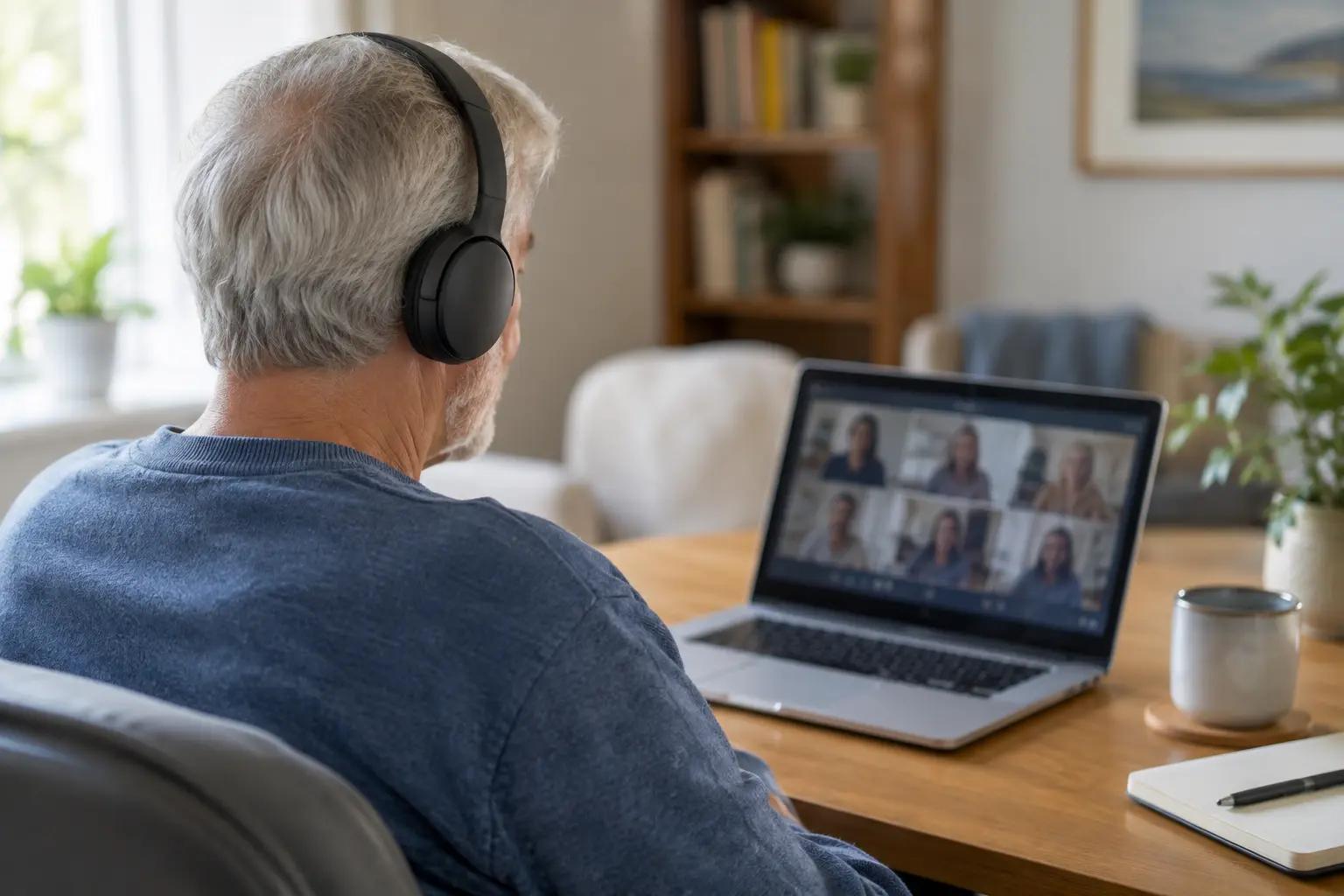
An older man with gray hair joins a virtual group from home with headphones.

Care Coordination for Private Treatment Space

Approved by Clinical Staff

Care coordination for a private treatment space means clarifying who may participate, what information is relevant to their involvement, and how privacy expectations shape remote sessions. For MVBH Virtual IOP, the verified boundary is a remote outpatient option for eligible adults physically present in Massachusetts during every live session.

Start with the verified Virtual IOP boundary

Review Massachusetts virtual IOP before contacting MVBH admissions. The route begins with two verified facts: Virtual IOP is remote outpatient care for eligible adults, and each live session requires physical presence in Massachusetts.

The verified scope identifies PHP, IOP, OP, Virtual IOP, and Dual Diagnosis. Within that scope, Virtual IOP has a specific description: it is a remote outpatient option for eligible adults who remain physically present in Massachusetts during every live session.

That boundary is the starting point for this route. “Remote” describes the outpatient format, while physical presence in Massachusetts applies to each live session. The evidence does not establish eligibility criteria, schedules, coverage, technology requirements, or an individual’s appropriate care level.

For care-coordination planning, separate verified program facts from questions that still need clarification. A person can confirm the session-location rule, identify who may participate, and prepare questions about relevant information. This keeps the decision focused on the private treatment space without extending beyond the supplied MVBH facts.

Clarify people, purpose, and relevant information

Use MVBH admissions to raise route questions, then review participation for private treatment space. Keep the discussion centered on who may be involved, why they may be involved, and what information would be directly relevant.

A private treatment space raises practical coordination questions even when the evidence does not define operational procedures. Useful questions concern the people involved, the purpose of their involvement, and the information directly relevant to that purpose.

The federal privacy quotation addresses disclosure to a family member, relative, close personal friend, or another person identified by the individual. It limits the described information to protected health information directly relevant to that person’s involvement in health care or payment related to health care. It also places disclosure within specified regulatory provisions.

This evidence supports a focused conversation rather than a broad assumption that coordination permits unrestricted sharing. Before the route is considered, identify the proposed participant and why that person would be involved. Then ask how relevant information and private-session expectations are handled within the applicable process.

Keep each evidence boundary distinct

Compare participation for private treatment space with outpatient treatment programs. The evidence supports limited points about relevant disclosures, desired family inclusion, MVBH program scope, and Massachusetts presence during Virtual IOP live sessions.

The supplied federal rule concerns certain disclosures by a covered entity. It describes categories of people and limits the information to what is directly relevant to their involvement in health care or related payment. It does not, by itself, describe MVBH workflows, platforms, consent documents, or private-space procedures.

The quality-treatment guidance separately says family members can be included in the treatment process as desired by the person in care. It also names evidence-based practices, including motivational interviewing, cognitive behavioral therapy, cognitive processing therapy, psychoeducation, supportive therapy, social skills training, and behavioral management training for youth.

Those statements have different subjects. One addresses a privacy disclosure rule, while the other describes quality-treatment practices and desired family inclusion. Keeping them separate prevents unsupported conclusions about how any specific MVBH session is conducted.

Plan around location without adding assumptions

Place outpatient treatment programs beside information about mental health conditions. For this coordination decision, do not infer individual fit. Confirm only the Virtual IOP route’s Massachusetts presence rule and prepare questions about continuity within that boundary.

Continuity questions should stay tied to the verified route. For Virtual IOP, the firm geographic condition is physical presence in Massachusetts during every live session. The supplied evidence does not support cross-state virtual care, exceptions to this rule, or conclusions about what happens if a participant’s location changes.

Private-space planning can therefore include a simple location check before each live session. It can also distinguish the participant’s session location from MVBH’s organizational address. MVBH is located at 77 Elm Street in Amesbury, Massachusetts, inside the historic Mill 77 building.

The address does not establish where a Virtual IOP participant must be within Massachusetts. It also does not establish travel requirements, in-person services, or appointment availability. Use it only as verified location context while keeping the live-session rule central.

Prepare a focused next-step conversation

Review mental health conditions and therapy services as separate context. Then prepare route-specific coordination questions about Massachusetts presence, desired participants, directly relevant information, and the private space used for each live Virtual IOP session.

A concise next-step conversation can begin with the route itself: Virtual IOP is remote outpatient care, eligibility is not established by this page, and Massachusetts presence is required during every live session. From there, ask who may participate in coordination and what purpose that participation would serve.

If another person may be involved, ask which information would be directly relevant to that involvement. If family participation is being considered, distinguish desired inclusion from required participation. The evidence supports family inclusion as desired by the person in care, not a universal requirement.

Finally, ask how private treatment space expectations connect with the proposed participation. These questions organize the decision without predicting outcomes or asserting an MVBH process not documented in the supplied facts. They also preserve a clear line between program scope, privacy rules, and general quality-treatment guidance.

Questions to clarify before the Virtual IOP route

  • Who may be involved in coordination?
  • Which information is relevant to that involvement?
  • Where will each live session occur?
  • How will the treatment space remain private?
  • Is family participation desired?
FAQ

Frequently Asked Questions

What is the verified location rule for MVBH Virtual IOP?

MVBH Virtual IOP is a remote outpatient option for eligible adults. The verified program description requires participants to be physically present in Massachusetts during every live session. The supplied facts do not establish individual eligibility, scheduling, coverage, or whether the route is appropriate for a particular person.

Can another person receive information related to coordination?

Federal privacy rules permit a covered entity, under specified provisions, to disclose protected health information directly relevant to another person’s involvement in health care or related payment. The person may be a family member, relative, close personal friend, or another person identified by the individual. The quoted rule does not authorize broader assumptions.

Does care coordination require family participation?

The supplied quality-treatment guidance says family members can be included in the treatment process as desired by the person in care. That supports asking whether family participation is wanted and what role is intended. It does not establish that family participation is required or describe MVBH’s operational process for including family.

Which MVBH programs are within the verified scope?

The verified scope lists PHP, IOP, OP, Virtual IOP, and Dual Diagnosis. Only Virtual IOP is described here as a remote outpatient option for eligible adults physically present in Massachusetts during every live session. The facts do not define how a person moves between programs or which program may apply.

Where is Merrimack Valley Behavioral Health located?

The verified MVBH location is 77 Elm Street in Amesbury, Massachusetts, inside the historic Mill 77 building. This address provides organizational context only. It does not change the Virtual IOP requirement that an eligible adult be physically present in Massachusetts during every live session, and it does not establish in-person or virtual availability.

A clear next step starts with a conversation.

Call MVBH or review plan-specific benefits.

If you are in crisis or having thoughts of suicide: call or text 988 (Suicide & Crisis Lifeline) or 911. MVBH is not an emergency service.