
77 Elm St, Amesbury, MA 01913 978-233-9597
Verify Insurance Admissions 24-Hour Admissions
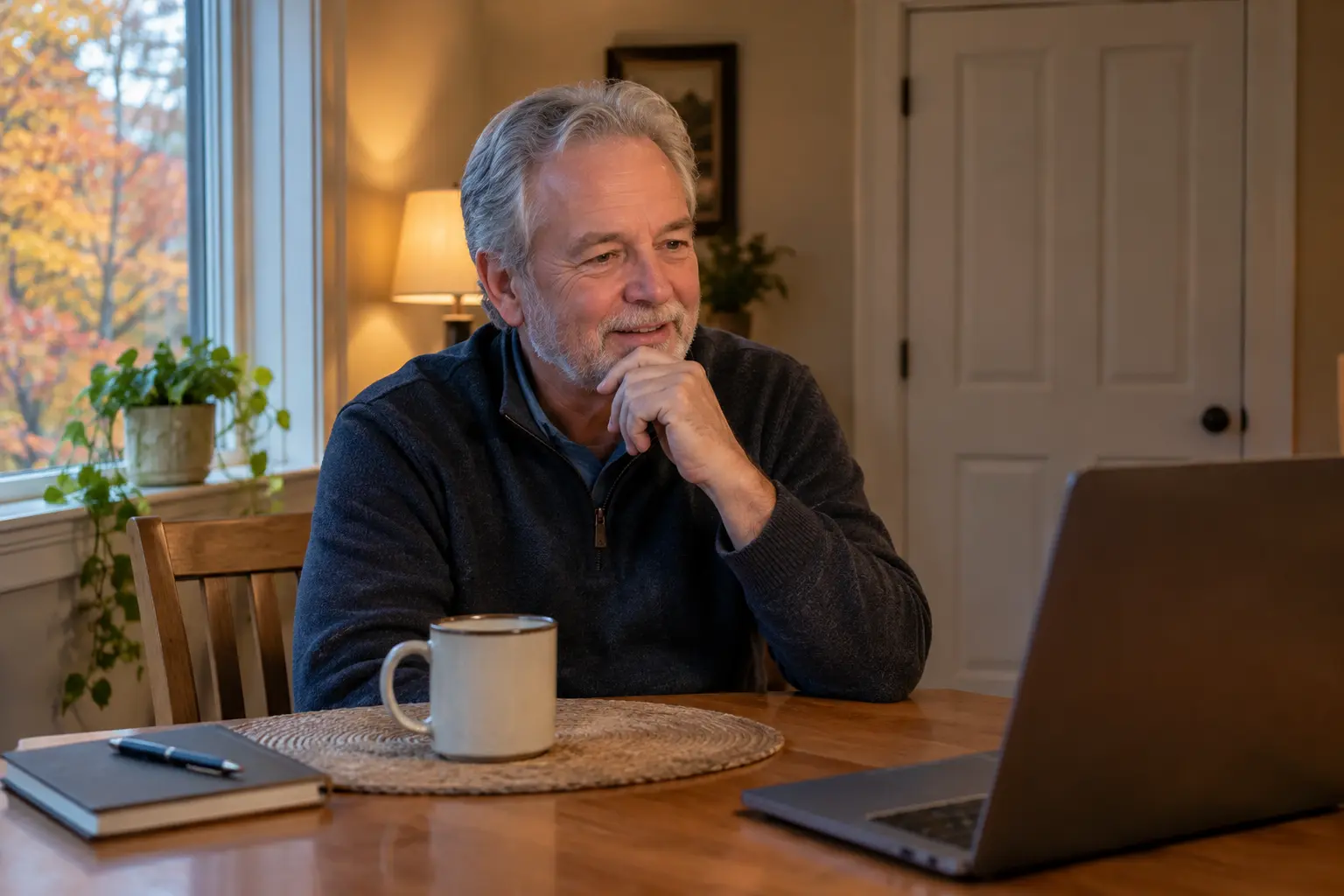
An older man with gray hair in a private video session at home.

Co-Occurring Needs for Massachusetts Physical Presence

Approved by Clinical Staff

Co-occurring needs means that a mental health disorder and a substance use disorder coexist. For this route, the verified boundary is specific: Virtual IOP is a remote outpatient option for eligible adults physically present in Massachusetts during every live session. That presence requirement does not establish individual eligibility.

What this route establishes

Massachusetts virtual IOP explains the remote program category. MVBH admissions is the route for process questions. Together, these pages frame the distinction between the verified Massachusetts presence rule and questions that the supplied facts do not answer.

The verified description combines two important ideas. Virtual IOP is remote, and eligible adults must remain physically present in Massachusetts during every live session. Remote participation should not be read as permission to join a live session while outside Massachusetts.

For co-occurring needs, begin with the supplied definition rather than assumptions. The term concerns the coexistence of a mental health disorder and a substance use disorder. It does not, on its own, explain a person’s circumstances or determine a program route.

Decision factors for Massachusetts participation

MVBH admissions supports questions about process, while return to care for massachusetts physical presence provides a related Massachusetts route. For this decision, focus on session location, the meaning of co-occurring needs, and what remains unverified.

A practical first check is whether Massachusetts presence can be maintained for every live session. This is a recurring session condition, not a one-time location check. The supplied facts do not describe exceptions to that requirement.

A second check is whether the question concerns the definition of co-occurring disorders or an individual eligibility decision. The definition is verified. Individual eligibility is not established here. Keeping those questions separate prevents a general term from becoming an unsupported personal conclusion.

For the Decision factors for Massachusetts participation decision, separate confirmed evidence from open questions and individual circumstances. Record which detail would change the next step. Ask MVBH to confirm current access, eligibility, coverage, scheduling, credentials, and available services. Compare each answer with the cited evidence and this page's stated limits. That process supports a practical decision without turning general guidance into an MVBH promise.

What the evidence does and does not show

return to care for massachusetts physical presence addresses another route-specific question. outpatient treatment programs shows the broader program context. Neither link changes the evidence boundary for co-occurring needs and Massachusetts presence.

The evidence supports three limited conclusions. MVBH lists Virtual IOP and Dual Diagnosis within its program scope. Co-occurring disorders has a defined meaning. Virtual IOP requires eligible adults to be in Massachusetts for every live session.

The evidence does not establish personal eligibility, program access, payment, expected results, or a complete admissions sequence. It also does not support joining live sessions from another state. Those boundaries matter because physical presence is explicit, while many other decision details are not supplied.

Connecting program scope with continuity questions

outpatient treatment programs presents the verified program categories. mental health conditions provides condition-focused context. For this route, use both as background while preserving the specific rule that every live Virtual IOP session requires Massachusetts physical presence.

MVBH’s verified scope includes PHP, IOP, OP, Virtual IOP, and Dual Diagnosis. This scope helps distinguish the named Virtual IOP route from the wider program set. It does not show that one category is interchangeable with another.

When preparing a process question, identify whether it concerns live-session location, co-occurring terminology, or the broader program scope. This makes the unresolved point clear. Admissions can then address its process without treating a general definition or program list as an individual determination.

For the Connecting program scope with continuity questions decision, separate confirmed evidence from open questions and individual circumstances. Record which detail would change the next step. Ask MVBH to confirm current access, eligibility, coverage, scheduling, credentials, and available services. Compare each answer with the cited evidence and this page's stated limits. That process supports a practical decision without turning general guidance into an MVBH promise.

Preparing a focused next-step question

mental health conditions supplies condition-related context, and therapy services supplies service context. When using these resources, keep the next step narrow: clarify the unanswered process issue without assuming eligibility, access, a particular service, or an expected result.

Before contacting admissions, write down the exact question that remains. Useful topics include how Massachusetts presence is confirmed, what the eligibility process considers, and which program information admissions requests. The supplied facts do not provide those answers.

It can also help to state that the question concerns co-occurring needs. Use the verified definition without presenting it as a personal conclusion. MVBH’s physical location is 77 Elm Street in Amesbury, inside the historic Mill 77 building. That address is distinct from the live-session presence rule.

Check the Massachusetts physical-presence route

  • Confirm Massachusetts presence for every live session
  • Describe both categories of co-occurring needs
  • Ask admissions about the eligibility process
  • Separate verified facts from unanswered personal questions
FAQ

Frequently Asked Questions

What does co-occurring disorders mean?

Co-occurring disorders refers to the coexistence of a mental health disorder and a substance use disorder. This definition explains the term, but it does not characterize an individual’s situation. Questions about personal circumstances should be kept separate from the verified definition and addressed through the appropriate admissions process.

Does physical presence apply to every live session?

Yes. The physical-presence rule applies during every live Virtual IOP session. The verified program description identifies Virtual IOP as remote, while also requiring eligible adults to be physically present in Massachusetts for each live session. A remote format therefore does not remove the Massachusetts boundary.

Does being in Massachusetts establish eligibility?

No. Massachusetts physical presence is one verified condition of the Virtual IOP description, but it does not by itself establish eligibility. The supplied facts do not state the complete eligibility process. Admissions is the appropriate route for asking what information is reviewed and what steps apply.

What programs are included in the verified MVBH scope?

The verified MVBH scope includes PHP, IOP, OP, Virtual IOP, and Dual Diagnosis. That list places Virtual IOP within a broader outpatient program context. It does not determine which program applies to an individual, establish access, or describe how any program addresses a particular circumstance.

Where is Merrimack Valley Behavioral Health located?

Merrimack Valley Behavioral Health is located at 77 Elm Street in Amesbury, Massachusetts, inside the historic Mill 77 building. This address identifies the organization’s location. It should not be interpreted as changing the separate rule that Virtual IOP participants must be physically present in Massachusetts during every live session.

A clear next step starts with a conversation.

Call MVBH or review plan-specific benefits.

If you are in crisis or having thoughts of suicide: call or text 988 (Suicide & Crisis Lifeline) or 911. MVBH is not an emergency service.