
77 Elm St, Amesbury, MA 01913 978-233-9597
Verify Insurance Admissions 24-Hour Admissions
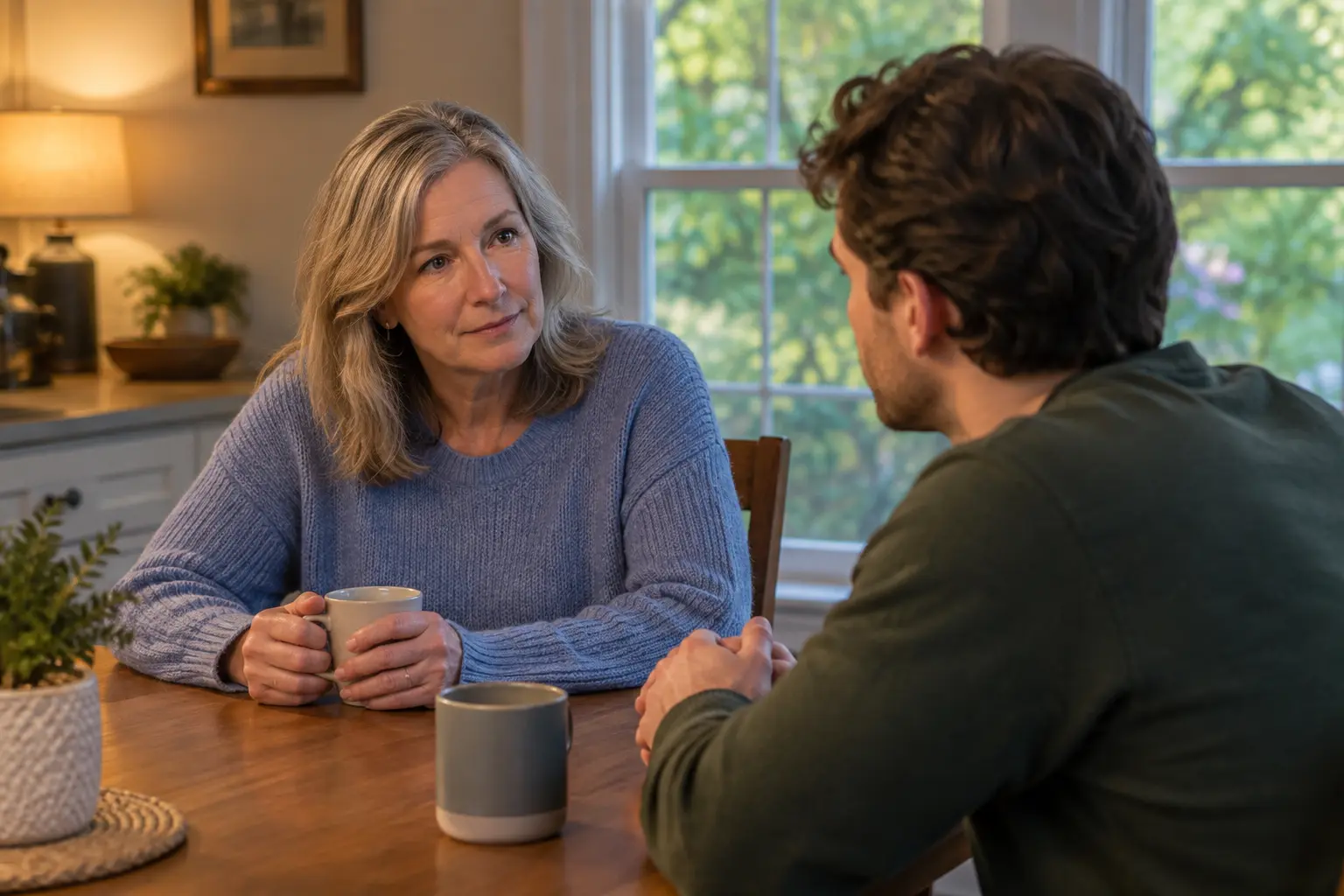
A woman in her fifties and a family member talk at a kitchen table.

Participation Boundaries for Siblings

Approved by Clinical Staff

Sibling participation has one verified boundary: family members can be included in treatment as desired by the person in care. Participation is not automatic. A useful plan separates treatment involvement from home support, identifies what the sibling may discuss, and leaves treatment participation under the person’s stated preferences.

What sibling participation means

Begin with family support resources to frame the sibling role, then review outpatient treatment programs. The verified boundary is simple: family members may be included in treatment when the person in care desires that involvement.

The central decision is whether the person in care wants a sibling included in the treatment process. The supplied evidence does not make sibling participation automatic or define one standard role. It supports a preference-based boundary.

Start by naming the proposed role. A sibling might be discussing treatment, preparing for a talk, or offering support at home. Those activities should not be combined under a vague label such as “involved.” Clear wording makes it easier to preserve the person’s preference.

The MVBH Family and Loved-One Support Academy helps adults and loved ones plan for treatment talks. Planning can organize a respectful conversation. It does not establish participation permission or define access to any treatment interaction.

Factors that define the boundary

Review outpatient treatment programs for the verified service scope, and use home routine support for siblings to distinguish everyday support from participation in the treatment process.

A practical boundary identifies the activity, topic, and setting. “Help me prepare questions” is different from “join a treatment conversation.” “Support my routine at home” is also different from treatment participation. Specific language reduces assumptions about what sibling involvement means.

The next question is who controls the boundary. The evidence assigns that choice to the person in care. A sibling’s wish to help does not replace that preference. Family status alone does not establish participation.

Preferences can be discussed directly without promising a fixed result. Useful questions include what support is wanted, which topics may be raised, and what should remain outside the sibling’s role. This approach keeps the decision tied to the stated evidence.

What the evidence does and does not establish

Compare home routine support for siblings with MVBH admissions. The evidence supports desired family inclusion, but it does not define automatic access, a required sibling role, or participation in every treatment activity.

The evidence supports one firm statement: family members can be included in treatment as desired by the person in care. It does not specify that siblings receive information, attend particular activities, or hold a standard decision-making role.

It also names several evidence-based practices, including motivational interviewing, CBT, CPT, psychoeducation, supportive therapy, social skills training, and behavioral management training for youth. That list describes practices. It does not establish sibling participation in any named practice.

A careful boundary therefore avoids converting a treatment approach into an invitation for family involvement. The participation question remains separate. First identify whether inclusion is desired. Then direct process questions to the appropriate MVBH contact without assuming access, format, or timing.

Program scope and continuity of boundaries

Use MVBH admissions for process questions, then review mental health conditions for general condition information. Neither route changes the verified participation boundary set by the preference of the person in care.

MVBH’s verified program scope includes PHP, IOP, OP, Virtual IOP, and Dual Diagnosis. These labels establish the listed scope only. They do not show that sibling participation works the same way in every program or interaction.

For continuity, preserve the distinction between a standing family relationship and a treatment-specific role. A sibling remains a sibling even when treatment participation is not desired. Support outside treatment can continue within boundaries stated by the person in care.

When a process detail is unclear, admissions is the relevant owned route for questions. Ask about the process without presuming availability, access, or a particular form of participation. The person’s preference remains the evidence-based starting point for family inclusion.

Prepare the next sibling conversation

Review mental health conditions for context and therapy services for treatment terminology. Then frame the sibling discussion around the desired participation, not around assumptions based on a condition or therapy name.

Before a treatment talk, write down the exact participation request. Identify whether the sibling is asking to help prepare, join a conversation, discuss a topic, or support a home routine. One clear request is easier to evaluate than a broad request for involvement.

Next, ask what the person in care wants. Record the boundary in ordinary language, without expanding it. Permission for one topic should not be presented as permission for every topic. Planning for one conversation should not be described as ongoing participation.

Finally, separate preference questions from process questions. The person in care determines whether family inclusion is desired. MVBH admissions can address MVBH process questions. This division keeps sibling planning grounded in the supplied facts and avoids unsupported assumptions.

Set a sibling participation boundary

  1. Ask what participation the person wants
  2. Separate treatment participation from home support
  3. Name topics the sibling may discuss
  4. Clarify whether preferences have changed
  5. Bring unresolved process questions to admissions
FAQ

Frequently Asked Questions

Does being a sibling automatically create a treatment role?

No. The supplied evidence says family members can be included as desired by the person in care. That makes participation dependent on the person’s preference rather than the family relationship alone. A sibling can remain supportive outside treatment without assuming access to treatment conversations or activities.

How should siblings discuss participation preferences?

The verified boundary is the preference of the person in care. A sibling can ask what kind of involvement is wanted, which topics are appropriate, and whether home support is separate from treatment participation. The supplied facts do not establish that one preference applies permanently to every treatment interaction.

Is home support the same as treatment participation?

They are not the same decision. Treatment participation concerns whether the sibling is included in the treatment process. Home support concerns conduct outside that process, such as respecting a stated routine or conversation boundary. Keeping those roles separate helps avoid treating ordinary sibling support as implied treatment involvement.

Do participation boundaries differ by MVBH program?

The verified MVBH scope includes PHP, IOP, OP, Virtual IOP, and Dual Diagnosis. The supplied program fact does not define a single sibling role across those programs. The participation boundary remains whether the person in care desires family inclusion, while program process questions can be directed to MVBH admissions.

What MVBH resource supports planning for treatment talks?

The MVBH Family and Loved-One Support Academy helps adults and loved ones plan for treatment talks. That purpose can support preparation, but it does not replace the participation preference of the person in care. A sibling should still distinguish planning for a conversation from being included in treatment.

A clear next step starts with a conversation.

Call MVBH or review plan-specific benefits.

If you are in crisis or having thoughts of suicide: call or text 988 (Suicide & Crisis Lifeline) or 911. MVBH is not an emergency service.