
77 Elm St, Amesbury, MA 01913 978-233-9597
Verify Insurance Admissions 24-Hour Admissions
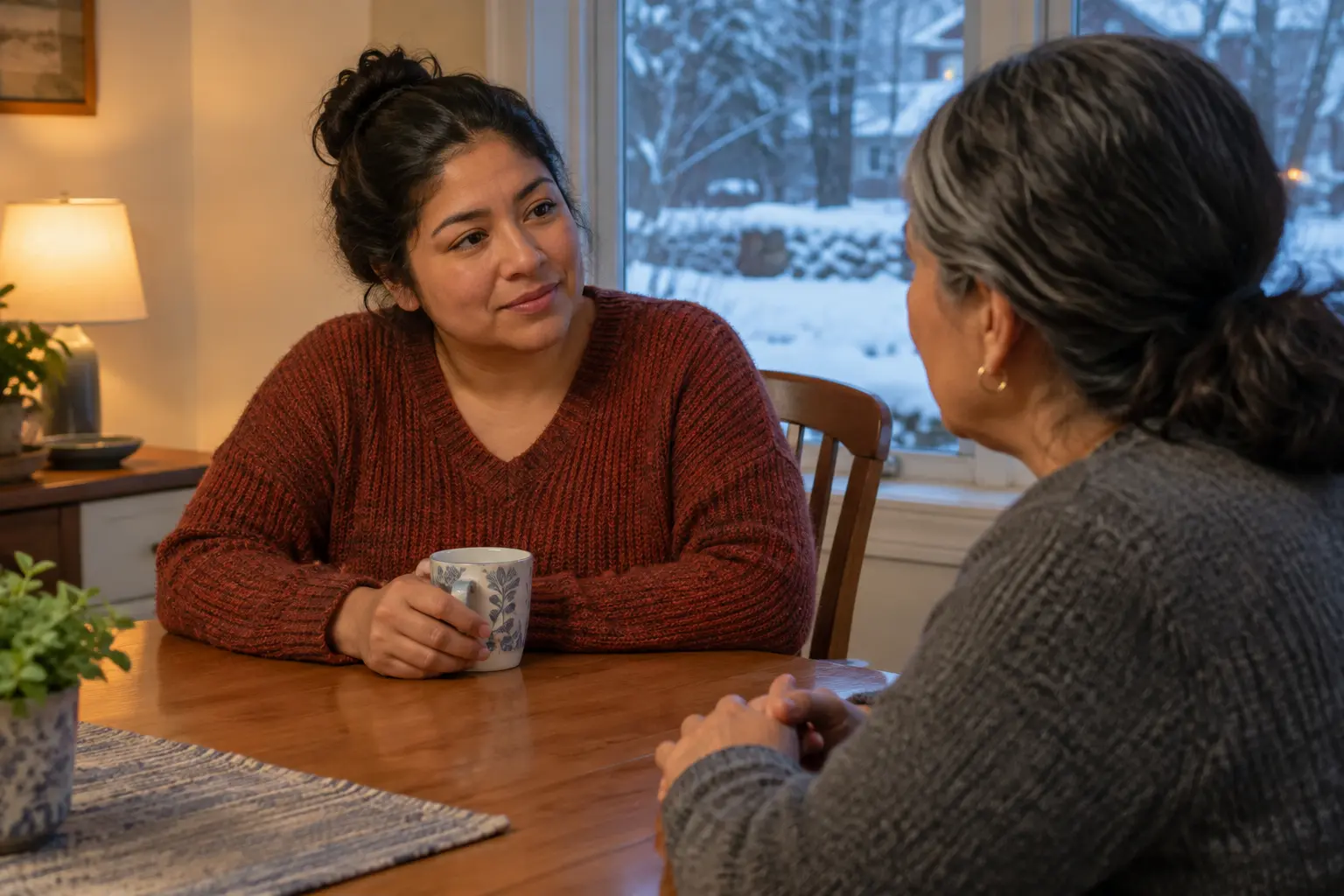
A Latina woman in her thirties and a family member talk at a kitchen table.

Outside Provider Continuity for Siblings

Approved by Clinical Staff

For siblings, outside provider continuity means clarifying whether an existing clinician may remain involved while considering MVBH outpatient programs. Verified information supports discussing treatment, program categories, therapies, and desired family involvement. It does not establish coordination arrangements, scheduling, coverage, clinical fit, availability, or outcomes.

Start with MVBH’s verified outpatient scope

Use family support resources to frame the sibling’s role, then review outpatient treatment programs. The verified scope names program categories, while continuity arrangements remain a separate question.

MVBH’s verified program scope consists of PHP, IOP, OP, Virtual IOP, and Dual Diagnosis. This list provides a starting point for continuity questions, not an answer about how providers coordinate.

A sibling can first identify the program category under discussion. They can then ask whether the existing provider’s role would remain separate, change, or require further review. Other useful questions concern records, treatment updates, and who would answer coordination questions.

The program list does not establish availability, coverage, scheduling, clinical fit, or outcomes. It also does not identify a standard arrangement with outside providers. Those details should remain open questions until directly confirmed.

Separate sibling, patient, and provider roles

Compare outpatient treatment programs with work and caregiving for siblings. This helps separate program questions from family responsibilities before discussing an outside provider’s role.

A practical continuity discussion separates three roles: the person considering care, the sibling, and the outside provider. The evidence supports family involvement when desired by the person in care. It does not make the sibling a default participant or define the provider’s role.

Siblings can ask what involvement is wanted before collecting questions. They can also describe the existing provider’s current function without assuming that function continues unchanged. Relevant questions may address communication, records, treatment discussions, and responsibility for follow-up.

This structure keeps family participation distinct from professional coordination. It also prevents the program category from being treated as proof of a particular continuity process.

Keep therapy evidence within its stated boundary

Review work and caregiving for siblings, then contact MVBH admissions about unresolved process questions. General evidence cannot confirm a specific coordination arrangement.

The quality-treatment evidence lists examples of evidence-based practices. These include motivational interviewing or motivational enhancement therapy, CBT, CPT, psychoeducation, supportive therapy, social skills training, and behavioral management training for youth.

That list supports asking precise questions about therapeutic approaches. It does not confirm that any practice is used for a specific person, program, or continuity arrangement. It also does not show that an outside provider and MVBH would use the same approach.

The same evidence says families may be included as desired by the person in care. It does not define consent procedures, record exchange, update frequency, or decision authority.

Turn continuity concerns into specific access questions

Bring process questions to MVBH admissions and use mental health conditions only as general context. Neither resource should be treated as confirmation of individual coordination, fit, or access.

Continuity questions become clearer when they name the information involved. A sibling might ask whether prior records are relevant, who can discuss treatment information, or where questions about the outside provider should be directed. These are questions, not established MVBH procedures.

Before contacting admissions, note the outside provider’s role and the continuity concern in plain language. Also identify whether the sibling is helping prepare questions or seeking direct participation. The person in care’s desired family involvement remains central to that distinction.

Admissions can be approached for MVBH-specific clarification. This page cannot establish communication permissions, record-transfer methods, response timing, scheduling, availability, coverage, or acceptance of an outside provider’s recommendations.

Prepare a bounded treatment conversation

Use mental health conditions for topic context and therapy services to organize questions. The Family and Loved-One Support Academy supports adults and loved ones in planning treatment talks.

The MVBH Family and Loved-One Support Academy helps adults and loved ones plan for treatment talks. For this route, that purpose supports preparing a concise conversation rather than predicting what MVBH or an outside provider will decide.

A sibling can organize the discussion around the current provider’s role, the MVBH program category being considered, the person’s desired family involvement, and the questions that still need confirmation. Therapy names may help make questions specific, but they do not establish a treatment plan.

Keep separate notes for confirmed facts and unresolved questions. Confirmed facts include MVBH’s listed program scope and the evidence supporting desired family involvement. Coordination methods and individual arrangements remain unconfirmed.

Questions for the outside provider continuity route

  • Identify the outside provider’s current role
  • Name records or updates that require discussion
  • Clarify the sibling’s desired involvement
  • Ask how each program handles coordination
  • Confirm details directly through admissions
FAQ

Frequently Asked Questions

Which MVBH programs are relevant to continuity questions?

MVBH’s verified scope includes PHP, IOP, OP, Virtual IOP, and Dual Diagnosis. These categories do not by themselves explain whether or how an outside provider participates. A sibling can use the program name to frame questions about roles, records, communication, and responsibility without assuming that a particular coordination arrangement exists.

Does sibling involvement automatically include provider communication?

Family members can be included in the treatment process as desired by the person in care. This supports asking the sibling what involvement they want before seeking updates or joining discussions. The evidence does not define permissions, communication procedures, or the exact role an outside provider may hold.

How can siblings prepare to discuss an existing provider?

A sibling can distinguish the outside provider’s role from the family’s role. Useful topics include who currently provides care, what continuity concern needs clarification, and what information may need discussion. Any actual process for exchanging records, updates, or treatment information must be confirmed rather than inferred from general family-involvement evidence.

Do the cited therapy examples establish continuity?

The cited quality-treatment evidence names motivational interviewing, CBT, CPT, psychoeducation, supportive therapy, social skills training, and behavioral management training for youth. It does not show which therapy is used in a specific case or how an outside provider’s approach would connect with MVBH services. Those details require direct clarification.

Does this page confirm that continuity can be arranged?

No. The verified evidence identifies MVBH program categories and supports treatment-talk planning through the Family and Loved-One Support Academy. It does not establish availability, coverage, fit, outcomes, scheduling, or a specific continuity process. Siblings should treat those points as questions for MVBH admissions and the outside provider.

A clear next step starts with a conversation.

Call MVBH or review plan-specific benefits.

If you are in crisis or having thoughts of suicide: call or text 988 (Suicide & Crisis Lifeline) or 911. MVBH is not an emergency service.