

Panic disorder in women can involve the same core pattern seen in anyone: repeated, unexpected panic attacks followed by ongoing concern about another attack or changes in behavior intended to avoid one. What may look different is how symptoms are interpreted, discussed, or woven into health concerns, caregiving responsibilities, relationships, work, and everyday routines.
Not every panic attack means someone has panic disorder. A thoughtful assessment considers when attacks happen, how often fear persists afterward, whether avoidance is growing, and whether medical conditions, substances, medications, or another mental health concern could better explain the experience.
What a panic attack may feel like
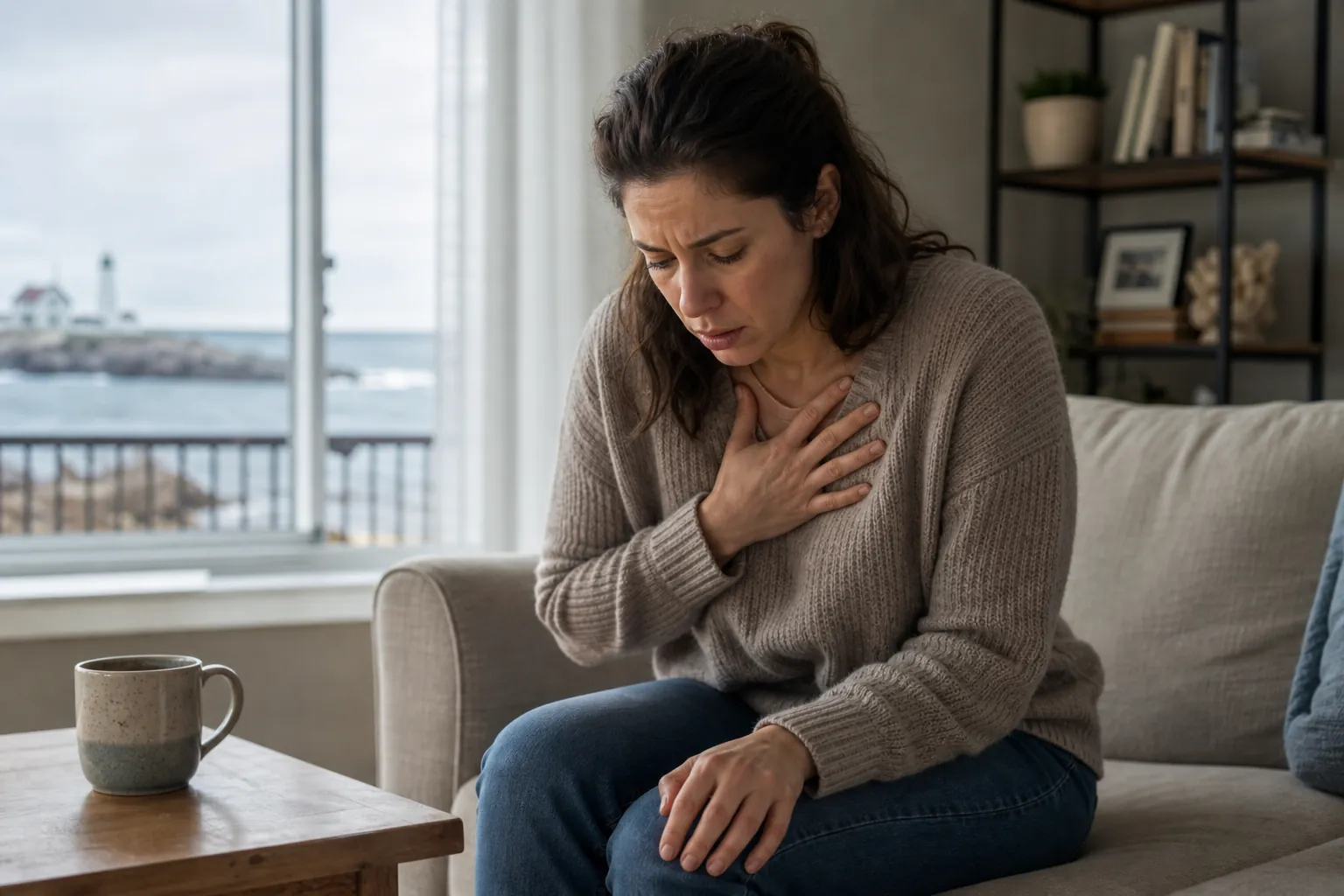
A panic attack is a sudden surge of intense fear or discomfort. According to the National Institute of Mental Health overview of panic disorder, symptoms may include a racing heart, sweating, trembling, difficulty breathing, weakness or dizziness, chest pain, stomach pain, nausea, and a sense of impending doom or being out of control.
For some women, the physical sensations stand out more than the feeling of fear. An episode might first be described as a heart problem, breathing problem, faintness, nausea, or an unexplained rush of distress. Physical symptoms should not automatically be attributed to anxiety, especially when they are new, severe, or medically concerning.
Why panic disorder may be overlooked
Panic can be difficult to recognize when a woman is continuing to work, care for others, or manage daily obligations. She may appear composed while privately monitoring her heartbeat, planning escape routes, avoiding being alone, or worrying that another attack will occur.
Symptoms may also overlap with other experiences or conditions. Hormonal and reproductive health changes, sleep disruption, medication effects, substance use, medical illness, trauma-related symptoms, and other anxiety concerns may affect how distress is experienced. These possibilities require individualized evaluation rather than assumptions based on gender.

How avoidance can shape daily life
The lasting impact of panic disorder often extends beyond the attacks. Fear of another episode may begin to influence decisions about driving, shopping, exercise, public transportation, crowded places, work meetings, or being far from home.
- A person may stop exercising because a faster heartbeat resembles the start of an attack.
- She may avoid driving alone because she fears becoming trapped or unable to get help.
- She may decline social plans, travel, or professional opportunities because escape feels uncertain.
- She may depend increasingly on a partner, friend, or family member to accompany her.
These choices can bring short-term relief while gradually narrowing daily life. Recognizing that pattern can help distinguish ordinary caution from anxiety-driven avoidance that warrants professional attention.
Deciding when to seek an assessment
An assessment may be appropriate when panic attacks recur, worry about another attack continues, or avoidance interferes with relationships, work, health care, or routine activities. It can also help when someone is unsure whether the experience is panic disorder, another behavioral health concern, or something requiring medical evaluation.
New or severe physical symptoms should be evaluated appropriately. Chest pain, fainting, breathing difficulty, or other alarming symptoms should not be self-diagnosed as panic. In an immediate behavioral health crisis, call 988 or 911. Merrimack Valley Behavioral Health does not provide emergency care, onsite detox, inpatient or residential care, or overnight stays.
What outpatient care can involve
Care begins with understanding the person’s symptoms, health context, functioning, safety, and goals. A clinical assessment can explore the pattern of attacks, persistent worry, avoidance, co-occurring symptoms, substance use, and factors that may affect the appropriate level of support.
Treatment planning may focus on understanding panic, recognizing cycles of fear and avoidance, developing coping skills, and gradually improving participation in daily life. When mental health and substance use concerns occur together, integrated attention to both may be important. Learn more in MVBH’s guide to panic disorder symptoms and treatment considerations.
Merrimack Valley Behavioral Health offers adult outpatient PHP, IOP, OP, and dual-diagnosis care. Virtual IOP is available only while the participant is physically in Massachusetts. In-person treatment is provided at 77 Elm St, Amesbury, MA 01913.
Understanding the limits of outpatient fit
Outpatient treatment is not the right setting for every situation. The appropriate level of care depends on current symptoms, safety, substance-related needs, medical needs, daily functioning, and the amount of structure required. Someone who needs emergency stabilization, medical detoxification, continuous supervision, inpatient treatment, residential care, or overnight support needs a setting that provides those services.
A prescreen and intake process can help determine whether an available outpatient option may align with the person’s needs. Contacting MVBH does not promise admission or establish that a particular program is suitable.
How family and trusted supporters can help
Support is most useful when it is calm, respectful, and collaborative. Family members may feel tempted to dismiss the fear or take over every difficult task. A more balanced approach validates that the symptoms feel real while supporting appropriate professional care and the person’s autonomy.
- Listen without telling the person that the symptoms are imaginary or that she should simply calm down.
- Ask what kind of support feels helpful instead of assuming what she needs.
- Encourage evaluation when attacks, worry, or avoidance are disrupting daily life.
- Call 988 or 911 if the situation becomes an immediate crisis.
Calling about care and coverage
Adults considering care can call Merrimack Valley Behavioral Health at 978-233-9597. The call can begin the process of discussing concerns and learning about the prescreen and intake path. Because coverage varies by insurance plan, callers can also ask to confirm their benefits. A benefits check does not guarantee coverage, admission, or clinical suitability.
Frequently asked questions
Are panic symptoms in women always caused by anxiety?
No. Panic can produce strong physical sensations, but medical conditions, medications, substances, and other factors can cause or contribute to similar symptoms. New, severe, or concerning physical symptoms need appropriate medical attention.
Can someone have panic attacks without panic disorder?
Yes. A panic attack can occur without panic disorder. Panic disorder involves recurrent unexpected attacks along with persistent concern about additional attacks or behavior changes related to them.
Can family members participate in support?
Family or trusted supporters can listen, encourage assessment, and help reduce shame. The appropriate role for others depends on the adult’s preferences, clinical needs, and the boundaries of care.
