

Chronic stress in men may not always look like visible worry. It can appear as irritability, anger, emotional distance, poor sleep, physical discomfort, overworking, increased substance use, or difficulty keeping up with responsibilities. Some men recognize the consequences before they identify stress as the underlying issue.
These signs do not prove that someone has a stress-related disorder. They can overlap with depression, anxiety, substance use, medical conditions, sleep problems, and other concerns. A professional assessment can help clarify what is happening and which level of support may fit.
Why chronic stress may be harder to recognize
People respond to pressure differently. Some men openly describe feeling overwhelmed, while others focus on headaches, exhaustion, conflict, or reduced performance. Expectations about staying strong, handling problems alone, or avoiding emotional conversations may also make distress less visible.
Stress can be a normal response to difficult circumstances. According to the National Institute of Mental Health's stress fact sheet, stress is generally a response to an external cause, and long-term stress can affect health. The important question is not whether stress exists, but whether it persists and begins interfering with well-being, relationships, work, or daily functioning.
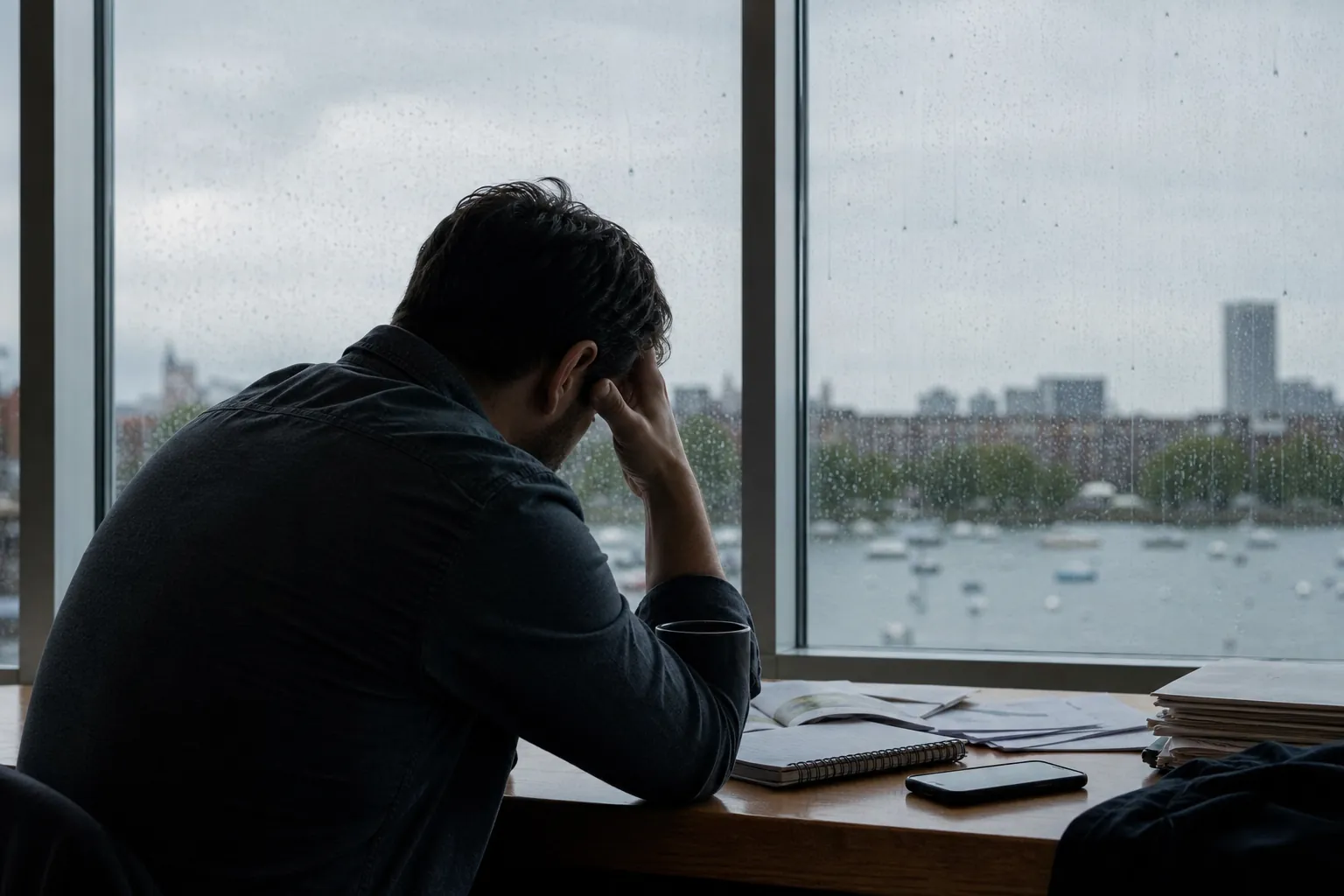
Signs of chronic stress in men
Chronic stress in men may affect emotions, behavior, thinking, and the body. Changes may develop gradually, making them easy to explain away as a busy season or temporary frustration.
- A man may become more impatient, argumentative, angry, or easily frustrated than usual.
- He may withdraw from family, friends, hobbies, or conversations that once felt manageable.
- He may have trouble falling asleep, wake frequently, or feel tired despite spending enough time in bed.
- He may struggle to concentrate, make decisions, remember details, or complete ordinary responsibilities.
- He may report headaches, muscle tension, digestive discomfort, or other physical symptoms.
- He may work excessively, take more risks, or use alcohol or other substances to disconnect from distress.
No single sign defines chronic stress. Patterns, duration, changes from a person's usual behavior, and effects on daily life matter more than one isolated reaction.

When stress starts affecting everyday life
It may be time to seek support when stress continues after a difficult period, feels difficult to control, or disrupts important areas of life. Warning signs can include repeated conflict at home, missed obligations, declining work performance, persistent sleep disruption, or relying increasingly on substances to cope.
A person does not need to wait until every part of life has deteriorated. An evaluation may help distinguish situational stress from a condition requiring structured behavioral health treatment. It can also identify overlapping concerns. For more context, read about stress-related disorders, their effects, and available support.
How families can respond constructively
Family members may notice irritability, withdrawal, or changes in routine before the person connects them with stress. A calm, specific conversation is usually more useful than labeling, criticizing, or trying to force a disclosure.
- Describe the changes you have observed without assuming why they are happening.
- Ask open questions and allow room for answers that may be brief or uncertain.
- Express concern about the person's well-being rather than focusing only on productivity or behavior.
- Encourage professional support while recognizing that the individual must participate in treatment decisions.
- Set appropriate boundaries if anger, substance use, or other behavior is harming the household.
Support does not mean taking responsibility for another adult's recovery. Families can offer connection, reduce shame, and encourage a next step while still protecting their own well-being.
What outpatient care may involve
Outpatient behavioral health care can provide assessment, therapeutic support, structure, and opportunities to develop more effective ways of responding to stress. The appropriate intensity depends on symptoms, functioning, safety, substance use, and the amount of support needed.
Merrimack Valley Behavioral Health offers adult outpatient Partial Hospitalization Programs (PHP), Intensive Outpatient Programs (IOP), outpatient care (OP), and dual-diagnosis care. Virtual IOP is available only while the participant is physically in Massachusetts. In-person treatment takes place at 77 Elm St, Amesbury, MA 01913.
Dual-diagnosis care may be relevant when stress-related symptoms and substance use occur together. Care decisions should address both rather than assuming that one concern will resolve automatically when the other is treated.
Understanding the limits of outpatient treatment
Outpatient care is not appropriate for every situation. The decision depends partly on whether someone can participate safely without continuous supervision or an overnight setting. Merrimack Valley Behavioral Health does not offer onsite detox, inpatient or residential care, overnight stays, or emergency care.
If someone may harm themselves or another person, cannot remain safe, or is experiencing another immediate crisis, call 988 or 911. The National Institute of Mental Health's help resources also explain options for finding immediate and ongoing mental health support.
What happens when you call
Adults concerned about chronic stress can call Merrimack Valley Behavioral Health at 978-233-9597. A call can begin with questions about current concerns and the type of support being sought.
Coverage varies by plan, so callers can confirm benefits. The next steps may include a prescreen followed by an intake process to better understand symptoms, daily functioning, safety, substance use when relevant, and the level of care being considered. Calling does not guarantee admission or mean that a particular program will be suitable. If outpatient care appears potentially appropriate, the intake path can help determine the next clinical and administrative steps.
Taking chronic stress seriously
Chronic stress in men can be easy to miss when it presents as anger, isolation, physical complaints, constant work, or substance use instead of recognizable anxiety. Paying attention to sustained changes and their impact can open the door to a clearer assessment. Seeking help is not an admission of failure. It is a practical step toward understanding what is happening and deciding what support makes sense.
Frequently asked questions
Can anger be a sign of chronic stress in men?
Yes. Irritability, impatience, or anger may accompany chronic stress, particularly when a person has difficulty identifying or discussing distress. Anger alone does not establish a diagnosis, so persistent or disruptive changes warrant professional assessment.
Can chronic stress cause physical symptoms?
Chronic stress may occur alongside headaches, muscle tension, digestive discomfort, sleep disruption, fatigue, and other physical symptoms. Because physical complaints can have multiple causes, medical evaluation may also be important.
When should a man seek help for chronic stress?
Consider seeking help when stress persists, feels unmanageable, disrupts sleep or relationships, affects work or responsibilities, or is accompanied by increasing substance use. For an immediate safety crisis, call 988 or 911.
