

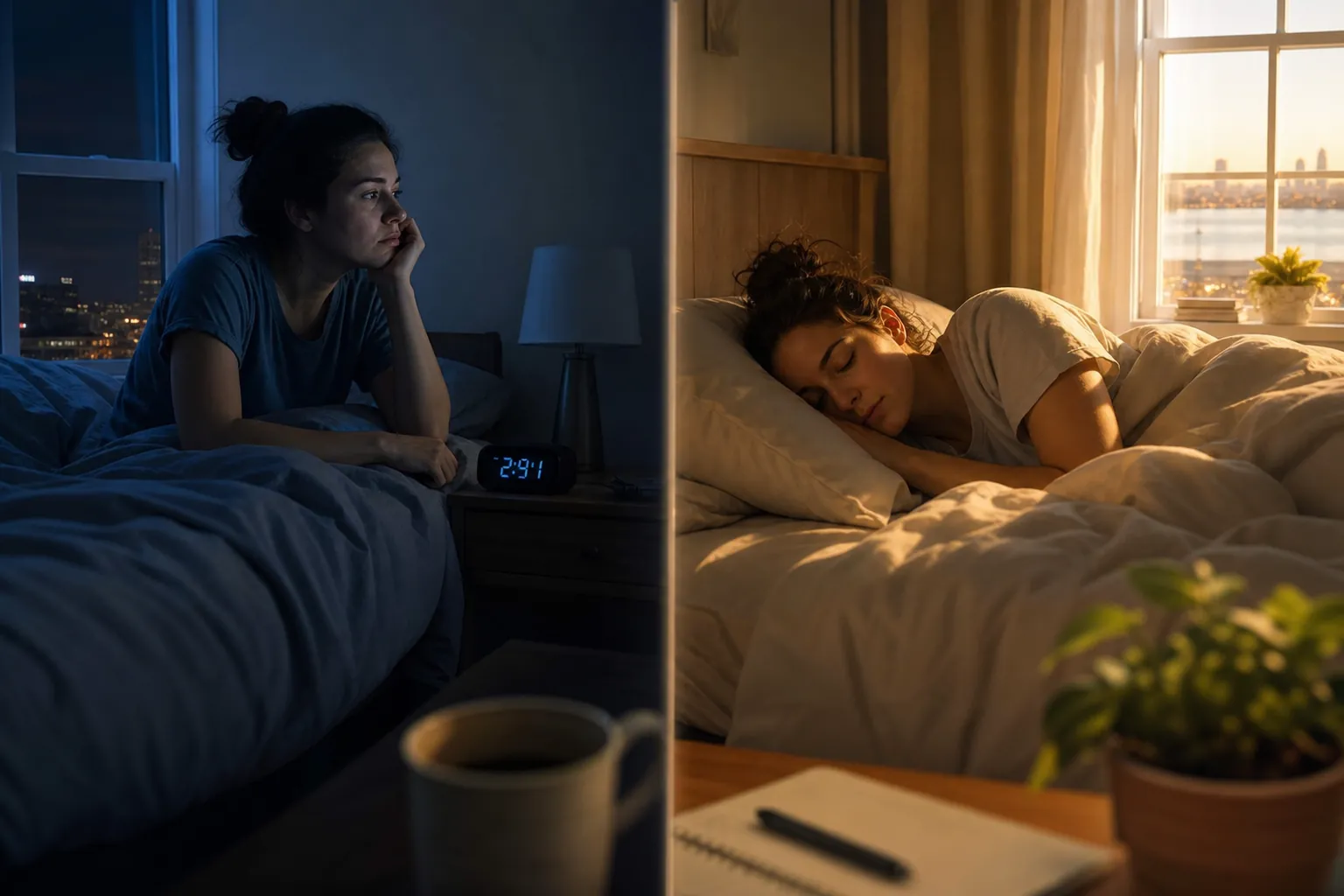
Bipolar disorder can affect both how long a person sleeps and how rested or energetic they feel. During manic or hypomanic episodes, someone may sleep far less than usual yet feel unusually energized. During depressive episodes, they may sleep too much, struggle to fall or stay asleep, or feel exhausted despite spending many hours in bed. These shifts can affect judgment, work, relationships, self-care, and the ability to maintain a daily routine.
How mood episodes can change sleep
Sleep changes are not identical for everyone, and one restless night does not establish a diagnosis. What matters clinically is the broader pattern, including changes in mood, activity, thinking, behavior, and functioning.
According to the National Institute of Mental Health overview of bipolar disorder, manic episodes may involve a decreased need for sleep, while depressive episodes may include trouble sleeping, waking too early, or sleeping too much. Bipolar disorder is diagnosed by a qualified healthcare professional based on the severity, length, and frequency of symptoms over time.
- During mania or hypomania, a person may sleep only a few hours and still feel rested or driven to keep moving.
- During depression, a person may have difficulty getting out of bed, experience daytime fatigue, or find that extra sleep does not restore energy.
- Between clear episodes, irregular sleep may still interfere with concentration, motivation, and emotional steadiness.
What changing daily energy can look like
Energy changes can be physical, mental, and social. Higher energy may involve rapid speech, racing thoughts, increased activity, irritability, impulsive decisions, or taking on many tasks at once. The person may feel productive, but their judgment or ability to recognize limits can be affected.
Lower energy may appear as slowed movement, poor concentration, reduced interest, social withdrawal, or difficulty completing ordinary responsibilities. Basic activities such as showering, preparing food, answering messages, or arriving at work may feel unusually demanding.
Sleep loss itself can also make it harder to regulate emotions and think clearly. Because sleep, energy, and mood influence one another, a noticeable departure from a person's usual pattern deserves attention, especially when it persists or disrupts safety and functioning.

When a change may need professional attention
Consider seeking an assessment when sleep and energy changes are sustained, recur in cycles, or accompany significant changes in behavior. A clinician can evaluate whether symptoms may relate to bipolar disorder, another mental health condition, a substance, a medication, or a physical health concern.
- Seek help if reduced sleep comes with unusually elevated or irritable mood, risky choices, agitation, or rapidly increasing activity.
- Seek help if fatigue, oversleeping, hopelessness, or loss of interest is making daily responsibilities difficult to manage.
- Seek help when substance use and mood or sleep symptoms are interacting or becoming difficult to separate.
- Use urgent support when symptoms create immediate danger rather than waiting for a routine outpatient appointment.
If there is a mental health crisis, imminent danger, or concern about suicide, call 988 or 911. Merrimack Valley Behavioral Health does not provide emergency care, onsite detox, inpatient or residential care, or overnight stays.
What outpatient care may involve
Outpatient care can provide structured support while a participant continues living at home. Depending on clinical needs, treatment may address mood symptoms, sleep routines, coping skills, daily functioning, medication-related concerns, relapse awareness, and the effects of substances. Learn more about the condition and available support on MVBH's bipolar disorder treatment and information page.
Merrimack Valley Behavioral Health offers adult outpatient partial hospitalization programs (PHP), intensive outpatient programs (IOP), outpatient care (OP), and dual-diagnosis care. Virtual IOP is available only while the participant is physically in Massachusetts. In-person treatment is provided at 77 Elm St, Amesbury, MA 01913.
The appropriate level of care depends on symptom intensity, safety, functioning, substance use, and how much structure is needed. Outpatient treatment is not appropriate for every situation. Someone who requires medical detoxification, continuous monitoring, emergency intervention, or overnight support needs a setting equipped to provide that care. Placement and admission cannot be determined from symptoms described online.
Practical ways to support steadier routines
Professional care may include discussion of habits that support more consistent sleep and daily functioning. These steps do not replace evaluation or treatment, but they can help make patterns easier to notice and routines easier to maintain.
- Keep sleep and wake times as consistent as reasonably possible, including on weekends.
- Reduce late-day caffeine or other stimulants if they interfere with sleep.
- Discuss sudden sleep or energy changes with a qualified healthcare professional rather than changing prescribed medication independently.
- Break essential daily activities into manageable steps when low energy makes tasks feel overwhelming.
- Pay attention when feeling rested after very little sleep occurs alongside increased activity, impulsivity, or unusual confidence.
How family or trusted supporters can help
With the person's consent, family members or other trusted supporters may reinforce stable routines and notice meaningful changes. Helpful support is specific and nonjudgmental. For example, a supporter might calmly mention that the person has slept much less for several nights or has stopped participating in normal activities.
Supporters can encourage professional help without arguing about whether the person “should” feel energetic or tired. They can also take statements about self-harm, unsafe behavior, or an inability to remain safe seriously. In a crisis, call 988 or 911.
What happens when you call MVBH
Adults considering outpatient care can call Merrimack Valley Behavioral Health at 978-233-9597. A call can begin with questions about current concerns and the available programs. Coverage varies by plan, so callers can confirm benefits.
The path may include an initial call, a benefits check, a prescreen, and an intake assessment. These steps help determine needs and whether an available outpatient level of care may fit. Calling does not promise admission or establish that a particular program is suitable. If outpatient services cannot safely meet the person's needs, a different level or type of care may be necessary.
Frequently asked questions
Can bipolar disorder make someone feel rested after very little sleep?
Yes. A decreased need for sleep can occur during mania or hypomania, and the person may still feel energetic. Professional assessment is important when this occurs with mood, behavior, or judgment changes.
Can bipolar depression cause too much sleep and low energy?
It can. Depressive episodes may involve sleeping too much, having trouble sleeping, or feeling tired even after extended sleep. Other conditions can cause similar symptoms, so evaluation matters.
Is outpatient care appropriate for every sleep-related bipolar symptom?
No. Outpatient care may fit some adults who can participate safely while living at home. Emergency risk, a need for overnight monitoring, or a need for detoxification, inpatient, or residential care requires another setting.
