

Binge eating does not have one visible form. For women in MA, binge eating may be hidden behind dieting, shame, or a routine that seems fine from the outside. These experiences are not unique to women, and appearance does not establish a diagnosis. Recurring loss of control and distress deserve care, even when nobody else has noticed a change.
You may feel unsure whether the problem is serious enough to mention. Perhaps you call it a lack of willpower, or think you must change your weight before seeking help. You do not need to prove that you look ill. A care conversation can start with the eating pattern and how it affects you.
How Can Binge Eating In Women In MA Stay Hidden?
Binge eating in women can stay hidden when private eating and shame are hard to discuss. Eating disorder information explains why behaviors matter, while individual therapy offers a private care setting. Keeping up with work or family tasks does not show that eating feels manageable. Your distress is worth taking seriously.
The NIDDK guide to binge eating symptoms describes eating alone because of embarrassment and feeling a lack of control. A person may find those details hard to reveal. It can feel easier to talk about weight than to say that eating has become frightening or upsetting.
A woman might describe repeated diets without mentioning episodes that feel out of control. Another might feel ashamed after eating and hide the distress. These are possible ways a concern can remain unseen, not accounts of MVBH patients or proof of a diagnosis. Men and people of other genders can also experience them.
The important point is not to search for a female appearance or personality type. You can take the concern seriously without judging the body or trying to read another person's food choices. A trained professional can explore the pattern with more care than an outside impression allows.
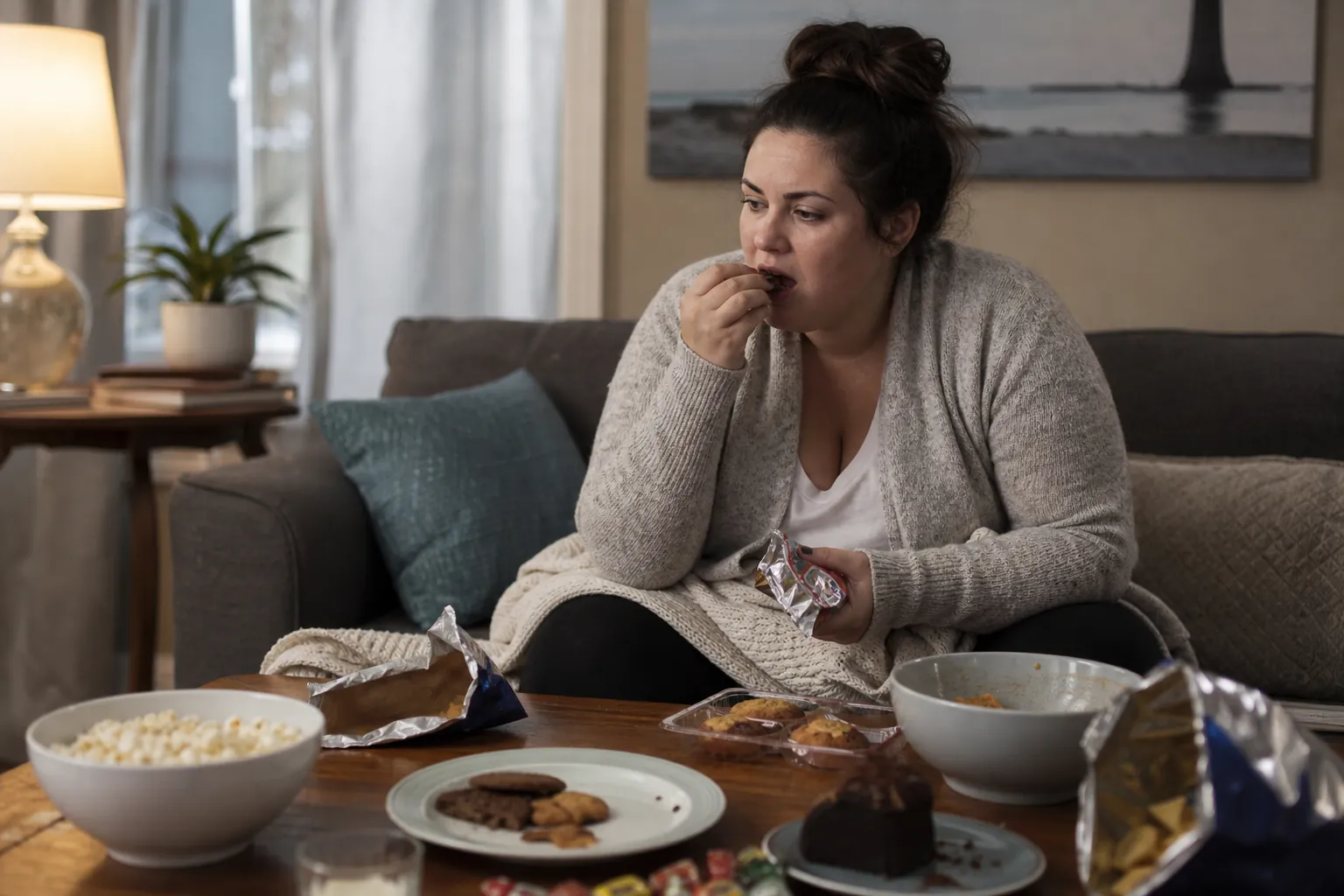
How Is Binge Eating Different From An Occasional Large Meal?
Binge eating involves more than a meal that happens to be large. Eating disorder care information focuses on patterns and distress, while talk therapy information explains a broader care approach. Feeling unable to control eating is an important concern. One meal alone cannot establish binge-eating disorder or rule it out.
NIDDK describes eating a large amount in a short period and feeling unable to stop or control what or how much is eaten. Its guidance also lists rapid eating, uncomfortable fullness, and eating when not hungry. These signs help explain the condition, but an online list is not a diagnosis.
A celebration, an unusually hungry day, and a recurring pattern of distress need not mean the same thing. The care conversation considers context and how the experience affects daily life. You do not need to compare your meal with another person's plate to decide whether it is reasonable to seek help.
Avoid turning this distinction into another test of discipline. Feeling out of control is not solved by criticism. Nor does one day without an episode prove that a recurring concern has gone away. A professional review can consider the overall pattern rather than one isolated moment.

Why Can Binge Eating Look Like A Dieting Problem?
Binge eating can look like a dieting problem when attention stays on weight or food rules. Support for eating concerns and cognitive behavioral therapy can help clarify thoughts and behaviors within a care plan. Strict rules are not proof of control, and a new diet is not a substitute for reviewing recurring loss-of-control eating.
NIDDK notes that unhealthy dieting, including skipping meals or eating too little, may contribute to binge eating for some people. This does not mean dieting is the only cause. It also does not justify a universal meal plan. Treatment needs to consider the person's physical and mental health.
You may be tired of viewing each day as a success or failure based on food. Professional care can provide a different place to discuss that experience. You can describe the stress of food rules without having to defend your size, list every meal, or prove that you tried hard enough.
This article does not set calorie targets, tell you to avoid specific foods, or recommend weight loss. Those instructions could miss the issue and may not suit your health needs. The next useful step is an appropriate assessment of the concern, rather than another promise to punish or restrict yourself.
How Can Shame Shape Binge Eating In Women?
Shame can make binge eating harder to share and delay help. Private individual support offers space to speak, while anxiety information can help when fear and worry also affect daily life. You do not need to present the concern neatly. A useful care conversation should address distress without blaming your character.
NIDDK describes guilt, disgust, or feeling depressed after episodes. These feelings can be part of the problem, yet they do not explain its full cause. Saying that you feel ashamed is enough to open a conversation. You should not have to expose details publicly or ask relatives to decide whether the concern is real.
Body expectations and social pressure may shape how you describe the problem. Some women may feel that talking about weight is accepted while talking about loss of control is not. This is a possible context, not a claim that every woman has the same experience or that binge eating belongs only to women.
Try to keep judgments about worth separate from the need for care. Seeking help is not an admission of weak character. The NIMH eating disorder overview describes eating disorders as serious illnesses. Compassion and a careful review are more useful than shame.
What Can A Binge Eating Assessment Clarify?
An assessment can clarify eating patterns, distress, health concerns, and other care needs. Eating disorder support and outpatient care should follow that review rather than an assumption about body size. A professional considers the whole picture. The goal is an appropriate next step, not simply applying a label to one episode.
A care conversation may cover how long the concern has been present, its impact, and other behaviors linked to eating. Medical needs matter as well as emotions. You do not have to diagnose yourself before seeking assessment. You can explain that eating feels out of control or that shame is taking up too much of your day.
NIMH explains that eating disorders can affect people across body weights and require appropriate care. Other symptoms may need attention at the same time. Anxiety, depression, or substance use should not be dismissed because the visible concern involves food.
MVBH offers adult outpatient programs, but this article does not establish a specialized eating-disorder track or promise suitability. Staff can review whether the available care can meet your needs or whether another setting is appropriate. That boundary matters when medical or nutritional needs require services beyond a general outpatient program.
When Does Binge Eating Need A Different Care Setting?
Binge eating needs a different setting when medical or safety needs cannot be met through outpatient care. Partial hospitalization care and intensive outpatient care offer daytime support. They do not replace emergency, inpatient, or residential services. A professional should assess concerning physical symptoms and determine which setting can safely address the full need.
MVBH does not provide onsite detox, inpatient or residential care, overnight stays, or emergency care. If you need round-the-clock support or urgent medical treatment, another provider must address that need. More hours of outpatient contact do not create overnight supervision.
Do not assume that distress is harmless because it has lasted a long time or because you still attend work. If your health or safety is in question, seek appropriate professional help. This article cannot assess medical stability or decide that outpatient eating-disorder care is safe for you.
For a mental health crisis or thoughts of suicide, call or text 988. For a life-threatening situation or medical emergency, call 911. The NIMH help guide explains these routes. Do not wait for an outpatient response when urgent help is needed.
How Can Loved Ones Respond To Binge Eating?
Loved ones can respond to binge eating with concern about distress rather than comments about weight. Family therapy information describes shared support, while individual care protects room for the adult's own voice. Listen and offer practical help. Policing food, shaming, or arguing about body size can miss the concern that needs care.
You do not have to prove that an episode happened in order to show concern. A loved one can offer to sit nearby during a call or help with transport if welcome. They should not take control of meals or demand an account of everything eaten as a condition of support.
- Listen without making comments about body size.
- Take distress seriously even when it stays private.
- Offer company for a professional care conversation.
- Respect the adult's privacy and choices.
- Use urgent help for medical or safety emergencies.
Family involvement in treatment depends on consent, privacy, and clinical needs. Supporting someone does not give automatic access to their care details. If you are a loved one, you can seek general information without asking staff to disclose private information about an adult participant.
How Can Women In MA Explore Binge Eating Support?
Women in MA can explore support by discussing eating distress and the care they need. The MVBH admissions pathway explains next steps, and MVBH contact information provides a direct route. You do not need to complete a self-help plan first. Clinical fit and insurance benefits each require review before a program can be considered suitable.
Call Merrimack Valley Behavioral Health at 978-233-9597. In-person adult care is at 77 Elm St, Amesbury, MA 01913. The available outpatient levels are PHP, IOP, OP, and dual-diagnosis care. Virtual IOP requires physical presence in Massachusetts during sessions.
The process includes a call or callback request, a benefits check, a prescreen, and intake when appropriate. Coverage varies by plan. Contact MVBH to confirm benefits. A call does not guarantee admission, coverage, or a start date. A website form collects callback details only, so keep sensitive clinical history for the care conversation.
What Are Common Questions About Binge Eating In Women?
Common binge eating questions concern recognition, shame, and care. Eating disorder information offers background, while outpatient care information explains one setting. The answers below describe general principles. They do not create a female diagnostic test or decide what level of treatment you need. Your own health and care needs still matter.
Can Binge Eating Occur At Any Body Size?
Yes. Body size alone does not determine whether someone has an eating disorder. A professional considers eating behavior, loss of control, distress, and health needs. You do not need to change your weight or look unwell before seeking care. The concern deserves attention based on its impact, not an outside impression.
Are These Binge Eating Signs Unique To Women?
No. Loss of control, private eating, shame, and distress can occur in men and people of other genders too. Women may describe their experience in different ways, but there is no single female symptom pattern. A clinician should assess the individual rather than make a diagnosis from gender or appearance.
Is Binge Eating Simply A Lack Of Willpower?
No. Eating disorders are serious health concerns, and blame does not provide an assessment or a care plan. Recurring loss of control and distress deserve professional attention. You can seek help even if you have repeatedly tried to change the pattern yourself. Those efforts do not establish that you should manage it alone.
Should I Start A Strict Diet To Stop Binge Eating?
This article does not recommend a diet or food rules. Unhealthy restriction can contribute to binge eating for some people, and health needs vary. A qualified professional can review the pattern and recommend appropriate care. Seek support for the eating concern rather than using punishment or an online meal plan as treatment.
Does Calling MVBH Guarantee Eating Disorder Admission?
No. Calling begins a conversation about needs, benefits, and possible outpatient assessment. MVBH offers adult PHP, IOP, OP, and dual-diagnosis care, but suitability must be assessed. It does not provide emergency or overnight care. Coverage varies by plan, and a call or prescreen does not guarantee admission or a start date.
