
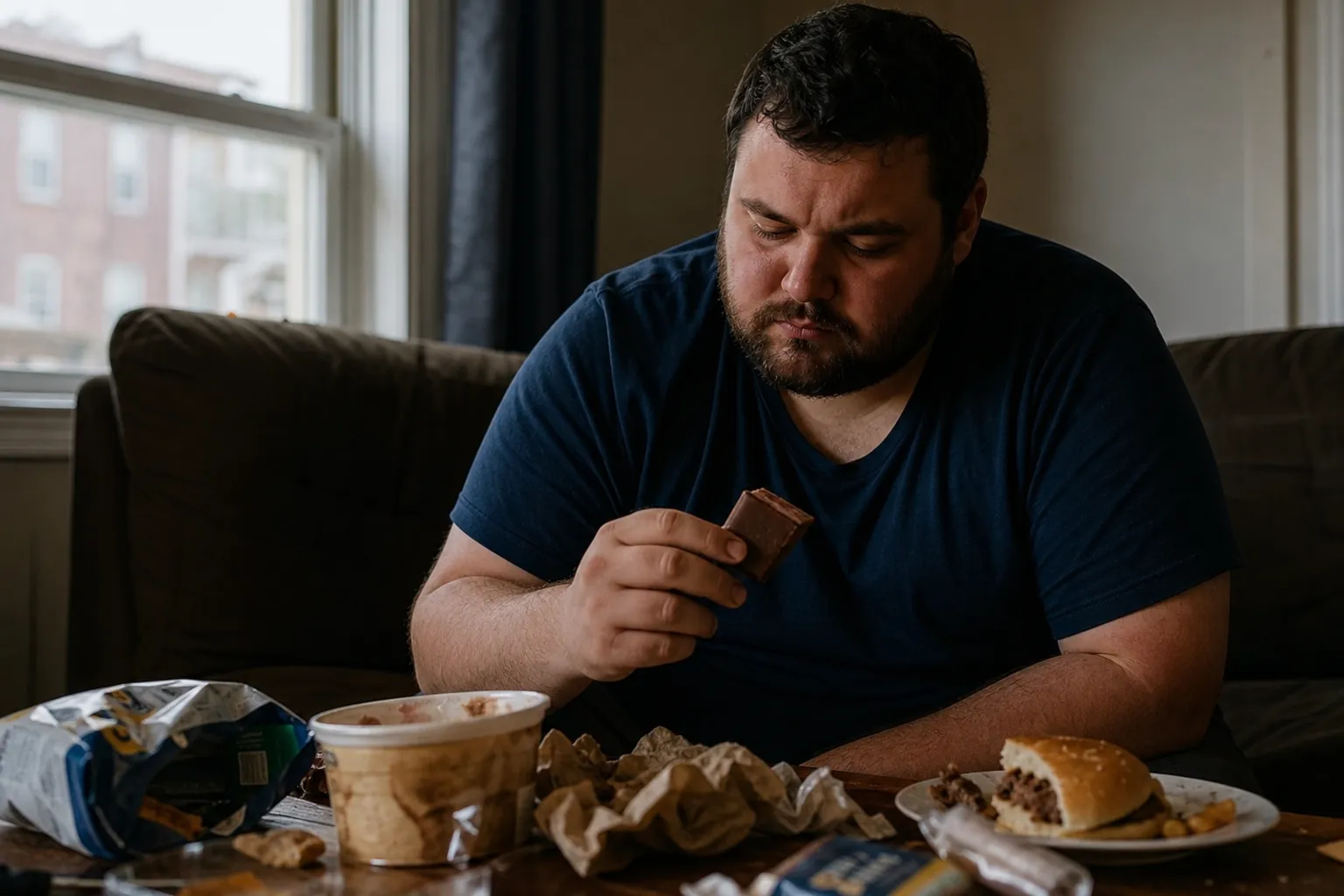
Binge eating disorder in men can involve eating unusually large amounts of food while feeling unable to stop, but the concern may be concealed behind fitness routines, body-size goals, dieting, or private eating. Some men focus less on wanting to be thin and more on becoming leaner, larger, or more muscular. Shame and assumptions about who develops eating disorders can also make symptoms harder to recognize or discuss.
Binge eating is more than occasionally overeating
A large meal or an occasional episode of overeating does not by itself establish an eating disorder. Binge eating involves a sense of losing control during an episode. A person may eat rapidly, continue past comfortable fullness, eat without physical hunger, eat alone because of embarrassment, or feel guilt or distress afterward.
Binge-eating disorder does not regularly include the compensatory behaviors associated with bulimia nervosa, such as vomiting, fasting, or excessive exercise after binge episodes. The National Institute of Mental Health overview of eating disorders explains that eating disorders can affect people of all ages, racial and ethnic backgrounds, body weights, and sexes.
A qualified professional considers the pattern, frequency, duration, distress, health effects, and other possible explanations. Appearance alone cannot show whether someone has binge-eating disorder.

Why the signs may be missed in men
Cultural stereotypes can frame eating disorders as conditions that affect only women or visibly underweight people. That misconception may keep a man from identifying loss-of-control eating as a behavioral health concern. Friends and relatives may also interpret large portions as normal, especially for someone who exercises frequently or has a larger body.
Signs that deserve attention may include:
- A person repeatedly eats in secret or arranges time alone around food.
- He feels unable to slow down or stop once an eating episode begins.
- He experiences marked shame, guilt, disgust, or distress after eating.
- Food rules, dieting, or attempts to change body size repeatedly alternate with binge episodes.
- Eating patterns interfere with relationships, work, daily routines, or emotional well-being.
These experiences can occur at any body size. Weight changes may happen, but they are not required for a concern to be meaningful.

Muscularity and fitness goals can complicate the picture
For some men, body dissatisfaction centers on muscularity, leanness, or strength rather than a wish to be smaller. Eating large quantities may initially be explained as “bulking,” while strict food rules may be described as discipline. Exercise can be healthy, but rigid routines and intense distress when a routine changes may warrant closer attention.
The practical question is not whether someone goes to the gym or follows a meal plan. It is whether eating and exercise feel flexible and chosen, or driven and difficult to control. A clinical assessment can examine binge episodes alongside mood, anxiety, substance use, body image, and exercise patterns without assuming that every fitness goal is a symptom.
What treatment decisions may involve
Care for binge eating is individualized. An assessment helps clarify the eating pattern, emotional and physical concerns, co-occurring conditions, current safety, and the level of support needed. Treatment may involve learning to recognize triggers, developing more consistent eating patterns, addressing shame and body-image concerns, and building alternatives to using food to manage difficult emotions.
When a substance use condition occurs alongside eating or mental health concerns, coordinated dual-diagnosis care may be relevant. Readers can explore MVBH’s broader information about eating disorders, warning signs, and treatment considerations.
Family or trusted-person support can also help when the adult receiving care wants it. Supportive people can listen without commenting on weight, avoid policing food, and encourage consistent participation in care. Adult treatment still centers the participant’s preferences, privacy, and clinical needs.
When outpatient treatment may or may not fit
Outpatient care can be considered when a person can participate safely without overnight monitoring and the program’s level of structure matches current needs. Merrimack Valley Behavioral Health offers adult outpatient partial hospitalization programming, intensive outpatient programming, standard outpatient care, and dual-diagnosis care. Virtual IOP is available only while the participant is physically in Massachusetts.
Outpatient fit requires an individual prescreen and intake assessment. Important considerations include:
- The person can remain safe between scheduled treatment sessions.
- Medical and psychiatric needs can be managed without inpatient or residential monitoring.
- The available program intensity is appropriate for the person’s symptoms and daily functioning.
- Any co-occurring substance use or mental health concerns can be addressed at the proposed level of care.
MVBH does not provide onsite detox, inpatient or residential care, overnight stays, or emergency care. Someone who needs those services may require a different setting. For a crisis or immediate danger, call 988 or 911. The NIMH guidance for finding help also describes crisis and treatment resources.
How to start a conversation about care
If you are concerned about your own eating, it can help to describe what happens plainly: loss of control, eating in secret, distress afterward, or the effect on daily life. You do not need to meet a stereotype or reach a certain weight before asking about an assessment.
If you are approaching a loved one, choose a private moment and focus on observed behavior and well-being rather than appearance. Statements such as “I have noticed that eating seems distressing lately” are generally less accusatory than comments about weight, willpower, or portion size. Listen to the response and avoid monitoring or shaming food choices.
Calling MVBH about the next step
Adults considering outpatient care can call Merrimack Valley Behavioral Health at 978-233-9597. The call can include a benefits check because coverage varies by plan, followed by a prescreen to discuss current concerns and whether an offered outpatient level may be appropriate. If the prescreen supports moving forward, the next step is an intake assessment. Calling does not promise admission or establish that a particular program is suitable.
In-person treatment is located at 77 Elm St, Amesbury, MA 01913. Virtual IOP participation is limited to times when the participant is physically present in Massachusetts.
Frequently asked questions
Can a man have binge-eating disorder without weight gain?
Yes. Binge-eating disorder can occur at any body size, and appearance cannot confirm or rule it out. Assessment focuses on loss-of-control eating, associated distress, the pattern over time, and its effects.
Is eating a lot for muscle gain the same as binge eating?
Not necessarily. Planned eating for a fitness goal differs from episodes marked by loss of control and distress. A clinician can assess how eating, exercise, body image, and emotional health interact.
Can family members participate in care?
Family or trusted supporters may be helpful when the adult participant wants their involvement and it is appropriate to the care plan. Support should avoid shame, weight criticism, and food policing.
