
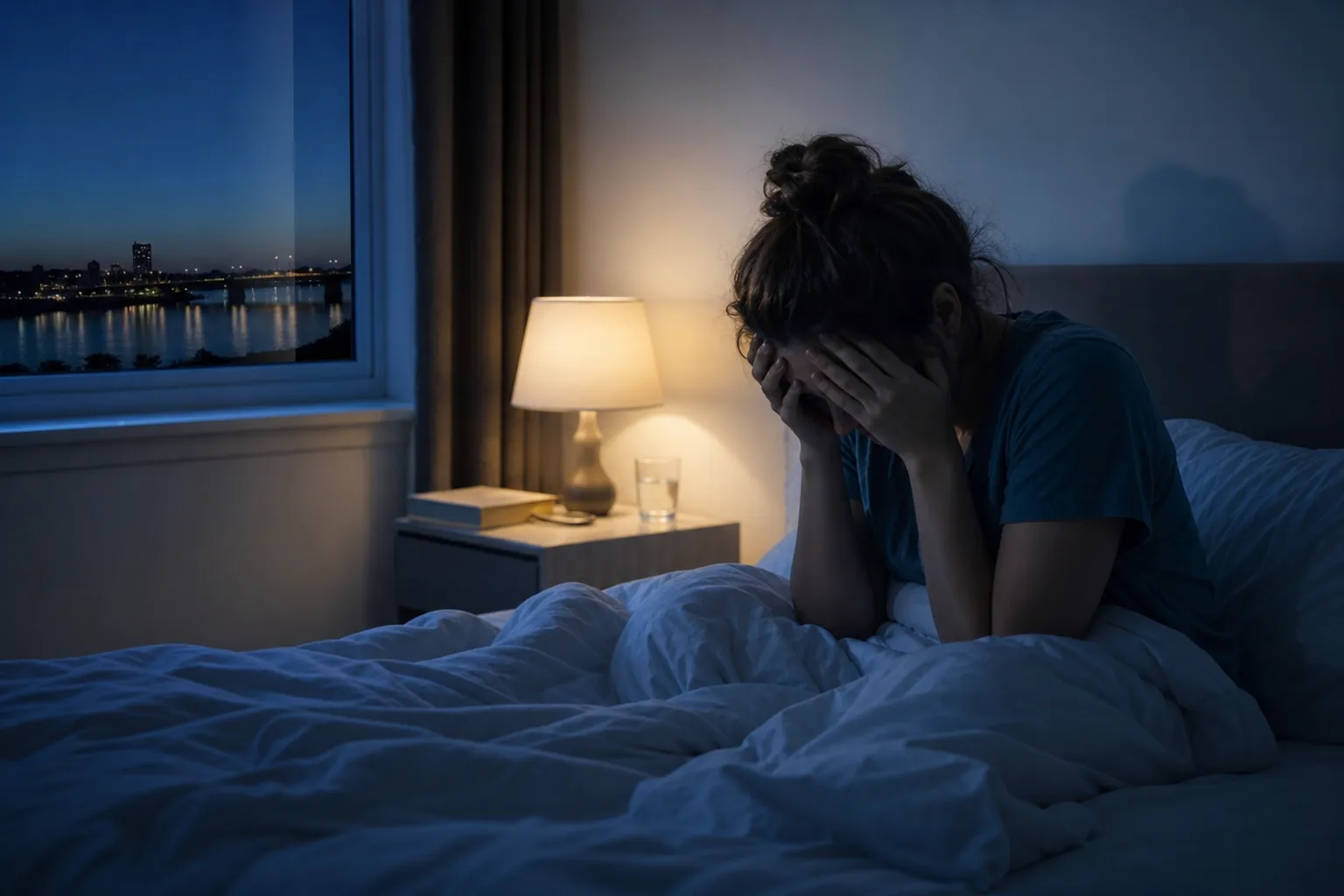
Anxiety can make it harder to fall asleep, stay asleep, or feel rested in the morning. In turn, poor sleep can reduce daily energy, strain concentration, and make anxious thoughts or physical tension feel harder to manage. This cycle may affect work, relationships, routines, and decision-making, but recognizing the pattern can help someone decide what support to seek.
Why anxiety can interfere with sleep
Anxiety often involves more than worry. A person may feel restless, on edge, tense, irritable, or unable to quiet racing thoughts. The National Institute of Mental Health explains that generalized anxiety disorder can involve fatigue, difficulty concentrating, muscle tension, and sleep problems.
At bedtime, fewer distractions may leave more room for concerns about responsibilities, health, relationships, or the next day. Someone may mentally revisit conversations, anticipate problems, or monitor whether they are falling asleep. Physical symptoms such as muscle tension can also make settling down difficult.
Anxiety and sleep problems do not look the same for everyone. One person may lie awake for hours, while another falls asleep quickly but wakes repeatedly. Others may sleep for a typical amount of time yet wake feeling unrefreshed.

How disrupted sleep can affect daily energy
Low energy is not always simple sleepiness. It can feel like physical heaviness, reduced motivation, mental fog, or having little capacity for ordinary demands. When anxiety remains active during the day, sustained alertness and tension may also feel exhausting.
Possible effects on daily life include:
- A person may need more effort to begin or finish routine tasks.
- Concentration may drift during work, conversations, or household responsibilities.
- Irritability may increase when someone feels tired or overstimulated.
- Decisions may feel unusually difficult because worry and fatigue compete for attention.
- Plans, exercise, or social contact may be reduced because energy feels limited.
These effects can reinforce the anxiety and sleep cycle. Falling behind may create more worry, while canceling meaningful activities can narrow sources of connection and relief.

Practical ways to respond to the cycle
Small changes cannot resolve every anxiety or sleep concern, but they may help clarify patterns and reduce avoidable strain. The goal is not to force sleep or demand perfect routines. It is to create conditions that support rest and make daytime energy more manageable.
- Keep wake times reasonably consistent, including after a difficult night, when possible.
- Create a quieter transition before bed by reducing stimulating activities and work-related tasks.
- Use a brief grounding practice, such as slow breathing or noticing physical sensations, when worry escalates.
- Break daytime responsibilities into smaller steps when fatigue makes the full task feel overwhelming.
- Discuss persistent sleep changes, daytime exhaustion, or physical symptoms with an appropriate health professional.
If attempts to improve sleep become rigid or stressful, that pressure may become another source of anxiety. A clinician can help examine both the nighttime symptoms and the daytime patterns that maintain distress.
When outpatient behavioral health care may help
Professional support may be worth considering when anxiety and sleep disruption repeatedly interfere with functioning, relationships, self-care, or responsibilities. Treatment may explore triggers, thought patterns, physical responses, coping strategies, routines, and the relationship between worry and avoidance.
The appropriate level of care depends on symptom severity, safety, daily functioning, and whether substance use or other behavioral health concerns are present. Merrimack Valley Behavioral Health offers adult outpatient partial hospitalization programs, intensive outpatient programs, standard outpatient care, and dual-diagnosis care. Virtual IOP is available only while the participant is physically in Massachusetts.
Readers can learn more about anxiety symptoms and treatment considerations. No single program is suitable for everyone, and contacting a provider does not promise admission or confirm that a particular level of care is appropriate.
Understanding outpatient limits and urgent needs
Outpatient treatment assumes that a person can remain safely in the community outside program hours. Merrimack Valley Behavioral Health does not provide onsite detox, inpatient or residential care, overnight stays, or emergency care. Someone who needs medical withdrawal management, continuous monitoring, overnight support, or emergency stabilization may require a different setting.
In a behavioral health crisis or when there is immediate danger, call 988 or 911. The National Institute of Mental Health also provides guidance on finding help, including information for urgent situations.
How family or trusted supporters can help
With the adult's preferences and consent in mind, family members or other trusted people may offer useful support. They can listen without minimizing the anxiety, help protect time for rest, or assist with practical responsibilities during periods of low energy.
Support is usually more helpful when it remains collaborative. Repeatedly checking whether someone has slept, pressuring them to relax, or taking over every task may increase tension. Instead, supporters can ask what would be useful and respect the person's role in decisions about care.
What happens when you call MVBH
Adults considering outpatient care can call Merrimack Valley Behavioral Health at 978-233-9597. During the initial call, the next steps can include a benefits check, since coverage varies by plan, and a prescreen to gather information relevant to program fit and level-of-care needs.
If outpatient services appear potentially appropriate, the team can explain the intake path. The intake process helps determine whether available care matches the person's current needs. It does not guarantee admission or suitability.
In-person treatment is provided at 77 Elm St, Amesbury, MA 01913. A caller can ask about the differences among PHP, IOP, OP, dual-diagnosis care, and Virtual IOP while discussing which next step may make sense.
Frequently asked questions
Can anxiety make you tired even if you slept?
Yes. Anxiety may contribute to unrefreshing sleep, muscle tension, sustained alertness, and mental strain, all of which can leave someone feeling tired even after time in bed.
When should sleep problems related to anxiety be discussed with a professional?
Consider seeking professional guidance when sleep disruption or fatigue persists, affects daily functioning, or occurs alongside significant distress, physical symptoms, substance use, or other behavioral health concerns.
Does MVBH provide overnight help for anxiety-related insomnia?
No. MVBH offers adult outpatient care and does not provide overnight stays, inpatient or residential treatment, onsite detox, or emergency care. In a crisis, call 988 or 911.
