

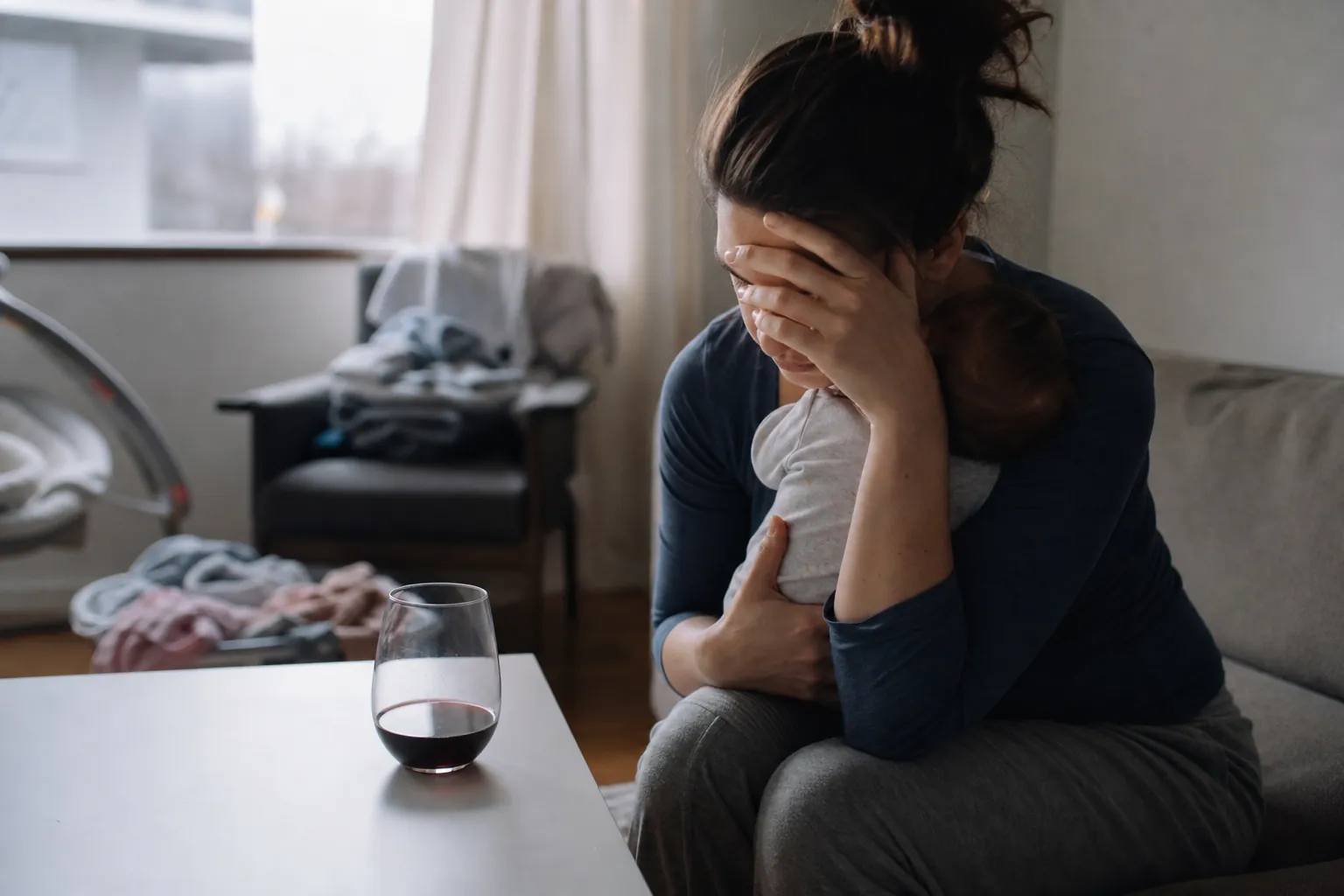
Postpartum depression and alcohol use can become connected when someone drinks to cope with sadness, anxiety, exhaustion, isolation, or other difficult feelings after childbirth. Alcohol may seem to provide short-term relief, but it can worsen mood symptoms, disrupt sleep, affect judgment, and make recovery more complicated. When both concerns are present, integrated care can address them together rather than treating one as secondary.
Understanding postpartum depression
Postpartum depression is a form of perinatal depression that occurs after childbirth. It is more intense and persistent than the temporary mood changes often called the “baby blues.” According to the National Institute of Mental Health’s overview of perinatal depression, symptoms may include persistent sadness, anxiety, fatigue, difficulty concentrating, changes in sleep or appetite, trouble bonding with the baby, and doubts about the ability to care for the baby.
Symptoms can vary widely. A person may feel numb rather than visibly sad, or experience irritability, guilt, hopelessness, or withdrawal. Sleep loss and major changes in routine can also make it difficult to distinguish a mental health condition from expected postpartum adjustment. A qualified healthcare professional can assess the symptoms, their duration, and their effect on daily life.

Why alcohol may enter the picture
Some people use alcohol in an effort to quiet racing thoughts, fall asleep, reduce tension, or temporarily escape painful emotions. Others may return to drinking patterns that existed before pregnancy. Social isolation, relationship stress, physical recovery, feeding concerns, financial pressure, and reduced access to usual coping strategies can add strain.
Drinking does not mean someone has failed as a parent. It does, however, deserve honest attention. Alcohol can intensify depression, interfere with restorative sleep, lower inhibitions, and contribute to conflict or unsafe decisions. As drinking increases, the resulting consequences may deepen shame or hopelessness, creating a cycle in which each condition aggravates the other.
- A person may drink for temporary relief, then experience lower mood or greater anxiety afterward.
- Interrupted sleep may lead to drinking as a sleep aid, even though alcohol can further disturb sleep quality.
- Guilt about drinking may make someone withdraw from family, friends, or healthcare professionals.
- Depression may reduce motivation to change alcohol use, while alcohol may make depression harder to manage.
Signs that both concerns need attention
Occasional symptoms do not establish a diagnosis. Still, certain patterns can signal that it is time for a professional evaluation, particularly when they persist, worsen, or interfere with caring for oneself or a baby.
- Alcohol is becoming a primary way to handle sadness, anxiety, anger, loneliness, or sleep problems.
- Drinking is occurring more often or in larger amounts than intended.
- Mood symptoms and alcohol use are affecting relationships, responsibilities, safety, or medical care.
- The person has tried to cut down but has been unable to sustain the change.
- Family members are concerned about changes in mood, behavior, judgment, or alcohol use.
- The person is hiding their drinking or avoiding conversations about how they feel.
A healthcare professional can also discuss alcohol use in relation to medications, physical recovery, breastfeeding, and other individual health considerations. These questions require personalized medical guidance.
What integrated treatment can involve
When postpartum depression and problematic alcohol use occur together, they may be described as co-occurring conditions or a dual diagnosis. Treatment generally works best when providers understand both concerns and how they interact. Addressing depression without discussing alcohol may leave an important driver of symptoms untreated. Focusing only on drinking may overlook the emotional distress contributing to it.
Care may include a clinical assessment, individual or group therapy, education about symptoms and coping skills, relapse-prevention planning, medication evaluation by an appropriate prescriber, and coordination with other healthcare professionals when relevant. The exact plan depends on clinical needs and level-of-care criteria.
Merrimack Valley Behavioral Health offers adult outpatient PHP, IOP, OP, and dual-diagnosis care. Its adult dual-diagnosis treatment program is designed to address mental health and substance use concerns together. Virtual IOP is available only while the participant is physically in Massachusetts.
Deciding whether outpatient care fits
Outpatient treatment can be appropriate when a person can participate safely without overnight monitoring and has needs that match the program’s level of support. PHP typically involves more structure than IOP, while standard outpatient care generally involves less frequent treatment. A prescreen and clinical intake help determine whether an available outpatient level may fit.
Outpatient care is not the right setting for every situation. Merrimack Valley Behavioral Health does not provide onsite detox, inpatient or residential care, overnight stays, or emergency care. Someone who may experience dangerous alcohol withdrawal needs prompt medical assessment rather than attempting to stop abruptly without guidance. A person who cannot remain safe or care for basic needs may require emergency or hospital-based support.
If there are thoughts of suicide, thoughts of harming the baby or another person, severe confusion, hallucinations, or immediate danger, call 988 or 911. Do not wait for a routine outpatient appointment.
How family members can offer support
A partner, relative, or trusted friend may notice changes before the person feels ready to discuss them. Support is most helpful when it is compassionate, specific, and centered on safety rather than blame.
- Express concern using observations, such as changes in mood, isolation, sleep, or drinking.
- Listen without minimizing the person’s distress or treating alcohol use as a character flaw.
- Offer practical support with childcare, meals, transportation, or making a phone call when appropriate.
- Encourage contact with medical and behavioral health professionals, especially when symptoms are worsening.
- Take statements about self-harm, harm to others, or inability to stay safe seriously.
Family involvement should respect privacy and the individual’s preferences whenever safety permits. Loved ones can support treatment, but they cannot replace clinical assessment or emergency intervention.
What happens when you call MVBH
Adults seeking outpatient support can call Merrimack Valley Behavioral Health at 978-233-9597. During the initial contact, callers can ask about adult PHP, IOP, OP, dual-diagnosis care, and the Massachusetts-only Virtual IOP option. Coverage varies by insurance plan, so callers can also request a benefits check to confirm plan details.
The next steps may include a prescreen followed by an intake assessment. These conversations help clarify current symptoms, alcohol use, safety needs, and the appropriate level of care. They do not promise admission or establish that a particular program is suitable.
In-person treatment is located at 77 Elm St, Amesbury, MA 01913. If outpatient services do not match the person’s needs, a higher or different level of care may be necessary.
Frequently asked questions
Can alcohol cause postpartum depression?
Alcohol use alone does not establish the cause of postpartum depression. However, drinking can worsen depressed mood, anxiety, sleep disruption, and judgment, which may intensify symptoms or complicate recovery.
Should postpartum depression and alcohol use be treated together?
When both are present, an integrated assessment can identify how they affect each other. A coordinated plan may address mood symptoms, alcohol use, safety, coping strategies, and relapse risk at the same time.
When is outpatient treatment not enough?
Outpatient care may not be sufficient when someone needs medically supervised withdrawal, cannot remain safe, has severe confusion or hallucinations, or requires 24-hour support. For immediate danger or a behavioral health crisis, call 988 or 911.
