
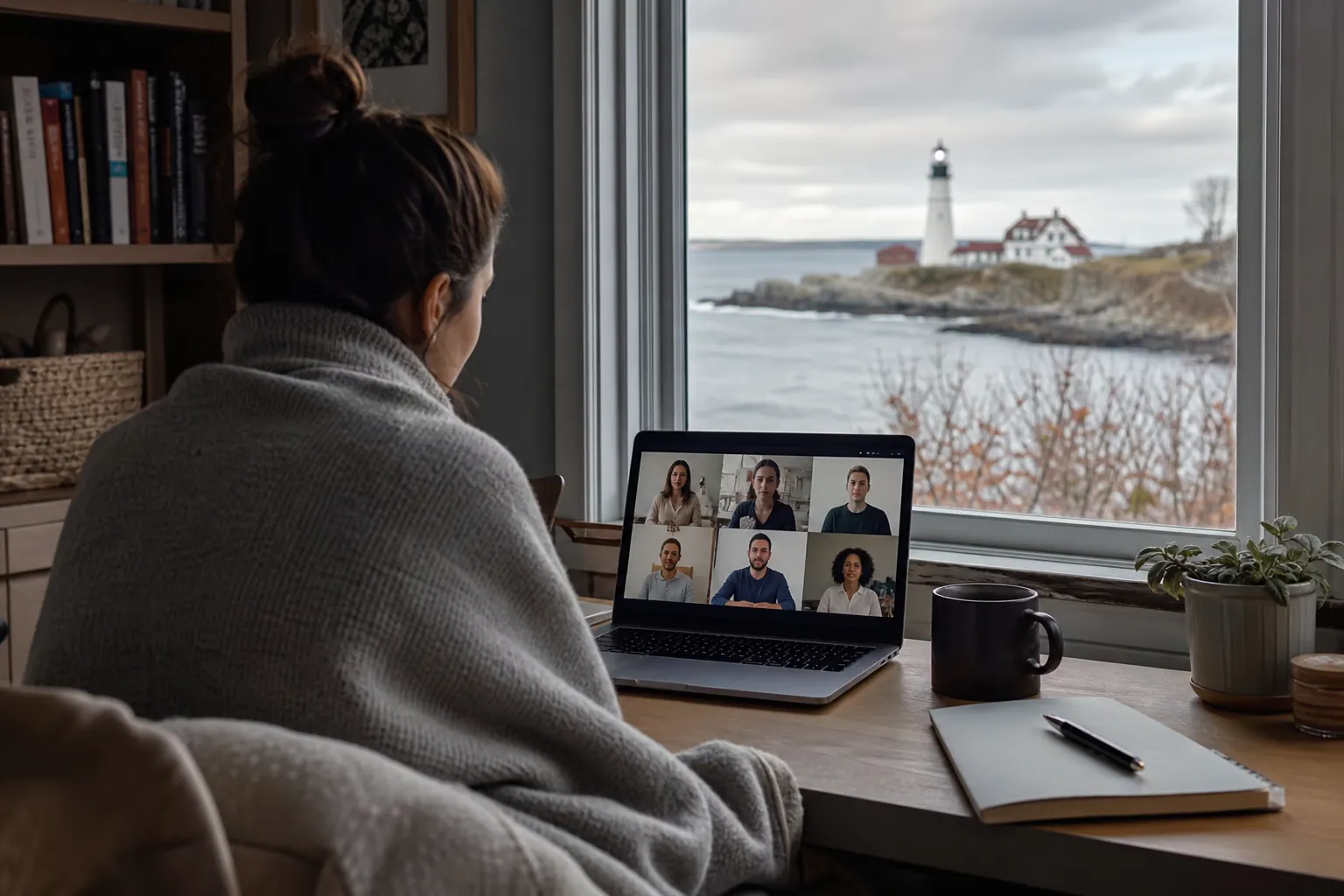
Yes, Virtual Intensive Outpatient Programming, or Virtual IOP, may help some adults manage social anxiety while they remain at home and continue living in their community. It offers more structure than routine outpatient appointments without requiring an overnight stay. At Merrimack Valley Behavioral Health, Virtual IOP is available only when a participant is physically located in Massachusetts.
Whether it is the right level of care depends on each person's symptoms, safety, support needs, and ability to participate remotely. A prescreen and intake process can help clarify fit. Virtual care is not emergency, inpatient, residential, or detox treatment.
How social anxiety can affect daily life
Social anxiety involves more than occasional nervousness or shyness. According to the National Institute of Mental Health's overview of social anxiety disorder, people may experience an intense, persistent fear of being watched and judged by others. Symptoms can interfere with work, school, relationships, and everyday activities.
The experience is not identical for everyone. One person may struggle to speak during meetings, while another avoids phone calls, appointments, meals with others, or public places. Physical symptoms such as sweating, trembling, a rapid heart rate, or difficulty making eye contact can also occur.
Avoidance may bring short-term relief, but it can also narrow a person's life. When anxiety regularly disrupts responsibilities, relationships, or desired activities, seeking an assessment can be a practical next step.

What care in a Virtual IOP involves
Virtual IOP is a structured form of outpatient behavioral health care delivered remotely. It generally requires a greater time commitment than standard outpatient care, but participants do not live at a facility. The appropriate program depends on individual clinical needs rather than diagnosis alone.
For an adult with social anxiety, remote participation may reduce certain logistical barriers associated with traveling to a program. At the same time, virtual treatment still requires active participation. A person should consider whether they have a private setting, a reliable way to connect, and the ability to remain engaged during program sessions.
Readers can learn more about the structure and participation requirements on the Merrimack Valley Behavioral Health Virtual IOP program page.

Questions that help clarify virtual treatment fit
The convenience of joining from home is only one part of the decision. Clinical needs, safety, and the home environment also matter. Useful questions include:
- Can the person participate consistently from a private location while physically present in Massachusetts?
- Is the person able to engage with other people in a remote treatment setting, even when social interaction feels uncomfortable?
- Do symptoms require more structure than standard outpatient appointments can provide?
- Can the person's needs be managed safely without overnight monitoring or inpatient support?
- Are substance use concerns also present and important to address through dual-diagnosis care?
Social anxiety itself may make entering a group-oriented or interactive setting feel difficult. That discomfort does not automatically rule out care, but it is worth discussing during prescreening. The goal is to identify a level and format of care that reasonably match the person's current needs.
When outpatient care may not be enough
Virtual IOP is not appropriate for every situation. Merrimack Valley Behavioral Health does not provide emergency care, onsite detox, inpatient or residential treatment, or overnight stays. Someone who needs continuous supervision, medical withdrawal management, stabilization in a controlled setting, or immediate crisis intervention may need a different type of provider.
Warning signs that call for urgent action can include immediate danger, a suicide attempt in progress, or an inability to remain safe. In a mental health or substance use crisis, call 988 or 911. The National Institute of Mental Health's help resources also explain options for finding immediate and non-emergency support.
If the situation is not an emergency but there is uncertainty about outpatient fit, a phone conversation and prescreen can help determine whether to proceed with intake. Calling does not promise admission or establish that Virtual IOP is suitable.
How family or trusted supporters can help
Support from family members or other trusted people can be useful when the adult wants them involved. Social anxiety can make calls, new routines, and unfamiliar interactions feel especially demanding. A supporter might offer encouragement, help protect privacy during remote sessions, or provide practical support around the treatment schedule.
Helpful support respects the adult's choices and boundaries. Examples include:
- A trusted person can ask what kind of encouragement feels useful instead of assuming what the adult needs.
- Household members can help maintain a quiet, private environment during scheduled virtual care.
- Supporters can avoid criticizing anxiety symptoms or treating hesitation as a lack of effort.
- The adult can decide whether and how a family member participates in conversations about care.
Virtual treatment still belongs to the participant. Family involvement should support engagement rather than take control of decisions.
Calling, checking benefits, and beginning intake
Adults considering care can call Merrimack Valley Behavioral Health at 978-233-9597. The initial conversation can address the reason for seeking treatment and explain the next steps. A prescreen helps explore current concerns and whether the available outpatient level of care may be appropriate.
Insurance coverage varies by plan. Callers can confirm benefits and ask about coverage for the recommended program. Coverage verification is not a guarantee of admission, clinical suitability, or payment by an insurer.
If the prescreen indicates that moving forward may be appropriate, the next step is the intake process. Merrimack Valley Behavioral Health offers adult outpatient PHP, IOP, OP, dual-diagnosis care, and Virtual IOP. In-person treatment is provided at 77 Elm St, Amesbury, MA 01913. Virtual IOP participants must be physically in Massachusetts while receiving care.
Choosing the next reasonable step
Virtual IOP may offer a useful balance for an adult whose social anxiety calls for structured support but does not require inpatient, residential, detox, or emergency services. The decision should account for symptom severity, safety, remote participation needs, privacy, and any co-occurring substance use concerns.
A call is a way to ask questions, verify benefits, and begin the prescreen process. It is not a commitment to enroll. For non-emergency questions about possible care, contact Merrimack Valley Behavioral Health at 978-233-9597.
Common Questions
Can I join MVBH's Virtual IOP from anywhere?
No. A participant must be physically located in Massachusetts while taking part in Merrimack Valley Behavioral Health's Virtual IOP.
Does Virtual IOP include overnight or emergency care?
No. MVBH does not offer overnight stays, emergency care, onsite detox, inpatient treatment, or residential care. In a crisis, call 988 or 911.
How do I ask whether Virtual IOP may fit my needs?
Call 978-233-9597 to discuss the prescreen and intake path and to confirm insurance benefits. Admission, suitability, and coverage are not guaranteed.
