
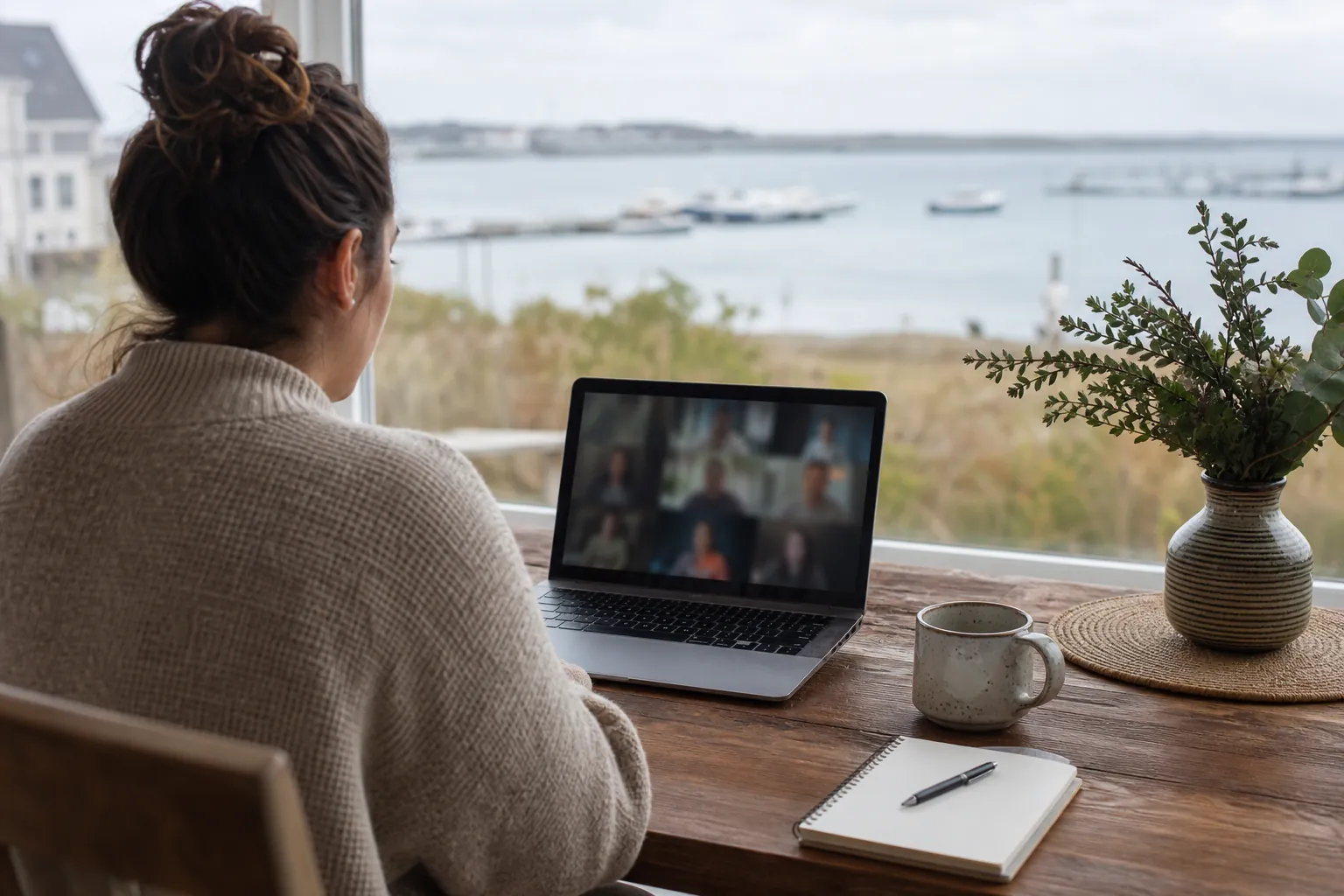
Yes. Barnstable residents may be able to participate in Merrimack Valley Behavioral Health's Virtual Intensive Outpatient Program while they are physically located in Massachusetts. Participation depends on factors such as clinical fit, prescreening, intake, and coverage. Virtual IOP is outpatient care, so it does not include housing, overnight supervision, emergency services, or onsite detox.
For someone in Barnstable, the virtual format can make structured behavioral health treatment accessible without routine travel to MVBH's in-person location at 77 Elm St, Amesbury, MA 01913. It is still important to understand the program's scope and determine whether outpatient treatment matches the person's current needs.
What Virtual IOP involves
An intensive outpatient program is a structured level of care that allows participants to remain in their communities rather than stay overnight at a treatment facility. MVBH offers adult outpatient PHP, IOP, OP, dual-diagnosis care, and Virtual IOP. The virtual option is available only when the participant is physically in Massachusetts during care.
Virtual treatment is more structured than ordinary appointments but remains outpatient. A participant should expect to discuss personal concerns in a remote setting and take part in the program from an appropriate location in Massachusetts. Learn more from MVBH's overview of the adult Virtual IOP and its format.
The key geographic rule concerns where the participant is physically located during treatment. Living in Barnstable fits within Massachusetts, but being a Massachusetts resident does not make sessions available while temporarily located outside the state.

Deciding whether virtual care fits daily life
Location is only one part of the decision. A person considering Virtual IOP should think about whether remote participation is workable and whether outpatient care provides an appropriate degree of support. Virtual access may reduce travel, but it does not remove the need to engage consistently in structured treatment.
- A participant needs to be physically present in Massachusetts during Virtual IOP sessions.
- The person should have a setting where private behavioral health conversations can occur with limited interruption.
- The participant should consider whether virtual communication is a workable way to engage in care.
- Household responsibilities, work, transportation, and family needs may affect whether virtual or in-person treatment is more practical.
A prescreen and intake conversation can address these considerations without assuming that a particular program is suitable. Calling does not promise admission, and an inquiry can help clarify what the next step may be.

When outpatient treatment may not be enough
Virtual IOP does not provide around-the-clock monitoring or a place to stay. MVBH does not offer onsite detox, inpatient care, residential care, overnight stays, or emergency care. Someone who needs medical detoxification, continuous supervision, emergency intervention, or a protected residential setting may need a different type of service.
Virtual outpatient treatment should not be used as an emergency response. If someone is in crisis, call or text 988 or call 911. The National Institute of Mental Health's guidance for finding help also directs people in life-threatening situations to call 911 and identifies 988 as the Suicide & Crisis Lifeline.
Safety needs can change. Even when virtual care appears convenient, the appropriate level of treatment should be considered before participation and revisited if circumstances become more urgent.
How dual-diagnosis needs may affect the decision
Some adults experience mental health concerns alongside substance use concerns. MVBH offers dual-diagnosis care, which recognizes that these issues may need to be considered together rather than separately. A prescreen can help identify what the person is seeking and whether an available outpatient pathway may align with those needs.
Dual-diagnosis outpatient care is not the same as onsite detox or residential treatment. If withdrawal risks, acute medical concerns, or the need for continuous oversight are present, callers should clearly describe the current situation so the appropriate next step can be considered. No level of care should be assumed solely from a diagnosis or from the convenience of attending virtually.
How family or household support can help
Family members or other trusted people may support participation when the adult receiving care wants them involved. Their role can be practical, such as helping protect the participant's privacy during scheduled care or reducing avoidable interruptions. Support should respect the adult participant's boundaries and confidentiality.
- Supporters can help create uninterrupted time without listening to private treatment conversations.
- Household members can discuss caregiving or shared responsibilities that might conflict with participation.
- A trusted person can encourage the participant to seek urgent help if a crisis develops.
- Family support should complement professional care rather than attempt to replace it.
Not every participant has family nearby, and family involvement is not a requirement stated here. The practical question is whether the person has a workable environment for remote outpatient participation.
What happens when a Barnstable resident calls
The path generally begins with a phone inquiry, followed by questions about benefits and an initial prescreen. If the next step is appropriate, intake can address the available outpatient pathway. These steps help separate basic eligibility questions from decisions about program fit.
- Call 978-233-9597. Ask specifically about Virtual IOP for an adult who will participate from Barnstable, Massachusetts.
- Confirm insurance benefits. Coverage varies by plan, so callers can ask for help confirming benefits rather than assuming that the program is covered.
- Complete the prescreen process. This conversation can explore current needs and whether an outpatient option may warrant further consideration.
- Proceed to intake if indicated. Intake is a later step in considering participation and does not change the program's outpatient limits.
Calling does not guarantee admission or establish that Virtual IOP is suitable. It provides a direct way to ask about geographic requirements, benefits, prescreening, intake, and the distinction between virtual and in-person care.
Virtual care from Barnstable versus in-person care
MVBH's in-person treatment location is 77 Elm St, Amesbury, MA 01913. A Barnstable resident weighing the options can consider travel demands, privacy at home, comfort with remote communication, and the level of structure needed. Virtual IOP can address the distance issue while the participant remains in Massachusetts, but convenience alone does not determine clinical fit.
The clearest next step is to call 978-233-9597 and ask about Virtual IOP, insurance benefits, prescreening, and intake. For an emergency or immediate crisis, call 988 or 911 instead.
Common Questions
Can a Barnstable resident attend MVBH Virtual IOP?
A Barnstable resident may be able to participate while physically located in Massachusetts, subject to benefits confirmation, prescreening, intake, and program fit.
Can I join a Virtual IOP session while outside Massachusetts?
No. MVBH Virtual IOP is available only while the participant is physically in Massachusetts.
Does Virtual IOP provide detox, overnight care, or emergency services?
No. MVBH does not offer onsite detox, inpatient or residential care, overnight stays, or emergency care. In a crisis, call 988 or 911.
