
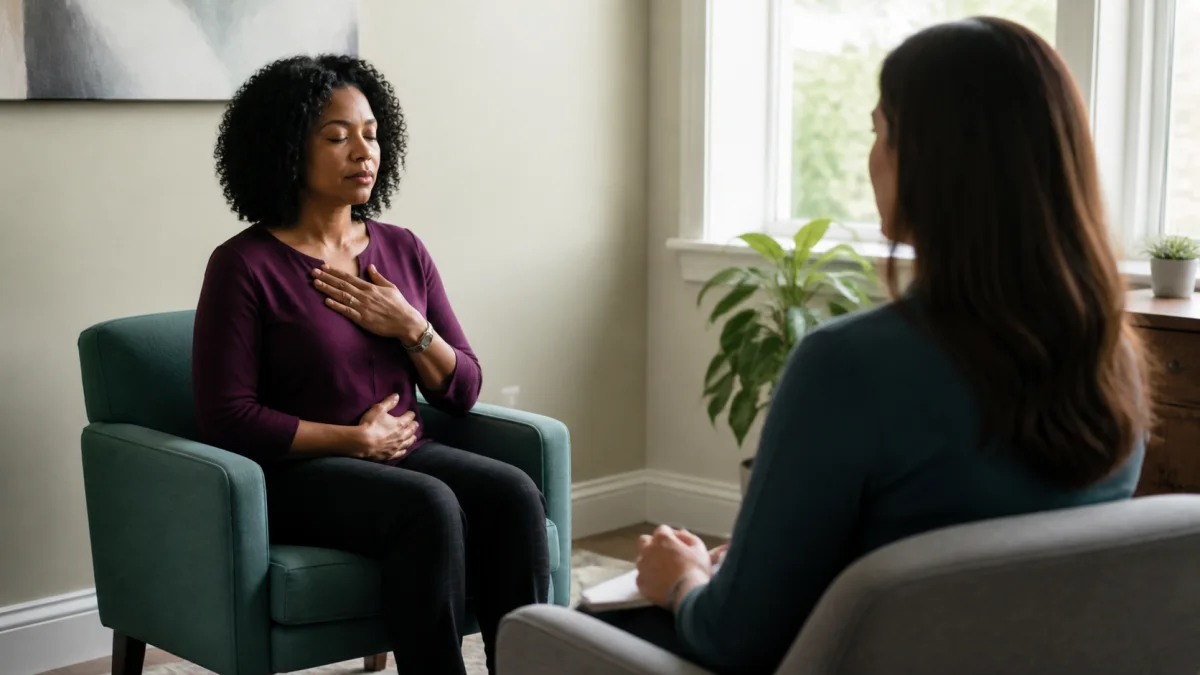
This guide gives you a clear place to start. DBT mindfulness skills help you notice thoughts and feelings without acting on them right away. They come from Dialectical Behavior Therapy and are often built up slowly, often with a clinician's guidance, rather than picked up overnight as a quick fix for hard moments.
- DBT mindfulness includes core skills like wise mind and observe, describe, participate.
- These skills are one part of DBT care.
- CBT and DBT both use mindfulness, but with different aims and structure.
- Practicing between sessions can help, but intense symptoms may need clinician input.
- Outpatient programs in Massachusetts can teach and support these skills safely.
What are the core mindfulness skills of DBT?
Core DBT mindfulness skills fall into two groups. 'What' skills cover observe, describe, and participate. 'How' skills cover doing these non-judgmentally, one thing at a time, and effectively. Together they help you notice the present moment with less reaction and more clarity about what is in fact happening.
Psychologist Marsha Linehan developed these skills as part of DBT. The therapy was first built for people with strong emotional swings and self-harm urges, such as some adults diagnosed with Borderline personality disorder. Mindfulness here does not mean an empty mind or a spiritual state. It is a skill you build through repeat practice, much like any other coping tool. Many people say it creates a short pause between an urge and an action. That pause can matter when emotions run high. Still, mindfulness works best as one part of a larger plan, not a stand-alone fix for serious symptoms. To see how these skills connect to other DBT modules like distress tolerance and emotion regulation, visit MVBH's DBT program page.
What are the four main DBT skill areas?
DBT groups its skills into four areas: mindfulness, distress tolerance, emotion regulation, and interpersonal effectiveness. Mindfulness sits underneath the other three, since you need to notice what is happening before you can respond differently or speak up clearly with someone else.
Distress tolerance skills help you get through a hard moment without making it worse, using tools like self-soothing or riding out an urge. Emotion regulation skills work on understanding and softening intense feelings over time. Interpersonal effectiveness skills teach you how to ask for what you need or say no while keeping a relationship intact. Mindfulness runs through all three. This is because each area starts with noticing your own state clearly. A staff member trained in DBT often introduces these areas in a structured order and pace that fits you, rather than all at once. That is one reason structured programs work better than a workbook alone.
What does wise mind mean in DBT?
Wise mind is the balance point between emotion mind. This reacts purely from feeling, and reasonable mind. This acts purely from logic. Wise mind blends both. It is treated as a skill to practice over time, not a fixed trait you either have or lack.
Therapists often describe wise mind as a quiet, felt sense of knowing. It tends to show up when you slow down instead of rushing or spiraling. It will not appear on command. As a result, some sessions focus on simply noticing brief glimpses of it. For adults dealing with work stress, relationship strain, or health worries, wise mind is often taught as a way to pause just long enough to avoid regret later. It is a helpful concept, not a guarantee against hard emotions. It is one more tool among several.
How do observe, describe, and participate work in DBT?
Observe, describe, and participate work in order. Observe means noticing an experience without reacting right away. Describe means putting plain words to what you noticed. Participate means fully joining the current activity once you have that awareness, without excess self-consciousness.
Say you feel anxious before a meeting. Observing might mean noticing shoulder tension and a fast heartbeat. Describing might sound like, 'I notice tightness in my chest and a thought that I will mess up.' Participating means walking into the meeting and engaging with the material instead of rehearsing worst cases in your head. These three skills often start as short exercises in a therapy group, then get applied to daily life. They are not meant to erase anxiety completely. They aim to help you function despite it. This is a more realistic and steady goal.
What is the difference between CBT and DBT mindfulness?
CBT tends to use mindfulness as one tool among several to interrupt unhelpful thought patterns. DBT treats mindfulness as its own core skill area, practiced again and again across sessions, with specific language like wise mind and observe, describe, participate.
Cognitive Behavioral Therapy often centers on spotting and reshaping distorted thoughts. Mindfulness exercises may support that work, such as noticing an automatic thought before challenging it. DBT was built for people whose emotional intensity made standard CBT harder to use. As a result, it treats mindfulness as a foundation rather than an add-on. The University of Washington's Behavioral Research and Therapy Clinics notes that DBT mindfulness borrows partly from contemplative traditions but is taught in a secular, skills-based way. Neither approach is automatically better. The right fit depends on your symptoms and what a licensed staff member recommends after an assessment.
Can adults practice DBT mindfulness between sessions?
Yes, many adults practice short DBT mindfulness exercises between sessions. These are often brief daily check-ins rather than long meditations. A therapist often assigns this practice step by step and reviews it. As a result, exercises stay matched to what you can handle right now.
Common between-session practices include a one-minute body scan, naming five things you notice in the room, or pausing before you reply to a stressful text. The goal is not to turn every moment into a formal drill. It is to build a habit of short, repeated noticing that becomes more automatic with time. Between-session practice works best when you talk it through with your therapist, especially if an exercise brings up unexpected distress. Skipping a day or changing an exercise is normal. It does not mean the skill has failed. Small, steady doses tend to matter more than length or intensity.
Why is DBT mindfulness sometimes criticized or difficult?
DBT mindfulness can feel hard because sitting with the present moment sometimes stirs up uncomfortable emotions or memories, especially for people with trauma histories. Some critics also say mindfulness language can feel vague or hard to grasp without clear, concrete guidance from a trained staff member.
Another common concern is pacing. If exercises move too fast or lack structure, they can raise anxiety instead of easing it for some people. That is why clinicians often start with short, structured practices instead of open-ended meditation, then check in afterward about what came up. Adults with dissociation, flashbacks, or acute crisis symptoms may need a different method, at least for a while, since mindfulness exercises are not built to manage acute safety risks. If an exercise ever feels destabilizing instead of grounding, that is useful feedback to share with a therapist rather than something to push through alone.
When should mindfulness practice be adapted by a clinician?
A staff member should adapt mindfulness practice whenever a client shows signs of dissociation, panic, flashbacks, or a sharp rise in distress during an exercise. Trained therapists can shorten the exercise, slow the pace, or switch to a grounding technique based on clinical judgment rather than a fixed script.
This kind of adjustment is one reason mindfulness skills are often taught inside structured Outpatient therapy settings rather than through generic apps or worksheets alone, especially for adults handling more complex symptoms. A DBT-trained therapist watches for signs an exercise is not landing well and can shift course right away. That might mean cutting a five-minute observation down to thirty seconds, or swapping a body scan for a simple five-senses grounding exercise. If mindfulness consistently makes things feel worse rather than better, that is valuable clinical facts. It is not a personal failure. It deserves a direct talk with your provider.
Start with a short practice. Notice one sound, one sight, and one body cue. Name each fact without adding a verdict. If your mind moves away, return to the same cue. A minute of steady practice can be easier to repeat than a long task.
Track when the skill helps and when it does not. Note the place, the stress level, and what came next. Share that pattern with the care team. The goal is not a blank mind. The goal is to notice the moment with less rush to act.
Ask how a DBT program teaches practice between visits. Check how feedback is given. Ask what to do if quiet focus makes distress worse. A clear plan should include another safe option and a point of contact.
Is DBT mindfulness the same as meditation?
Not quite. DBT mindfulness borrows some techniques from meditation traditions. It is taught as a practical, secular skill set focused on daily functioning rather than a spiritual practice. You do not need any meditation background or belief system to learn or use these skills.
Do I need a specific diagnosis to learn these skills?
No exact diagnosis is required to learn DBT mindfulness skills. DBT was first built for certain conditions, but many outpatient programs teach these skills to adults working through anxiety, stress, or strong emotions more broadly, based on an individual therapy review.
How long does it take to notice a difference?
There is no fixed timeline, and results vary from person to person. Some adults notice small shifts in awareness within a few weeks of steady practice. Others need more time or added support along the way. A therapist can help set realistic expectations for your situation.
Can I practice mindfulness skills on my own without therapy?
You can try basic mindfulness exercises on your own, but DBT mindfulness skills tend to work better and stay safer when a trained staff member introduces and reviews them. This matters most if you have a history of trauma, dissociation, or heavy emotional distress.
What if a mindfulness exercise makes me feel worse?
Tell your therapist right away if an exercise raises distress instead of easing it. This is useful facts, not a setback to hide. Care staff can shorten the exercise, change its pace, or swap in a different grounding technique that fits your needs better.
Are DBT skills available through outpatient programs in Massachusetts?
Yes, adults across Massachusetts can often find DBT skills through outpatient, PHP, or IOP-level care, such as virtual options for people located in the state during sessions. Whether a program fits you depends on an individual therapy review, not a guaranteed spot.
Does MVBH offer emergency or crisis mindfulness support?
No. MVBH is an outpatient provider and does not offer emergency, inpatient, residential, or onsite detox care. If you are in a mental health crisis, contact emergency services or a crisis line right away rather than relying on mindfulness alone.
Here is a general sequence some outpatient programs follow when teaching these skills, though your staff member should adjust the order and pace to fit you:
- Assess current symptoms and readiness for skills work.
- Introduce basic observe and describe exercises.
- Practice wise mind concepts briefly during sessions.
- Add participate exercises gradually during daily activities.
- Discuss between-session practice and any difficulties noticed.
- Connect mindfulness with distress tolerance and emotion regulation.
- Review progress and adjust based on your response.
DBT skills training is often delivered through a mix of individual therapy and group skills sessions, often inside a structured program rather than one stand-alone class. This setup lets skills like mindfulness get introduced, practiced, and reviewed steadily over weeks. Many programs follow a structured curriculum, moving through mindfulness, distress tolerance, emotion regulation, and interpersonal effectiveness in order, sometimes repeating the cycle so the skills stick. For adults juggling work or family duties, options like Intensive outpatient programming can offer more frequent sessions than weekly therapy alone, without requiring an overnight stay. MVBH is not an inpatient, residential, or emergency service, and any mindfulness skill taught here supports, rather than replaces, a broader plan built with your care team.
Mindfulness-based methods, such as those inside DBT, have been studied as part of wider psychotherapy research. Findings often support mindfulness as a helpful piece of treatment for certain conditions, though it works best when matched to the person and paired with other evidence-based methods. The National Institute of Mental Health notes that psychotherapy, DBT included, varies in effect based on the person, the condition, and the skill of the provider. NIMH's material on Borderline personality disorder also states that DBT is one of several therapies with research support for easing certain symptoms, though results differ and no single treatment works the same way for everyone. Keep this in mind if you see broad online claims that mindfulness alone can resolve serious mental health symptoms. It is a meaningful skill, not a guaranteed cure.
MVBH is located at 77 Elm Street, Amesbury, Massachusetts 01913, and serves adults age 18 and older through outpatient care. The practice is licensed by Massachusetts DPH and accredited by The Joint Commission. Verified program options include full-day PHP, half-day IOP, outpatient care, Virtual IOP, and dual diagnosis care, with Virtual IOP sessions requiring you to be physically present in Massachusetts. To ask about how DBT mindfulness skills might fit an outpatient plan, call MVBH admissions at 978-233-9597.
