

You do not have to force yourself to feel calm. Mindfulness for PTSD in Massachusetts may be considered as one part of an individualized care plan. It involves paying attention to the present, but it does not require ignoring distress or reliving a traumatic event on your own. Some people find a practice helpful; others may need to pause or choose another approach. Merrimack Valley Behavioral Health offers adult outpatient care in Amesbury, MA. A qualified provider can help decide where a mindfulness approach fits alongside treatment for trauma-related needs.
What Does Mindfulness Mean In PTSD Care?
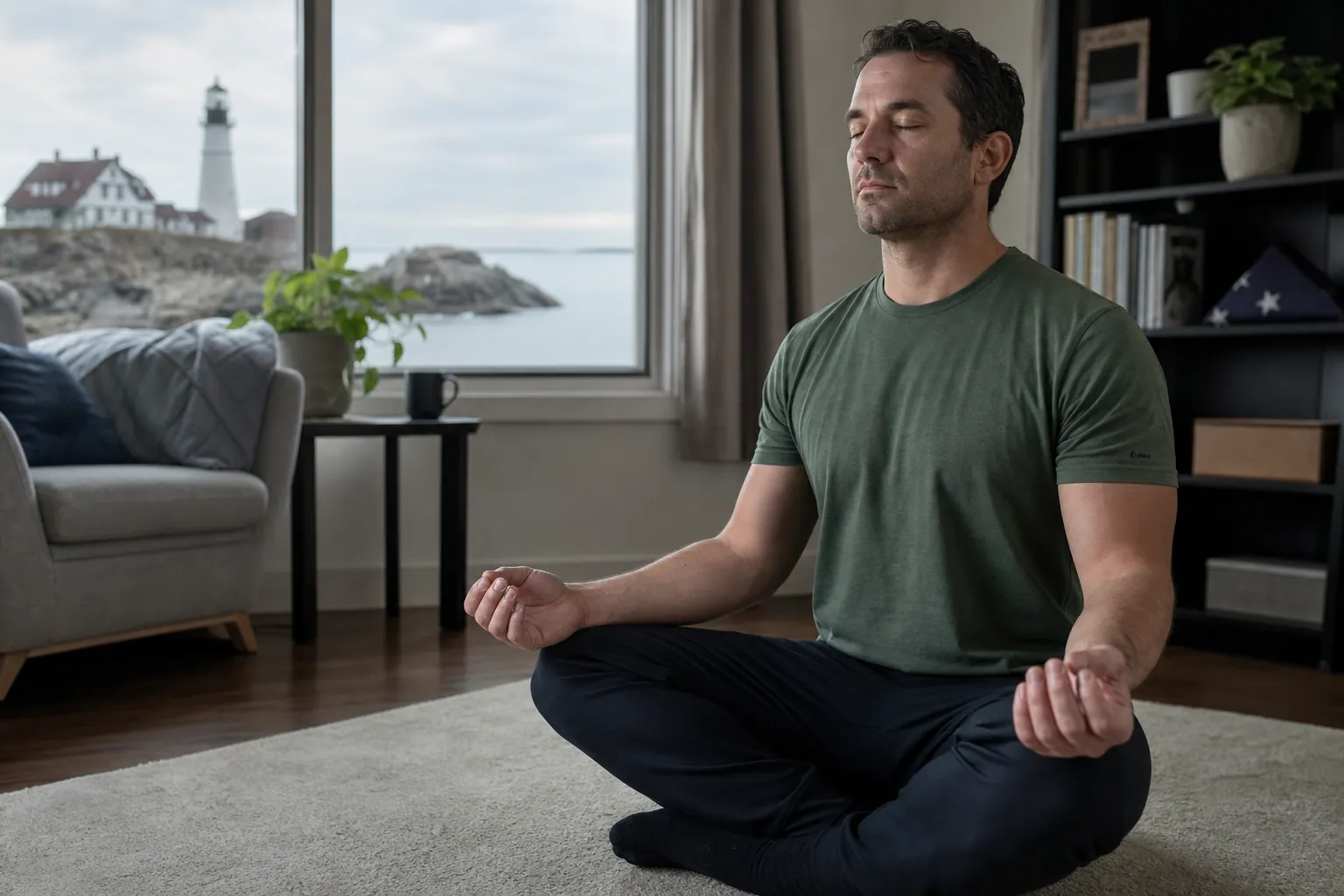
Mindfulness means paying attention to what you notice now, with less pressure to judge or change every feeling. A mindfulness approach can sit alongside care for PTSD. It is not a demand to empty your mind, feel peaceful, or keep going through distress. The meaning and purpose of a practice should be clear to you.
The NCCIH overview of meditation and mindfulness describes a range of practices and the limits of research. A short awareness practice and a structured clinical program are not the same thing. An app, a video, or a brief exercise cannot be assumed to provide the same care as a treatment delivered by a qualified professional.
For someone seeking PTSD care, the main point is choice. You can notice that a practice feels useful, unclear, or uncomfortable. None of those responses says anything about your strength or willingness to get help. A care approach should be something you can discuss and adjust rather than a task to endure silently.
Present-moment awareness also does not mean pretending that the past has no effect. PTSD care can address the impact of trauma while a specific practice focuses on what you notice now. Keeping those purposes distinct can help you understand what a technique can and cannot offer.
How Strong Is The Evidence For Mindfulness As PTSD Treatment?
The evidence is more limited than a general promise that mindfulness treats all PTSD symptoms. An individualized PTSD care plan should guide the main treatment, while mindfulness support may be considered in that wider context. Research on one structured approach does not prove that any meditation exercise will provide the same benefit.
The VA National Center for PTSD review describes limited evidence for complementary approaches. It notes a weak recommendation for a specific program called Mindfulness Based Stress Reduction. The review does not support treating complementary practices as the first-line approach for PTSD. That is a narrower conclusion than saying mindfulness never helps or that it is a cure.
These findings come from particular studies and groups of participants. They cannot tell you how you will respond. They also do not establish that MVBH offers that specific structured program. The actual treatment methods available at a provider need to be confirmed rather than inferred from a general educational article.
A useful care discussion links any practice to a clear goal. That might be a supportive skill within a broader plan, rather than the full treatment itself. The clinician and adult seeking care can review whether the approach serves that goal. A lack of benefit is a reason to reassess, not to blame the person.
How Is Mindfulness Different From Trauma-Focused Therapy?
Mindfulness and trauma-focused therapy have different aims and methods, even when a care plan includes both. Present-focused practices do not replace an assessment for PTSD treatment. A technique that invites you to notice the room around you is different from a planned clinical approach that addresses trauma-related memories or beliefs.
The NIMH PTSD overview describes psychotherapy approaches used in treatment and the need to match care with the person. This article does not determine which approach you need. It also does not provide instructions for trauma exposure or processing memories without a clinician.
You do not need to retell a traumatic event in a self-guided practice to prove that you are doing mindfulness correctly. If a recording or exercise moves into material that you did not expect, you can stop. A clinician can help explain the difference between a supportive skill and a treatment method with a specific clinical purpose.
This distinction matters because words such as “trauma-informed” can sound like a promise without explaining the care. You deserve a plain account of what the approach involves and how it relates to your needs. No label on an exercise can, by itself, establish that the exercise is safe or suitable for you.
What If A Mindfulness Practice Feels Uncomfortable?
You can pause or stop when a practice feels distressing. Mindfulness support should allow that response, and PTSD care can help review what to do next. Continuing through discomfort is not a requirement for seeking treatment. Your response is useful information for the clinician, rather than a failed effort at calm.
NCCIH notes that some people report negative experiences during meditation and that safety research has limits. This supports a cautious approach. It does not prove that a particular technique causes a particular PTSD symptom, so no such causal claim is made here. People can have different reactions to the same general practice.
If you choose to pause, you can return your attention to ordinary surroundings rather than push further into the exercise. Keep your eyes open if that feels more comfortable, or simply stop the recording. These are options for ending an unwanted exercise, not a guaranteed clinical treatment or a substitute for professional support.
Tell the qualified provider if a practice repeatedly leaves you feeling worse or unable to settle afterward. The plan may need a different format, goal, or method. For a mental health crisis, call or text 988. Call 911 for immediate danger or a life-threatening emergency instead of relying on a mindfulness exercise.
What Makes A Small Present-Focused Practice More Manageable?
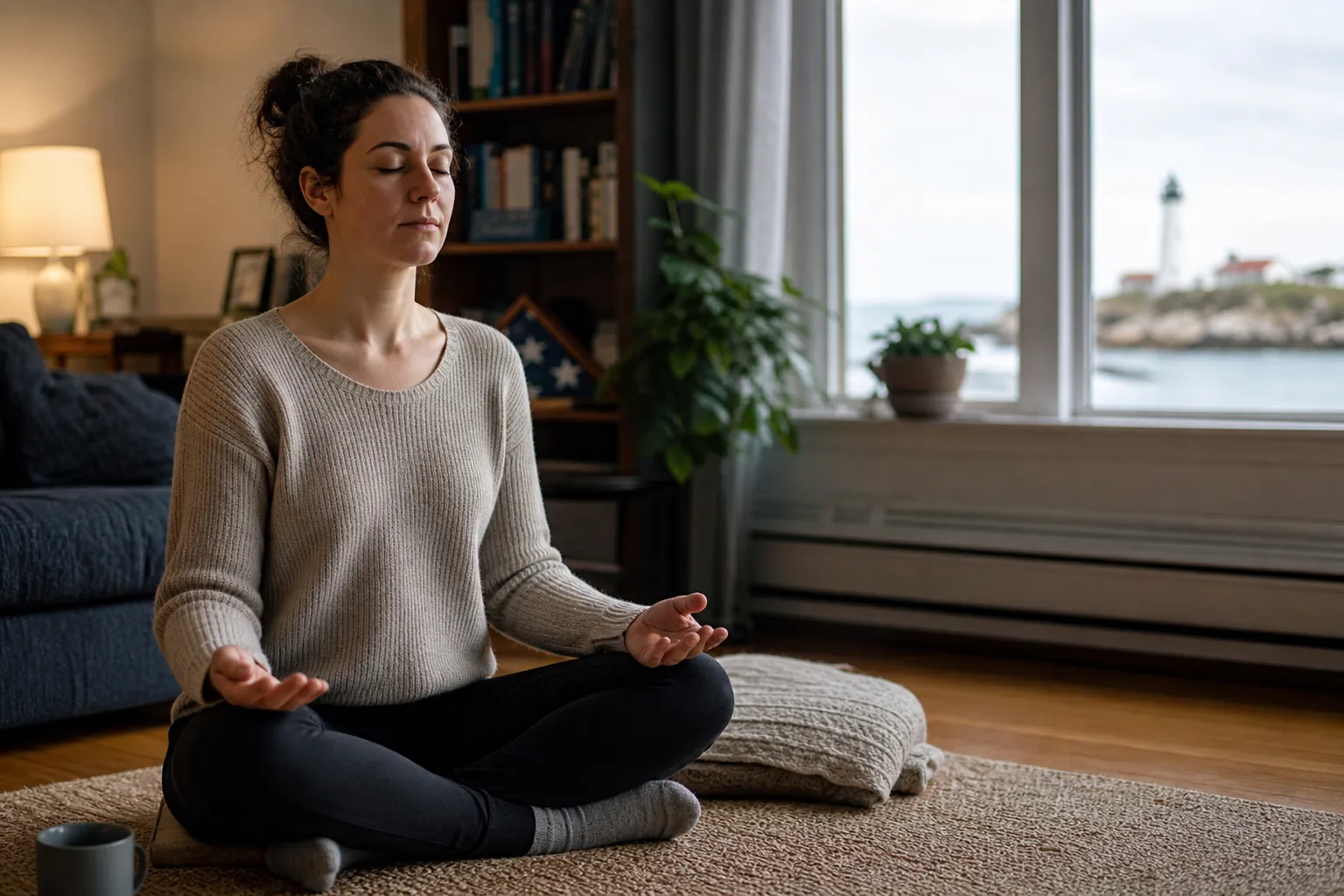
A manageable practice has a clear purpose, a choice to stop, and a pace that fits your needs. Mindfulness care can be discussed within outpatient support. There is no universal number of minutes you must complete. A short practice is not inferior simply because another person prefers a longer one or a different format.
When a clinician suggests a practice, clarity matters more than complexity. You should know whether the aim is simple awareness, a coping skill, or part of a specific therapy. You can also know what to do if it becomes uncomfortable. That keeps the exercise connected to care instead of turning it into an unexplained assignment.
A neutral focus, such as noticing the color of a nearby object, may feel more approachable to some people than a long recording. It is an option to discuss, not a claim that one focus is clinically safer for everyone. Personal preference and response still matter. You do not have to use a technique just because it is popular.
The aim is not a perfect session. You may notice that your attention wanders or that you would rather stop. An observation can remain an observation without becoming a judgment about your progress. If every attempt feels difficult, the care team can consider other support rather than assuming that more practice is always the answer.
How Can Mindfulness Fit Within Outpatient PTSD Care?
Outpatient care can consider mindfulness alongside other needs, with the level of support based on your whole situation. An adult IOP and PHP care offer different outpatient structures. A preference for mindfulness does not decide the level of care. Safety, daily function, other concerns, and support between sessions still need assessment.
MVBH offers adult PHP, IOP, OP, dual diagnosis care, and Virtual IOP. These are outpatient services. This article does not promise a particular trauma therapy, a specific mindfulness curriculum, or a certain session format. Your care plan needs to reflect the actual program and a qualified clinical assessment.
In-person care takes place at 77 Elm St, Amesbury, MA 01913. Virtual IOP participants must be physically in Massachusetts during sessions. Privacy and the ability to focus matter in a remote setting, as they do for other virtual care. Being at home does not remove the need for an assessment of outpatient fit.
MVBH does not provide emergency care, inpatient or residential treatment, overnight stays, or onsite drug and alcohol detox. If you need those services, a different setting may be appropriate. Mindfulness should not be used to make an unsafe setting seem adequate or delay care for an urgent need.
How Can You Explore Care Without Committing To A Technique?
You can explore care without deciding that mindfulness is right for you. MVBH admissions and contact with the program offer a way to begin considering outpatient support. You do not need to arrive with a preferred therapy, a diagnosis you have made yourself, or a plan to practice a technique at home.
Call 978-233-9597 if you want to discuss adult outpatient options. The approved path includes insurance verification, prescreening, and intake before treatment starts. These steps help consider payment and program fit. A call does not establish that a certain therapy will be provided or that admission is assured.
- Call to begin exploring outpatient support.
- Complete your plan’s benefits verification.
- Take part in the prescreen.
- Proceed to intake when appropriate.
Coverage varies by plan. No insurance carrier participation or guaranteed payment is claimed here. If you request a callback through the website, keep the form to callback details. A detailed trauma history, medication information, and other sensitive clinical information belong in the appropriate private care process.
You can take the next step without promising to feel calm or to use any particular skill. A care decision can consider what you need and what has or has not felt workable. The goal is informed support with room to adjust, rather than a demand to make a technique work for you.
What Else Helps You Understand This Care Choice?
Mindfulness is a possible part of a care plan, rather than a test you have to pass. Mindfulness approaches and PTSD care address related but different needs. These answers explain the distinction, the limits of self-guided practice, and why your own comfort and clinical needs should guide decisions about outpatient support in Massachusetts.
Can Mindfulness Cure PTSD?
Mindfulness is not presented as a cure for PTSD. Evidence for complementary approaches is limited, and a brief exercise is different from a structured treatment program. A qualified clinician can consider whether it has a supportive role in your care. Your treatment plan should address your broader needs and allow review when an approach is not helpful.
Do I Have To Close My Eyes To Practice?
No single format is required by this article. You can stop an exercise or choose not to close your eyes if that feels uncomfortable. A clinician can help consider suitable options in the context of your care. This is a choice about participation, rather than a claim that one format is safe for everyone.
Should I Keep Going If A Practice Makes Me Feel Worse?
You do not have to keep going through distress to prove that you want help. Pause or stop, and bring the response to your qualified provider so the plan can be reviewed. For an urgent mental health crisis, use 988. Call 911 for immediate danger or a life-threatening emergency.
Is A Meditation App The Same As PTSD Treatment?
No. A general app may offer exercises, but it cannot be assumed to provide an individualized PTSD assessment or the same care as a clinical treatment. It may not address your safety needs or other concerns. Do not use an app as a reason to delay professional care when symptoms affect your daily life.
Does MVBH Guarantee A Particular Mindfulness Program?
No particular curriculum, therapy method, or outcome is promised here. MVBH provides adult outpatient services, and a prescreen and intake help consider program fit. Call 978-233-9597 to begin that pathway. The clinical decision should reflect your needs and the actual care available, rather than an assumption from an educational article.
